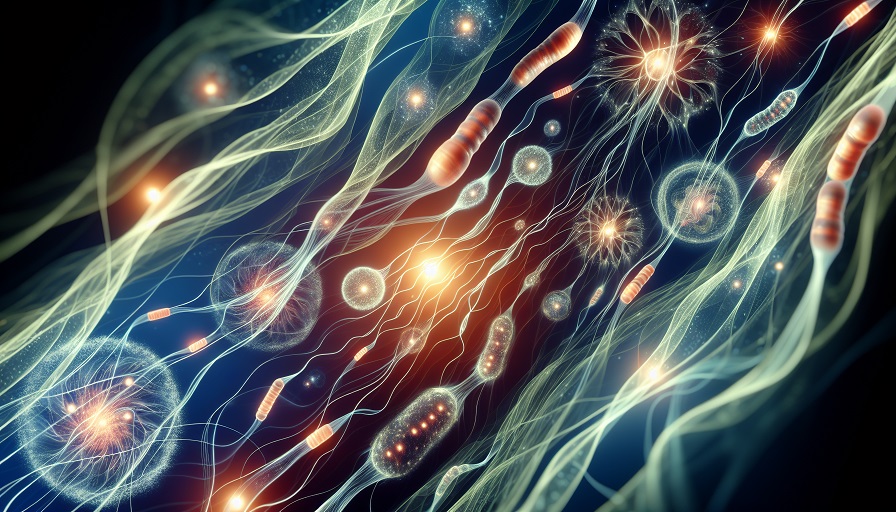
Most people think of “energy” as a mood or a mindset. You wake up feeling sharp, or you wake up feeling like your brain is wrapped in a blanket. But behind that feeling is a real, measurable process happening inside your cells. It is less like “willpower” and more like a power company keeping the lights on.
That power company is your mitochondria (pronounced my-toh-KON-dree-uh). They are tiny structures inside your cells that help convert food and oxygen into the usable energy your body runs on. If that sounds abstract, here is a relatable translation: mitochondria help you have the energy to climb the stairs, stay patient in traffic, remember why you walked into the kitchen, and finish the day without feeling like a phone stuck at 12% battery.
Let’s make mitochondria feel less like a biology term you forgot after high school, and more like the behind-the-scenes crew making daily life possible.
Meet Your Cellular Power Team
Mitochondria are often called the “powerhouses” of the cell, and for once, that nickname is not exaggerating. Nearly every cell uses them to produce a molecule called ATP (adenosine triphosphate). ATP is the body’s immediate energy currency. Think of it like cash in your pocket, not the money in your savings account. When your muscles contract, when your brain signals your body, when your heart beats, ATP is what gets spent.
Why ATP Is The Big Deal
Your body does not store much ATP at once. It makes and uses ATP constantly, all day and all night. Even while you sleep, your body is running “background apps” like tissue repair, hormone signaling, and memory consolidation. That is why healthy energy is not just about how much you ate today, it is about how efficiently your cells can convert resources into usable power.
Not All Cells Need The Same Energy
Some cells are energy-hungry by design. Your heart muscle is always working. Your brain uses a large share of your body’s energy budget. Your muscles need quick bursts of power when you move. These tissues tend to have a lot of mitochondria, because their job requires it.
How Mitochondria Shape Everyday Energy
When mitochondria are running smoothly, your “battery” tends to feel steadier. You are not necessarily bouncing off the walls, but you feel like you have enough. You can think clearly, recover from activity, and stay more resilient when life gets busy.
Energy Is A Chain Reaction, Not A Single Switch
It is tempting to ask, “How do I get more energy?” like there is one magic switch. In reality, energy depends on a chain of steps: digestion, nutrient availability, oxygen delivery, hormone signals, sleep quality, and cellular conversion into ATP. Mitochondria sit near the end of that chain. When the chain runs well, you feel it. When it doesn’t, you feel that too.
Why Energy Crashes Can Feel Sudden
Have you ever felt fine, then hit a wall at 2:30 p.m.? That can happen when the body’s short-term energy strategies (like stress hormones or quick carbs) run ahead of deeper cellular production. It is like running a generator too hard and then realizing the fuel tank is not as full as you hoped.

Mitochondria And Cognitive Health: Your Brain Runs On Power
Your brain is not “just thinking.” It is firing electrical signals, recycling neurotransmitters, maintaining cell membranes, and coordinating your entire body. That takes energy, and mitochondria help supply it.
Focus, Memory, And Mental Stamina
When people describe brain fog, they often mean a mix of slower recall, reduced attention, and a feeling of mental drag. Many factors can contribute (sleep, stress, blood sugar swings, dehydration), but cellular energy is part of the picture. If your brain cells are struggling to meet energy demand, you may notice it as reduced mental stamina.
Your Brain Loves Consistency
The brain tends to perform best when energy supply is steady. That does not mean you can never enjoy a treat or stay up late. It means that your everyday habits, repeated over time, matter more than the occasional exception. Mitochondria respond to patterns.
What Stresses Mitochondria In Modern Life
Mitochondria are sturdy, but they are not invincible. Modern life throws a few common stressors into the mix. Think of these as “speed bumps” for cellular energy.
Poor Sleep And Irregular Schedules
Sleep is not only rest, it is repair. During sleep, the body coordinates recovery and maintenance processes that support healthy cellular function. Chronic short sleep can make energy feel harder to come by, even if you are eating well.
Chronic Stress And The Always-On Nervous System
Short bursts of stress can be useful. Chronic stress, however, is like keeping your foot on the gas while the parking brake is still on. Over time, it can affect appetite, sleep, inflammation, and the way your body manages fuel, all of which can influence how your cells produce energy.
Nutrient Gaps And Highly Processed Patterns
Your mitochondria need raw materials and helpers. Macronutrients (carbs, fats, protein) provide the main fuel, while micronutrients (vitamins and minerals) often act like tools that help the conversion process run smoothly. If your diet is heavy on ultra-processed foods and light on nutrient-dense options, it can be harder to support steady energy.
Sedentary Habits
Movement is one of the most reliable ways to signal the body to maintain healthy mitochondrial function. You do not need to train like an athlete. Regular walking, light strength work, and short bursts of higher effort (as appropriate for your fitness level) can all be part of the picture.
Everyday Habits That Support Cellular Energy
Here is the encouraging part: you do not need a perfect lifestyle to support mitochondria. You need a handful of repeatable habits that move you in the right direction. Think “mostly consistent,” not “always flawless.”
Build Meals Around Real Food Basics
A practical rule: start with protein, add colorful plants, include a quality fat, and choose carbs that do not spike and crash you. This supports steadier fuel availability, which your cells generally appreciate. Hydration also matters more than people think, because blood volume and oxygen delivery affect energy, too.
Protect Your Sleep Like It Is A Health Tool
Sleep is not a luxury item. Try to keep a consistent wake time, limit bright screens close to bedtime, and create a wind-down routine. Even modest improvements in sleep consistency can change how energy feels during the day.
Use Stress “Off Switches” On Purpose
Most people try to “relax” only when they are already fried. Instead, sprinkle small resets into the day: a short walk outside, slow breathing for two minutes, light stretching, or a quick chat with someone who makes you laugh. Your nervous system responds to these signals, and your energy can feel steadier when stress is not running the whole show.
The Takeaway: Mitochondria Make Daily Life Possible
Mitochondria are not a trendy buzzword, they are a core part of how you function. They help convert the food you eat and the oxygen you breathe into ATP, the energy your body spends to think, move, and recover. When your lifestyle supports your cells, you often feel it as steadier physical energy and better mental stamina.