
Critical thinking is one of those phrases that gets thrown around so often it risks losing its meaning entirely. Employers want it on resumes. Universities mandate courses built around it. Parents hope their children develop it. But strip away the buzzword layer and what you are really talking about is a specific set of cognitive operations: evaluating evidence objectively, identifying hidden assumptions, recognizing logical fallacies, weighing competing interpretations, and arriving at conclusions that hold up under scrutiny. Each of those operations has a neural address in your brain, and each one is sensitive to the biological conditions under which your brain is running. That is the opening through which nootropics enter the conversation, not as shortcuts to instant brilliance, but as compounds that help create the neurochemical and structural conditions in which genuinely sharp critical thinking becomes more accessible and more sustainable.
Contents
What Critical Thinking Demands From Your Brain
Critical thinking is metabolically expensive. It requires your prefrontal cortex to stay engaged with a problem long enough to examine it from multiple angles, which is exactly the kind of sustained, effortful cognition that the brain’s default-mode shortcuts are designed to circumvent. Left to its own energy-saving instincts, the brain gravitates toward confirmation bias, availability heuristics, and the cognitive comfort of agreeing with whoever spoke most recently and most confidently. Overriding those tendencies requires executive function, inhibitory control, and the mental stamina to keep questioning when the easier path is simply to accept.
Cognitive Flexibility as the Core of Critical Reasoning
Among the cognitive capacities most central to critical thinking, flexibility stands out. The ability to hold a belief loosely enough to revise it when contrary evidence arrives, to shift interpretive frameworks without losing the thread of an argument, and to generate genuinely alternative explanations rather than retrofitting evidence to a foregone conclusion, these are the hallmarks of a mind that thinks critically rather than merely assertively. Cognitive flexibility is mediated primarily by prefrontal-cortical networks and is acutely sensitive to sleep quality, stress load, inflammation, and neurotransmitter balance. The right nootropic compounds can meaningfully support all of these underlying variables.
Nootropics That Target the Machinery of Critical Thought
The compounds highlighted here were chosen specifically for their relevance to the cognitive operations that critical thinking requires, with particular attention to flexibility, inhibitory control, sustained attention, and the reduction of cognitive fatigue. The emphasis falls on some less-discussed but equally important dimensions of bias resistance and adaptive reasoning, intentionally broadening the nootropics conversation beyond the usual shortlist.
Ashwagandha
Ashwagandha is perhaps better known as a stress and anxiety adaptogen than a cognitive enhancer, but that framing undersells its relevance to critical thinking. Chronic stress is one of the most reliable destroyers of prefrontal function. When cortisol levels remain elevated over time, the prefrontal cortex loses dendritic density, meaning the physical structure of the neurons responsible for sophisticated reasoning becomes less elaborate and less efficient. Ashwagandha’s well-documented ability to reduce serum cortisol, confirmed in multiple randomized controlled trials including a 2019 study published in the journal Medicine, translates directly into protecting and restoring the neural architecture that critical thinking depends on. A calmer stress-response system is not just good for your mood. It is good for your judgment.
Ginkgo Biloba
Ginkgo biloba has a longer history of use and a larger body of clinical research than almost any herbal nootropic. Its primary mechanisms involve improving cerebral blood flow and acting as a potent antioxidant against the free-radical damage that degrades neural efficiency over time. What makes ginkgo particularly relevant to critical thinking is a cluster of trial findings showing improvements not just in memory but in the speed and accuracy of complex information processing. A Cochrane-reviewed meta-analysis found that ginkgo produced consistent improvements in cognitive performance across multiple domains in both healthy and cognitively impaired populations. For critical thinking, which requires the brain to rapidly cross-reference multiple streams of information simultaneously, the cerebrovascular benefits are especially meaningful. Better blood flow to the prefrontal cortex means better fuel delivery precisely where analytical reasoning lives.
Alpha-GPC
Alpha-GPC is a highly bioavailable form of choline that crosses the blood-brain barrier efficiently and raises acetylcholine levels more reliably than many competing choline sources. It is distinguished by its speed of action and its particular relevance to the kind of rapid, flexible information processing that critical analysis requires in real-time situations. Research published in the Journal of the International Society of Sports Nutrition found that alpha-GPC supplementation improved cognitive performance and reaction time, outcomes that map directly onto the demands of real-world critical reasoning. When you need to evaluate a situation quickly, weigh competing interpretations, and commit to a well-reasoned position without the luxury of extended deliberation, faster and more reliable acetylcholine signaling is a genuine cognitive advantage.
Panax Ginseng
Panax ginseng, sometimes called true ginseng or Korean ginseng to distinguish it from its botanical relatives, has one of the more interesting research profiles in the nootropics world because its cognitive effects appear to be especially pronounced under conditions of mental fatigue. A randomized trial published in Psychopharmacology found that Panax ginseng significantly improved performance on a sustained mental arithmetic task and reduced feelings of mental fatigue compared to placebo. This matters enormously for critical thinking, because the cognitive operations most vulnerable to fatigue are precisely the higher-order ones: inhibitory control, perspective-taking, and resistance to intellectual shortcuts. The active compounds in ginseng, known as ginsenosides, appear to work through a combination of anti-inflammatory, neuroprotective, and neurotransmitter-modulating mechanisms that collectively support mental endurance when the stakes of clear thinking are highest.
Magnesium L-Threonate
Magnesium is the most chronically under-consumed mineral in the modern diet, and its role in cognitive function is considerably more profound than its reputation as a sleep aid suggests. Magnesium L-threonate is a newer form of the mineral developed specifically for its ability to cross the blood-brain barrier and raise brain magnesium levels, something that standard magnesium supplements struggle to accomplish effectively. Research from MIT, published in the journal Neuron, found that elevating brain magnesium levels enhanced synaptic plasticity and improved both short-term and long-term memory retrieval. For critical thinking, synaptic plasticity is foundational. The ability to form new connections between ideas, update existing mental models in light of new evidence, and resist the cognitive rigidity that hardens into dogmatic thinking all depend on a brain that can physically rewire itself in response to new information. Magnesium L-threonate supports that rewiring capacity at the cellular level.
N-Acetyl L-Tyrosine
N-Acetyl L-Tyrosine, commonly abbreviated as NALT, is a highly bioavailable form of the amino acid tyrosine, which serves as the precursor to both dopamine and norepinephrine. Both neurotransmitters play central roles in executive function, specifically in the prefrontal cortex processes that govern working memory updating, cognitive switching, and the inhibition of prepotent but incorrect responses. Military research conducted under conditions of acute stress and sleep deprivation has found that tyrosine supplementation helps maintain cognitive performance when biological reserves are depleted. For critical thinking, the relevance is twofold: NALT supports the dopaminergic tone that keeps you motivated to keep questioning when your brain would rather settle for a comfortable answer, and it buffers the cognitive degradation that stress and fatigue impose on the very faculties that careful reasoning requires most.
The Compound Effect: Stacking for Critical Thinking
One of the more sophisticated developments in the nootropics space is the recognition that compounds often work better in combination than in isolation, a principle known as nootropic stacking. The biological demands of critical thinking are multidimensional enough that no single compound addresses all of them simultaneously. A thoughtfully assembled stack might pair ashwagandha for cortisol regulation and prefrontal protection with alpha-GPC for acetylcholine-driven processing speed, magnesium L-threonate for synaptic plasticity, and NALT for dopaminergic resilience under pressure. Each compound handles a different layer of the same cognitive challenge, and the combined effect is greater than any single ingredient could deliver alone.
What to Look for in a Quality Brain Supplement
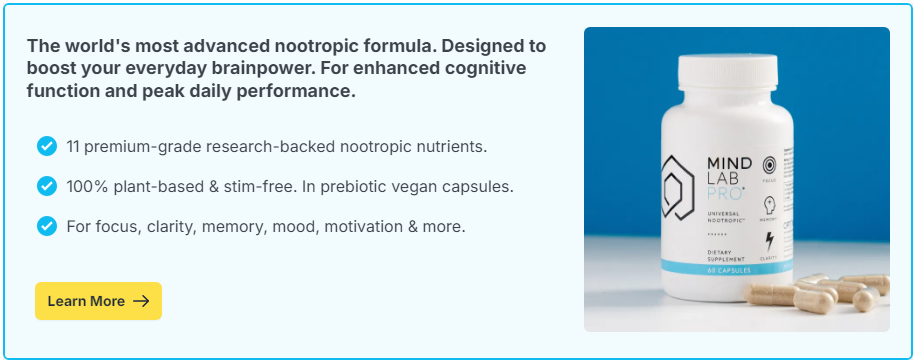
The nootropics market rewards careful consumers and punishes hasty ones. The difference between a rigorously formulated brain supplement and a loosely assembled collection of underdosed ingredients can be considerable, both in terms of results and value for money. Look for products that disclose every ingredient and its dose clearly rather than concealing amounts behind proprietary blend labels, use bioavailable forms of each compound that match what clinical research has actually studied, and carry third-party testing certifications for purity and potency. A premium brain supplement that combines several of the compounds discussed here in evidence-aligned doses is often more practical and more reliably dosed than assembling individual products from scratch.
Sharpening the Mind Beyond the Bottle
The honest conversation about nootropics always returns to the same foundational truth: supplements create conditions, not outcomes. The prefrontal cortex that ginkgo feeds with better blood flow, the synapses that magnesium L-threonate keeps plastic, and the dopamine system that NALT keeps resilient under stress all still need to be put to work through deliberate practice. Reading widely outside your area of expertise, actively seeking out arguments that challenge your existing views, writing out your reasoning in explicit logical form, and practicing the discipline of genuinely changing your mind when evidence warrants it, these habits are what actually develop critical thinking over time.
Nootropics, chosen wisely and used consistently, simply help ensure that the biological instrument you are practicing on is operating as well as it possibly can. That combination of smart supplementation and deliberate cognitive habit is a genuinely powerful one, and the mind that questions carefully, updates willingly, and reasons clearly under pressure is worth every ounce of effort it takes to build.