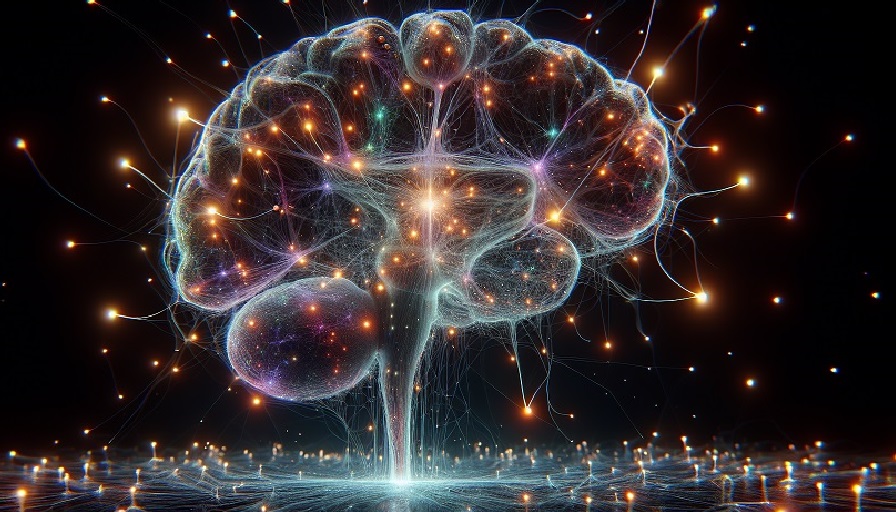
There is a persistent myth that creativity is a gift, something you either have or you don’t. Either you were born with an artist’s eye or a poet’s ear, or you weren’t, and that’s simply the hand you were dealt. But neuroscience has been quietly dismantling that myth for years, and the evidence it’s building in its place is genuinely exciting. Creativity, it turns out, is not a fixed trait. It is a practice, a cognitive process, and one of the most powerful tools we have for keeping the brain healthy across the entire span of a lifetime.
Whether you are someone who paints on weekends, improvises in the kitchen, writes in a journal, or simply approaches problems at work in unconventional ways, you are engaging your brain in a mode that pays extraordinary dividends. The connection between creative activity and brain health is richer and more scientifically grounded than most people realize.
Contents
What Actually Happens in a Creative Brain
For a long time, popular culture insisted that creativity lived exclusively in the right hemisphere of the brain, while the left hemisphere handled all the serious, logical work. Neuroscientists have moved well past that tidy but oversimplified story. Modern brain imaging research paints a far more interesting picture: creativity is a whole-brain phenomenon that requires the coordinated activity of multiple large-scale networks working in concert.
The Three Networks Behind Creative Thinking
Creative cognition appears to rely heavily on the interplay of three distinct brain networks. The default mode network, which becomes active during mind-wandering, daydreaming, and spontaneous thought, is where imaginative ideas tend to take their first breath. The executive control network, centered in the prefrontal cortex, provides the focused attention and critical evaluation needed to develop and refine those ideas. The salience network acts as a traffic controller, shifting activation between the other two as needed.
What makes highly creative individuals neurologically distinctive, according to research, is not that one network dominates, but that all three communicate with unusual fluency. The executive and default mode networks, which typically suppress each other, are able to stay co-active in creative thinkers. That unusual flexibility is something that can be cultivated through regular creative practice, which is precisely why the habit matters as much as the talent.
Creativity as a Builder of Neural Architecture
Every time you engage in a genuinely creative act, you are asking your brain to make connections it hasn’t made before, to reach across familiar neural highways and forge new routes between seemingly unrelated ideas, memories, and sensory experiences. This is neuroplasticity in action, and it is the foundation of long-term cognitive resilience.
New Connections and Cognitive Reserve
Cognitive reserve is the brain’s ability to improvise and find workarounds when some neural pathways are damaged or degraded, as inevitably happens with aging or disease. Think of it as the difference between a city with one major bridge and a city with twenty. If one bridge goes out in the first city, traffic grinds to a halt. In the second, drivers simply reroute. A rich and varied creative life helps build that second kind of city in your brain.
Research on aging populations consistently finds that people with a history of regular creative engagement, whether through visual arts, music, writing, or craft, tend to show better cognitive outcomes as they age. They demonstrate stronger memory performance, more flexible thinking, and a measurably reduced risk of cognitive decline. It is one of the clearest examples of the brain reaping what the mind sows.
Learning, Skill Acquisition, and Synaptic Growth
There is something particularly potent about learning a new creative skill from scratch. When an adult picks up a paintbrush for the first time, or sits down at a piano with no prior experience, the brain responds with a burst of synaptic activity. New neural pathways form. Existing ones are strengthened. The combination of motor learning, sensory feedback, aesthetic judgment, and emotional engagement makes creative skill acquisition one of the most neurologically comprehensive activities available to us.
A notable study out of the University of Toronto found that seniors who participated in art-making classes over several months showed measurable improvements in memory and processing speed compared to a control group. The gains weren’t enormous, but they were real, consistent, and achieved simply through the act of making things.

The Emotional and Psychological Dimensions
Brain health is not purely a matter of gray matter and synaptic density. Emotional wellbeing and cognitive health are deeply intertwined, and this is an area where creativity offers some of its most immediate and tangible benefits.
Creativity and Stress Reduction
Chronic stress is one of the most damaging forces for the brain. Elevated cortisol levels, sustained over time, literally erode structures like the hippocampus, the brain’s primary memory center. Creative activity has been repeatedly shown to lower cortisol and activate the brain’s reward circuitry, producing a state of relaxed focus that researchers sometimes describe as a “flow state.” In that state, the brain is engaged but not threatened, challenged but not overwhelmed. It is, in neurological terms, a remarkably healthy place to spend time.
Art therapy, music therapy, and narrative writing have all demonstrated clinical efficacy in reducing anxiety and depressive symptoms, not merely as pleasant distractions but as genuine modulators of the brain’s stress-response systems. You don’t need a therapist’s office to access these benefits. A sketchbook, a guitar, or a kitchen where you’re free to experiment will do just fine.
Emotional Processing and the Narrative Brain
Humans are, at their core, storytelling creatures. The brain is constantly constructing narratives to make sense of experience, and creative writing in particular offers a uniquely powerful avenue for emotional processing. Expressive writing research, pioneered by psychologist James Pennebaker, has shown that writing about difficult personal experiences produces measurable improvements in both psychological and physical health. The act of translating raw emotion into structured language appears to help the brain shift traumatic or distressing memories from the reactive limbic system toward the more reflective prefrontal cortex, a kind of internal renegotiation that supports emotional regulation.
Creativity Across the Lifespan
One of the most encouraging findings in this area of research is that the cognitive benefits of creative engagement are not reserved for the young. In fact, for older adults, creative activity may be especially valuable precisely because the brain’s neuroplasticity, while slower than in youth, remains genuinely responsive to stimulation throughout life.
Creativity and Healthy Aging
Programs that bring creative arts into senior communities have produced some remarkable results. Studies of community-based arts programs for older adults have documented improvements not just in cognitive test scores but in overall health outcomes, including reduced medication use, fewer falls, and higher self-reported wellbeing. The social dimension of group creative activities adds another layer of benefit, since social engagement is itself a powerful protector of brain health.
What strikes researchers is how quickly benefits appear. Even relatively short periods of regular creative engagement, measured in weeks rather than years, can produce detectable improvements in cognitive function. The brain, it seems, is grateful for the invitation to make something new.
Supporting Your Creative Brain from the Inside Out
Creative practice is one of the most enjoyable investments you can make in your brain, but it works best when the brain itself is well-nourished. Sleep, physical activity, social connection, and diet all contribute to the cognitive environment in which creativity either flourishes or struggles. A brain running on poor nutrition, chronic sleep deprivation, and sedentary habits will find it harder to enter that fluid, associative state where the best creative thinking happens.
This is where brain supplements enter the conversation as a genuine complement to a creative lifestyle. Nootropic compounds designed to support cognitive function, mental clarity, and focus can help maintain the neurological conditions creativity depends on. Ingredients like Lion’s Mane mushroom, which supports nerve growth factor and may assist in the formation of new neural connections, are particularly relevant here. Bacopa monnieri, long studied in Ayurvedic medicine, has shown promise in supporting memory consolidation and reducing cognitive fatigue, both of which directly affect creative output.
Phosphatidylserine supports healthy cell membrane function, while omega-3 fatty acids provide the structural building blocks the brain needs to maintain the kind of flexible, well-connected neural architecture that creative thinking requires. A thoughtfully formulated brain supplement won’t replace creative practice, but for those serious about cognitive health, it may help you show up to that practice at your sharpest.
Making Creativity a Daily Habit
The research doesn’t demand that you produce a masterpiece. It asks only that you make something, regularly, with genuine engagement. Fifteen minutes of freewriting in the morning. A sketch of whatever is on the kitchen table. A new recipe assembled from whatever’s in the fridge. An improvised melody hummed on the way to work. The medium matters far less than the consistency and the willingness to be genuinely absorbed in the act of making.
Your brain doesn’t care whether what you create is good. It cares that you tried, that you reached, that you made connections it hadn’t made before. Do that often enough, and the brain you bring to the rest of your life will be sharper, more resilient, and rather more interesting to inhabit.