
The pitch is irresistible: spend a few minutes a day on a colorful app, and emerge with a sharper memory, faster reflexes, and a mind that ages like fine wine rather than forgotten leftovers. Brain training apps have become a multi-billion dollar industry built on that promise. But somewhere between the marketing and the neuroscience, the honest answer gets a little complicated.
That is not a reason to dismiss brain training entirely. It is a reason to understand it better, because some of what these apps offer is genuinely useful, and some of it is not quite what it appears to be.
Contents
What Brain Training Apps Are Claiming
Apps like Lumosity, BrainHQ, Elevate, and Cognifit market themselves as scientifically grounded tools for improving cognitive performance across domains including memory, attention, processing speed, and problem-solving. Most are structured as short, gamified exercises repeated daily, with progress tracking to reinforce the sense of improvement over time.
The claims range from the modest and defensible to the sweeping and questionable. The scientific credibility behind them varies just as widely, which is where things get interesting.
What the Science Actually Says
The core scientific question is not whether people get better at brain training games. They almost invariably do. The real question is whether that improvement transfers to real-world cognitive tasks beyond the game itself. This distinction, between task-specific learning and broad cognitive enhancement, is where the research gets complicated.
The Transfer Problem
A landmark 2014 statement signed by more than seventy leading cognitive scientists cautioned that the evidence for broad, transferable cognitive benefits from commercial brain training programs was far weaker than the marketing suggested. Getting faster at a memory game makes you faster at that memory game. Whether it makes you better at remembering where you left your keys is a different question, and one the evidence has struggled to answer convincingly.
A major 2016 study published in Psychological Science found that participants who trained extensively on brain games showed significant improvement on those specific tasks but minimal transfer to untrained cognitive measures. A roughly equal improvement in untrained tasks was observed in a control group that simply played ordinary video games, suggesting that engagement and novelty may account for much of the benefit attributed to specialized brain training.
Where the Evidence Is More Encouraging
Not all brain training research points in the same direction. BrainHQ, developed by Posit Science, has accumulated a more rigorous body of peer-reviewed evidence than most of its competitors. Its speed-of-processing training in particular has shown meaningful transfer effects in older adults, including improved driving safety and reduced dementia risk in long-term follow-up studies. The ACTIVE trial, one of the largest cognitive training studies ever conducted, found that speed-of-processing training produced benefits that persisted for a decade.
The takeaway is not that all brain training apps are equal. Quality, design, and the specific cognitive functions targeted matter enormously. Apps backed by genuine, independent research deserve more credit than those riding on borrowed scientific language.
The Value of Engagement and Novelty
Even where transfer effects are modest, brain training apps may deliver real value through mechanisms that have nothing to do with their specific exercises. Sustained mental engagement, the habit of challenging the brain regularly, and the motivational structure of gamified progress tracking all support cognitive health in ways that passive leisure activities do not.
For older adults in particular, a daily brain training routine may serve as a gateway to broader cognitive engagement. If an app motivates someone to sit down every day and actively challenge their mind, that habit has value independent of whether the specific exercises produce measurable transfer. The brain rewards consistent challenge, whatever form it takes.
What Works Better Than Apps Alone
Here is where the research is unambiguous: activities that involve genuine learning, physical engagement, or social interaction produce more robust cognitive benefits than screen-based brain games alone. Learning a musical instrument, studying a new language, taking up a complex strategy game, or joining a dance class all challenge the brain in richer, more multidimensional ways than any app currently on the market.
Aerobic exercise, in particular, consistently outperforms brain training apps in head-to-head research comparisons for overall cognitive benefit. Exercise increases brain-derived neurotrophic factor, promotes neurogenesis in the hippocampus, and produces structural brain changes that no app has yet demonstrated the ability to replicate. The honest recommendation is to use brain training apps as a supplement to an active cognitive lifestyle, not as a substitute for one.
Supporting the Brain Beyond the App
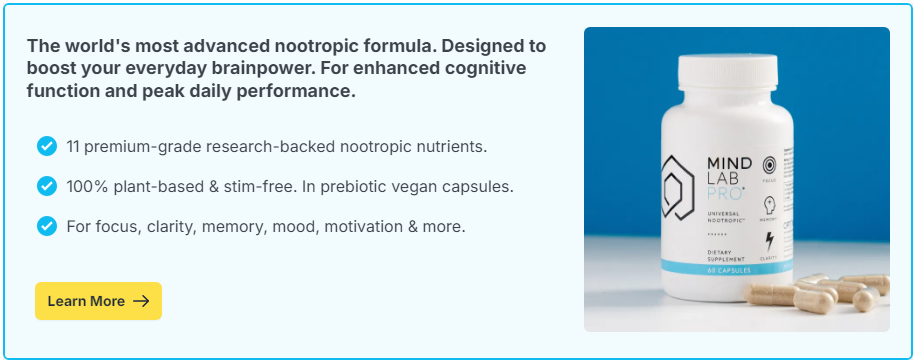
Whatever role brain training apps play in a cognitive health routine, the brain performs best when it is well-nourished at a cellular level. This is where targeted nutritional support becomes relevant. Nootropic brain supplements formulated with ingredients like Bacopa monnieri, which has solid research support for memory consolidation and processing speed, may complement the cognitive goals that brain training apps are pursuing. Lion’s Mane mushroom supports nerve growth factor and the neural connectivity that learning of any kind depends on. Omega-3 fatty acids provide the structural foundation for healthy brain cell membranes, and phosphatidylserine supports efficient neurotransmission. A quality brain supplement does not replace meaningful cognitive challenge, but for those already investing in their brain health through training, movement, and learning, it may help them get more from those efforts. Speak with your healthcare provider to find out what might suit your specific needs.
The Honest Verdict
Brain training apps are not snake oil, but they are not cognitive miracle workers either. The most defensible benefits are task-specific improvement, the value of a consistent mental engagement habit, and meaningful effects in specific populations when the app is well-designed and research-backed. The least defensible claims involve sweeping promises of broad intelligence enhancement or guaranteed dementia prevention.
Used with realistic expectations and in combination with richer forms of cognitive engagement, exercise, good sleep, and strong nutrition, brain training apps can be a worthwhile piece of a larger brain health picture. Just do not expect the app to do all the heavy lifting. Your brain is capable of far more than any game can ask of it.