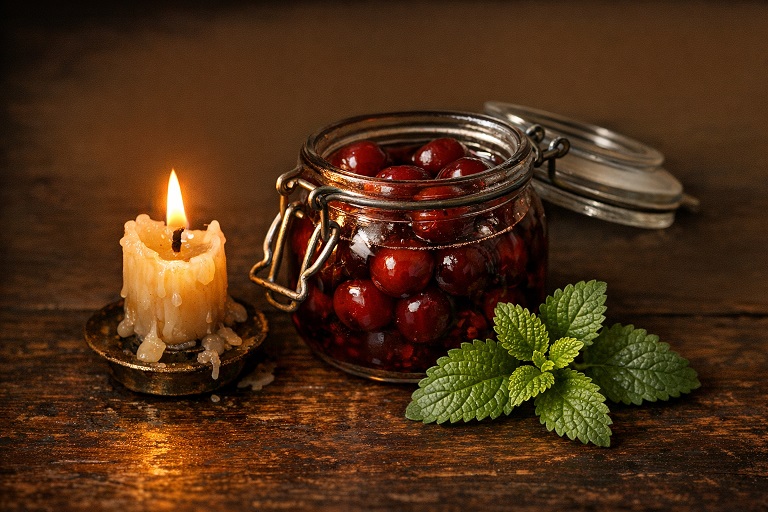
If you asked a hundred people to name a natural sleep aid, you would hear a lot of melatonin, some valerian, maybe chamomile, perhaps lavender oil. Montmorency tart cherry would not make many lists, despite having a more substantial research record than most of the more famous options. It occupies a peculiar position in the natural health world: genuinely well studied, unusually well rounded in its sleep-supporting mechanisms, and almost entirely unknown to the general public that could benefit from it. That gap between evidence and awareness is worth closing.
The Montmorency variety is a specific cultivar of sour cherry, Prunus cerasus, grown primarily in Michigan, Utah, and parts of Oregon in the United States, with significant production in Canada and Europe as well. It is distinct from the sweet cherries most people encounter in fruit bowls or atop ice cream sundaes. The flavor is emphatically tart, which is part of the reason it is more often processed into juice or concentrate than eaten fresh. That tartness is also a hint at the fruit’s unusually concentrated bioactive chemistry, because the same compounds responsible for the intensity of flavor are closely related to the compounds responsible for its remarkable health properties.
What Makes Montmorency Cherry Nutritionally Exceptional
Montmorency tart cherries are not simply cherries with good marketing. They have a genuinely unusual nutritional profile that sets them apart from other fruits and from the sweet cherry varieties that share their common name. Several of the compounds present in this fruit are either rare in the food supply or present in Montmorency cherries at concentrations that substantially exceed what is found in comparable fruits.
Naturally Occurring Melatonin
The presence of naturally occurring melatonin in Montmorency tart cherries was a genuine surprise to researchers when it was first confirmed. Most plant foods do not contain melatonin in meaningful quantities. Montmorency tart cherries contain it in amounts that are detectable in human blood and urine after consumption, confirming that the melatonin in the fruit is bioavailable and reaches circulation where it can exert physiological effects. Research protocols measuring urinary melatonin excretion after tart cherry juice consumption have consistently found significant increases compared to placebo periods, providing direct biochemical evidence that the fruit’s melatonin content is not just analytically present but functionally relevant.
The amount of melatonin delivered by a typical serving of tart cherry concentrate is modest and physiologically proportionate, falling within the range of what the pineal gland naturally produces rather than overshooting into the supraphysiological territory of most commercial melatonin supplements. This alignment with natural production levels is one of the fruit’s most important features for sleep support.
Tryptophan and the Upstream Pathway
Tart cherry also contains L-tryptophan, the essential amino acid that serves as the raw starting material for the body’s own melatonin synthesis. By providing both the hormone itself and the amino acid precursor needed to make more of it, tart cherry supports the melatonin system from two angles simultaneously. The cherry also contains compounds that inhibit indoleamine 2,3-dioxygenase, the enzyme that diverts tryptophan away from serotonin synthesis and toward inflammatory metabolites. This protective effect on the tryptophan pathway means more of the available tryptophan is directed toward serotonin and ultimately melatonin production.
Anthocyanins: The Anti-Inflammatory Powerhouse
The compounds that give Montmorency tart cherries their deep ruby color are anthocyanins, particularly cyanidin-3-glucosylrutinoside and cyanidin-3-rutinoside. Montmorency cherries have been measured as having among the highest anthocyanin concentrations of any commonly consumed fruit, and these compounds are potent anti-inflammatory agents that inhibit the same cyclooxygenase enzymes targeted by nonsteroidal anti-inflammatory medications, though through a gentler and more selective mechanism. The relevance to sleep is direct: chronic low-grade inflammation is one of the most significant and underappreciated disruptors of sleep architecture, reducing time spent in deep slow-wave sleep and increasing nighttime awakenings. An ingredient that meaningfully reduces this inflammatory burden going into the sleep period creates better conditions for restorative sleep regardless of what else is happening biochemically.
What the Clinical Research Has Found
The research on Montmorency tart cherry and sleep is more extensive and more methodologically rigorous than most people expect from a fruit-based intervention, and the results have been replicated across independent research groups using different populations.
The Insomnia Study
A randomized, double-blind, crossover study conducted at Louisiana State University and published in the American Journal of Therapeutics examined older adults with chronic insomnia. Participants consumed Montmorency tart cherry juice concentrate twice daily for two weeks, then crossed over to placebo. During the tart cherry period, total sleep time increased by an average of 84 minutes per night compared to the placebo period, and sleep efficiency, the proportion of time in bed actually spent sleeping, improved significantly. For context, many prescription sleep medications demonstrate improvements in total sleep time of 20 to 45 minutes in comparable trials, making this a substantial and clinically meaningful result from a fruit concentrate.
The Healthy Adult Study
A separate trial from Northumbria University in the United Kingdom examined tart cherry concentrate in healthy adults without diagnosed sleep disorders. Even in this population, participants showed significant improvements in sleep duration and quality during the tart cherry period compared to placebo. Researchers also measured urinary melatonin and an inflammatory marker alongside the sleep outcomes, finding elevated melatonin and reduced inflammation in the tart cherry group. The coincidence of these biochemical changes with the sleep improvements strongly suggests that both the melatonin and the anti-inflammatory mechanisms were contributing to the observed benefits.
Beyond Sleep: The Athletic Recovery Connection
Montmorency tart cherry has also been extensively studied in athletic recovery contexts, and this research base is relevant to sleep in ways that are sometimes overlooked. Exercise-induced inflammation and oxidative stress are significant disruptors of sleep quality in athletes and active individuals. The muscle damage and cytokine elevation that follow strenuous training can degrade sleep architecture in the nights following exercise, creating a frustrating situation where training hard seems to make sleep worse.
Multiple controlled trials have found that tart cherry consumption reduces markers of exercise-induced muscle damage, lowers inflammatory cytokines, decreases delayed onset muscle soreness, and accelerates recovery of strength performance after eccentric exercise. These benefits have been observed in endurance runners, strength athletes, and team sport players. For anyone who trains regularly and has ever noticed that sleep suffers in the nights after particularly hard sessions, tart cherry’s combination of anti-inflammatory, antioxidant, and melatonin-supportive activity makes it an unusually well-matched intervention.
How to Use Montmorency Tart Cherry Effectively
The research protocols that found the strongest sleep benefits used tart cherry concentrate taken twice daily, once in the morning and once one to two hours before bed. The morning dose maintains consistent anthocyanin levels and supports tryptophan availability throughout the day. The evening dose aligns the melatonin and anti-inflammatory activity with the overnight window. Specific products like CherryPURE use a whole-fruit freeze-drying process that concentrates the bioactive compounds of Montmorency tart cherry into a standardized extract, making it practical to achieve research-equivalent potency in a capsule without the sugar content of juice.
The Montmorency cherry is not the flashiest entry in the natural sleep space. It does not benefit from the marketing budgets of mainstream melatonin brands or the celebrity endorsements that drive some supplement categories. What it has instead is a genuinely unusual nutritional profile, a multi-mechanism approach to sleep support, and a clinical research record that holds up to scrutiny. For a sleep aid that has largely stayed below the public radar, that combination is quite an accomplishment.