
The idea that you can eat your way to a sharper brain sounds, on first encounter, a little too convenient to be true. And in the simplified, headline-friendly version of that claim, where a single superfood is credited with reversing cognitive decline, it often is too convenient. But the more nuanced and considerably better-supported version of that claim, the one grounded in decades of nutritional neuroscience rather than marketing copy, is substantially true and increasingly precise in its specificity. Certain foods contain specific molecular compounds that interact with the aging brain through documented mechanisms, reducing neuroinflammation, supporting neuroplastic processes, maintaining the integrity of neural membranes, and protecting the hippocampal and prefrontal structures most vulnerable to age-related change.
Contents
Why Nutrition Matters More for the Aging Brain
The aging brain faces a specific set of challenges that make nutritional support more consequential than at earlier life stages, not because the principles change but because the stakes rise and the compensatory capacity of the system narrows. Neuroinflammation increases as a baseline condition with normal aging, partly through the accumulation of senescent cells that secrete pro-inflammatory cytokines and partly through reduced efficiency of the regulatory mechanisms that normally terminate inflammatory responses. Neuroplasticity declines as BDNF expression and nerve growth factor production diminish. Mitochondrial energy production efficiency in neurons reduces, making the brain’s metabolic demands harder to meet from the same dietary inputs.
The Absorption Challenge After Sixty
Before discussing specific foods, the absorption dimension deserves explicit attention because it changes the calculation significantly. Vitamin B12, essential for myelin maintenance, neurotransmitter synthesis, and the prevention of the homocysteine elevation that is independently associated with cognitive decline, requires adequate stomach acid and intrinsic factor for absorption from food sources. Both decline substantially with age, meaning that older adults who consume adequate B12 from meat, fish, and dairy may still develop functional B12 deficiency because the absorption machinery has deteriorated. Research has estimated that up to thirty percent of adults over sixty have some degree of B12 malabsorption from food sources. Crystalline B12 in supplements, which does not require intrinsic factor, bypasses this absorption limitation.
The Brain-Boosting Foods With the Strongest Evidence
The following foods were selected based on the strength, consistency, and mechanistic specificity of the evidence connecting them to cognitive benefits in older adult populations specifically. General anti-inflammatory or antioxidant claims have been given less weight than studies with cognitive outcomes in human populations, because the translation from biochemical mechanism to actual cognitive benefit is not always straightforward and the aging population research is where the evidence is most directly applicable.
Fatty Fish and the DHA Imperative
For aging adults specifically, the case for regular fatty fish consumption rests on several lines of converging evidence. The Framingham Heart Study found that individuals who consumed fish at least once per week had significantly larger brain volumes across several regions, including the hippocampus, than those who consumed fish rarely, with the effect equivalent to approximately two years of aging in the protective direction. A meta-analysis published in Neurology found that higher omega-3 levels, measured as blood biomarkers rather than dietary recall, were associated with larger brain volumes and better cognitive scores in older adults in dose-dependent fashion.
Berries and the Flavonoid Case
Berries, particularly blueberries, strawberries, and blackberries, contain high concentrations of flavonoid compounds including anthocyanins that have attracted significant research attention for their cognitive effects in aging populations. The Nurses’ Health Study, following over sixteen thousand women over six years, found that higher berry consumption was associated with slower cognitive aging by approximately two and a half years, with the association strongest for blueberries and strawberries. The mechanistic case rests on several well-characterized pathways: flavonoids cross the blood-brain barrier and accumulate in the hippocampus and cortex, where they upregulate BDNF expression, reduce neuroinflammation through suppression of microglial inflammatory activation, and improve cerebrovascular function through nitric oxide-mediated vasodilation.
Nuts and Walnuts in Particular
Nuts as a food category have consistent associations with cognitive health in older adult populations across multiple large observational studies, but walnuts stand out within that category for their specific omega-3 fatty acid content. Walnuts are the only tree nut with significant alpha-linolenic acid, the plant-based omega-3 precursor that the body can partially convert to DHA and EPA, giving them a mechanistic advantage for brain health beyond the general benefits of their polyphenol, vitamin E, and magnesium content. The WAHA trial, a Spanish randomized controlled trial studying walnut consumption in older adults over two years, found that daily walnut consumption slowed cognitive decline in certain subgroups, particularly those who were younger and who had not yet developed cognitive impairment.
Eggs and Choline Delivery
Eggs have undergone considerable nutritional reputation rehabilitation in recent decades, and their specific relevance to brain health in aging adults centers on their exceptional choline content. Choline is the dietary precursor to acetylcholine, the neurotransmitter most directly associated with memory, attention, and cognitive flexibility, and to phosphatidylcholine, the phospholipid that constitutes a significant portion of neuronal cell membranes. Two large eggs provide approximately 250 to 300 milligrams of choline, representing more than half the adequate intake level for adults, and choline insufficiency, which is common in older adults who have reduced egg and meat consumption due to dietary guidance that is now being revisited, produces measurable deficits in cognitive function.
Putting It Together: A Practical Framework
The research does not support a single magic food or a rigid dietary prescription. What it does support is a consistent pattern of food choices that collectively address the multiple distinct mechanisms through which diet influences the aging brain. Fatty fish two to three times per week delivers DHA and EPA. A daily serving or more of leafy greens provides folate, vitamin K, lutein, and nitrates. Regular berry consumption provides flavonoids and BDNF support. Extra virgin olive oil as the primary culinary fat delivers oleocanthal and anti-inflammatory monounsaturated fatty acids. A daily small handful of nuts with walnuts included provides omega-3 precursors, vitamin E, and polyphenols. Eggs several times per week deliver choline. And regular fermented food consumption maintains the microbiome diversity that gut-brain axis health depends on.
This pattern is not a radical dietary departure for most people. It is a recalibration of emphasis within the broad framework of whole-food eating that most nutritional guidance already points toward, with specific attention to the food categories that have the strongest mechanistic and clinical evidence for the aging brain specifically.
Diet and Brain Supplements as Complementary Strategies
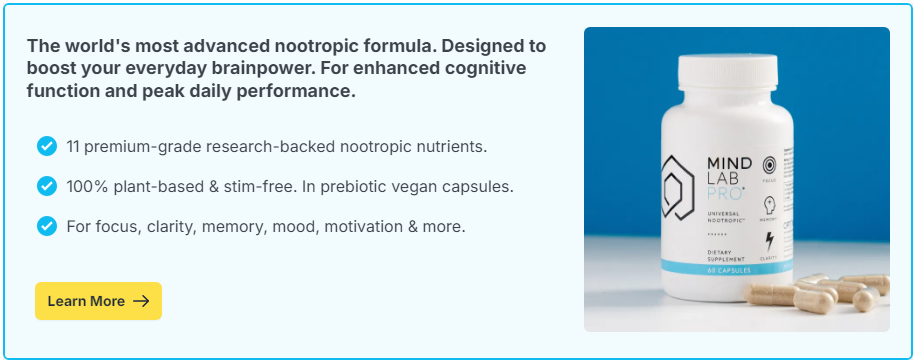
The absorption challenges specific to aging, discussed at the outset, mean that dietary strategy and supplementation strategy are genuinely intertwined for older adults in a way that is less true at earlier life stages. B12 supplementation with the crystalline form that bypasses the intrinsic factor requirement is essentially a necessity for many adults over sixty regardless of dietary adequacy. Vitamin D supplementation addresses the diminished synthesis efficiency that limits sun exposure’s contribution. And a quality brain supplement that includes DHA, bacopa monnieri, lion’s mane mushroom, phosphatidylserine, and citicoline addresses the specific molecular gaps that even the most carefully constructed dietary pattern leaves in the particular neurotransmitter and neuroplastic dimensions of cognitive aging.