The word “stack” comes from the fitness and biohacking world, where it describes a combination of supplements chosen to produce effects that exceed what any single compound delivers. The concept is sound when the compounds involved work through distinct mechanisms toward shared goals. It is less sound when it is just marketing dressed up as biochemistry, which is what most supplement stacks amount to once you look past the labels. The Akkermansia and berberine combination for GLP-1 support is one of the rare cases where the stack concept holds up under scrutiny, not because of branding but because the underlying science is genuinely coherent. A science-based look at it requires working through what each compound does with appropriate rigor and then asking honestly whether the combination is more than the sum of its parts.
The answer this article arrives at is yes, with specificity about why. The mechanisms do not overlap in ways that produce redundancy. The research supporting each individually is meaningful. The biological logic of their combination is grounded in how the GLP-1 production system actually fails in the people most likely to benefit from natural support. And the practical implications of understanding this are clearer than the supplement industry usually manages to communicate.
Contents
The Science of Berberine’s GLP-1 Effects
Berberine’s relationship with GLP-1 is the better established of the two, with a research trail that extends across cell studies, animal models, and multiple human randomized controlled trials. Mapping it systematically reveals a compound whose metabolic effects are more mechanistically grounded than its supplement category reputation typically suggests.
L-Cell Stimulation: The Direct Route
The most immediate GLP-1 mechanism involves berberine’s direct action on intestinal L-cells. These enteroendocrine cells express specific receptors, including bitter taste receptors and bile acid receptors, that berberine activates to trigger GLP-1 secretion. Research in NCI-H716 cells, a human intestinal L-cell model, has confirmed concentration-dependent GLP-1 release in response to berberine exposure. In vivo human studies measuring postprandial GLP-1 concentrations have found meaningfully higher levels in berberine-treated subjects compared to placebo controls, validating that the cell-level mechanism translates to whole-organism effects. The dose-response relationship is consistent with what the cell studies predict, which strengthens confidence in the mechanistic interpretation rather than leaving it as a post-hoc explanation for an observed clinical outcome.
DPP-4 Inhibition: Protecting the Supply
GLP-1’s active lifespan in circulation is measured in minutes, not hours. The enzyme dipeptidyl peptidase-4 cleaves it rapidly after secretion, limiting how much of the produced hormone reaches its receptors in the pancreas, gut wall, and brain before being inactivated. Berberine inhibits DPP-4 activity in a manner documented across both animal and human studies, reducing the rate of GLP-1 degradation and extending its effective window. The clinical significance of this effect sits somewhere between that of dedicated pharmaceutical DPP-4 inhibitors like sitagliptin, which are more potent and longer-acting, and having no DPP-4 inhibition at all. It is a real contribution to the net GLP-1 available for receptor activation, and combined with the increased production from L-cell stimulation, it creates an additive effect on circulating hormone levels that neither mechanism alone would achieve.
AMPK Activation: The Parallel Metabolic Pathway
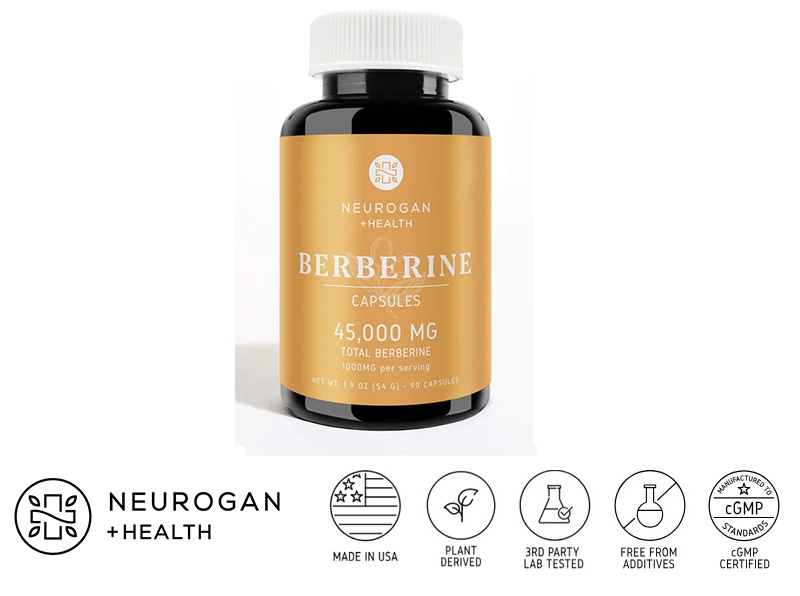
Berberine’s activation of AMP-activated protein kinase runs alongside its GLP-1 effects rather than through them, improving insulin sensitivity in muscle and hepatic tissue, reducing hepatic glucose output, and shifting cellular energy metabolism toward fat oxidation. These AMPK-mediated effects produce metabolic improvements that converge with GLP-1’s outcomes on blood sugar regulation without depending on GLP-1 as an intermediary. In the context of the natural stack, AMPK activation adds a metabolic benefit layer that operates independently of Akkermansia’s mechanisms, broadening the protocol’s reach beyond what either GLP-1-specific pathway produces. The clinical evidence for berberine’s AMPK-mediated metabolic effects is among the most robustly established in the supplement research literature, with head-to-head comparisons to metformin in diabetic populations producing results that have repeatedly surprised researchers expecting the pharmaceutical to dominate.
The Science of Akkermansia’s GLP-1 Effects
Akkermansia’s mechanisms are newer to the research literature and, in some dimensions, less thoroughly characterized in human subjects than berberine’s. What they lack in the volume of clinical trial data they compensate for in mechanistic novelty and the specificity of what they address in the gut biological architecture.
Mucosal Architecture and L-Cell Environment
Akkermansia’s most distinctive scientific contribution is structural. By residing in and continuously maintaining the intestinal mucus layer, it preserves the physical environment in which L-cells operate. The research pathway that established this began with germ-free mouse experiments comparing GLP-1 secretion in animals colonized only with Akkermansia versus animals with no gut bacteria at all. The Akkermansia-colonized animals showed significantly higher GLP-1 secretion in response to glucose, and the mechanistic analysis pointed to improved mucosal integrity and reduced epithelial inflammatory tone as the mediating factors. This is a class of mechanism that no small molecule can replicate because it requires continuous biological maintenance of a physical structure rather than receptor binding or enzyme inhibition. It is the dimension of GLP-1 support that is most distinctly Akkermansia’s and most clearly absent from berberine’s contribution.
The Amuc_1100 Protein: Molecular Precision
The discovery of Amuc_1100 as a primary bioactive component of Akkermansia shifted how researchers think about the bacterium’s mechanism. This outer membrane protein interacts with toll-like receptor 2 on intestinal epithelial cells, improving tight junction function, modulating the local immune environment, and influencing enteroendocrine cell activity. Its activity persists through pasteurization, which explains the pivotal finding from the 2019 Nature Medicine trial that pasteurized Akkermansia produced metabolic benefits in humans comparable to live bacteria. From a scientific standpoint, identifying a specific protein mediator of a probiotic’s metabolic effects is unusual and significant. It provides a molecular target for understanding and potentially amplifying Akkermansia’s benefits, and it grounds the bacterium’s metabolic effects in a level of mechanistic specificity that most probiotics cannot claim.
Ecological Cross-Feeding and SCFA Amplification
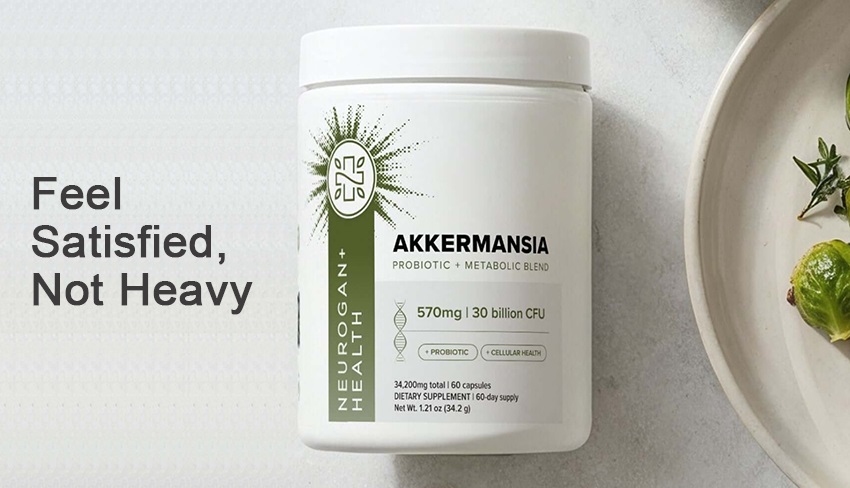
Akkermansia does not produce butyrate directly, but its fermentation of mucin releases acetate and other short-chain intermediates that serve as cross-feeding substrates for butyrate-producing bacteria including Faecalibacterium prausnitzii and Roseburia intestinalis. This ecological relationship means Akkermansia’s contribution to the SCFA-mediated GLP-1 stimulation pathway is broader than its own direct fermentation products would suggest. By supporting the metabolic activity of butyrate producers that directly stimulate L-cells, Akkermansia functions as an upstream enabler of a GLP-1-supporting fermentation cascade that compounds its individual metabolic contribution. Research examining this cross-feeding network has found that Akkermansia abundance correlates positively with butyrate-producing bacterial populations in ways consistent with an ecologically enabling rather than merely competitive relationship.
Where the Science Supports Combination: The Stack Evaluated
A science-based evaluation of the stack requires identifying where the mechanisms genuinely add to each other rather than simply asserting that two good things must be better than one. Three specific zones of mechanistic complementarity are supported by the research.
Chemical Stimulation Plus Structural Support
Berberine chemically stimulates L-cells and inhibits GLP-1 degradation. Akkermansia maintains the structural environment those L-cells inhabit. These are not competing approaches to the same problem. They are sequential conditions: the structural environment determines the baseline capacity of L-cells to respond to chemical stimulation, and the chemical stimulation operates within whatever capacity the structural environment allows. A gut with depleted Akkermansia has L-cells with reduced baseline secretory function, meaning berberine’s direct stimulatory signals arrive in a system running below capacity. Restoring Akkermansia raises the ceiling within which berberine’s stimulation operates. The combined effect is a GLP-1 output that reflects both more responsive L-cells and more effective chemical activation of those cells, which is a genuinely additive relationship rather than a redundant one.
Two Distinct Anti-Inflammatory Pathways
Systemic metabolic inflammation is among the most important suppressors of GLP-1 activity, impairing both L-cell function and the downstream effectiveness of GLP-1’s actions on insulin signaling and appetite regulation. Berberine reduces this inflammation primarily through AMPK activation and microbiome remodeling that shifts the gut bacterial community toward less proinflammatory compositions. Akkermansia reduces it primarily by closing the gut barrier breach that allows lipopolysaccharide translocation into systemic circulation in the first place. Addressing inflammation from the inside out, which is berberine’s approach, and from the barrier inward, which is Akkermansia’s approach, produces broader and more durable anti-inflammatory coverage than either pathway alone. The clinical literature on berberine and on Akkermansia both document reductions in circulating inflammatory markers, and the mechanisms behind those reductions are distinct enough that the combination should produce additive effects on systemic inflammatory tone.
Frequently Asked Questions
How Confident Can Someone Be That Berberine and Akkermansia Together Produce More GLP-1 Than Either Alone?
The mechanistic case for additive GLP-1 support is scientifically coherent: berberine stimulates L-cells and inhibits GLP-1 degradation while Akkermansia maintains the structural environment those L-cells depend on. However, the absence of dedicated human combination trials means confidence is based on biological reasoning from individual evidence rather than direct measurement of the combination’s GLP-1 output. The mechanisms are genuinely distinct, which is necessary for true additivity, but whether the predicted additive effects materialize precisely as the reasoning suggests awaits combination trial data to confirm.
Does the Order in Which You Take the Two Supplements Each Day Matter?
Berberine is best taken with or just before meals to align its direct L-cell stimulation and DPP-4 inhibition with the postprandial GLP-1 window, typically two to three times daily. Pasteurized Akkermansia is generally taken once daily, and the research has not established a clear superiority for any specific timing relative to meals. The two supplements do not need to be taken simultaneously, and their mechanisms do not interact in real time, so taking berberine before meals and Akkermansia at a separate consistent daily time is a practical approach that respects the optimal conditions for each without creating scheduling complexity.
Are There Any Known Pharmacological Interactions Between Berberine and Akkermansia?
No direct pharmacological interactions between berberine and Akkermansia have been identified in the research literature. Berberine is a bioactive small molecule that affects enzymatic activity and cellular signaling; Akkermansia is a bacterium that operates through structural and ecological mechanisms. They are different classes of intervention without the kind of shared metabolic pathways that typically create pharmacological interactions. The interaction concerns with berberine are with pharmaceutical medications, particularly those affecting blood sugar and blood pressure, rather than with probiotic bacteria.