
Among the trillions of microorganisms that call your gut home, one has been generating more scientific excitement than almost any other over the past decade. Akkermansia muciniphila, a bacterium that lives in the mucus layer lining your intestinal wall, has moved from relative obscurity to the center of metabolic health research in a remarkably short time. The reason, increasingly, is its relationship with GLP-1, the hormone that governs blood sugar regulation, appetite, and metabolic efficiency in ways researchers are still working to fully characterize.
Understanding what Akkermansia actually does, how it connects to GLP-1, and what the science currently supports about supplementing with it puts you in a much better position to evaluate whether it belongs in a conversation about your own metabolic health. The story is newer and in some ways more complex than the berberine narrative, which makes it worth approaching with both genuine curiosity and appropriate scientific humility.
Contents
What Akkermansia Muciniphila Is and Why It Matters
Akkermansia muciniphila is a gram-negative anaerobic bacterium, meaning it lives without oxygen, discovered in 2004 by Dutch microbiologist Muriel Derrien. Its name comes from the environment it inhabits: the mucus layer of the intestinal wall, with “muciniphila” translating roughly as “mucus-loving.” This habitat is not incidental to its metabolic effects. The mucus layer is the interface between the gut’s microbial world and the immune and endocrine cells embedded in the intestinal lining, including the L-cells responsible for GLP-1 secretion.
In healthy adults, Akkermansia typically comprises one to four percent of the gut microbiome. That relatively small proportion belies an outsized influence on gut integrity and metabolic signaling. Research across numerous populations has consistently found that people with obesity, type 2 diabetes, metabolic syndrome, and inflammatory bowel conditions have significantly lower Akkermansia abundance than metabolically healthy individuals. Whether depleted Akkermansia causes these conditions or results from them remains an active area of investigation, but the correlation is robust enough that researchers have spent considerable resources trying to understand, and harness, the bacterium’s apparent protective effects.
Akkermansia’s Unique Ecological Role
What makes Akkermansia particularly interesting from an ecological standpoint is that it feeds on mucin, the glycoprotein that constitutes the mucus layer it inhabits. This sounds counterintuitive at first: a bacterium that eats the very structure it lives in. But this feeding relationship is symbiotic rather than destructive. By degrading and recycling mucin, Akkermansia stimulates the intestinal cells to produce more of it, maintaining and even thickening the mucus layer rather than depleting it. A robust mucus layer means a more intact gut barrier, less translocation of bacterial components into the bloodstream, and a quieter systemic inflammatory environment. Each of those outcomes has downstream consequences for metabolic health and GLP-1 signaling.
The Abundance Problem in Modern Life
Akkermansia abundance is sensitive to several features of modern life that have become nearly universal. High-fat, low-fiber diets reduce it significantly. Antibiotic exposure disrupts it. Chronic stress and sleep disruption lower it. Sedentary behavior is associated with reduced levels compared to physically active populations. The result is that many people in industrialized populations are carrying substantially less Akkermansia than their gut microbiome would ideally support, creating a deficit in one of the microbiome’s key metabolic regulators at the exact moment that metabolic conditions like prediabetes and obesity have reached epidemic scale. That convergence is part of what has made Akkermansia supplementation so compelling a research and commercial proposition.
How Akkermansia Supports GLP-1 Production
The connection between Akkermansia and GLP-1 runs through several biological pathways, some more directly established than others. Taken together, they describe a bacterium that influences the GLP-1 production system through its effects on gut barrier integrity, local inflammatory signaling, endocannabinoid tone, and the chemical environment surrounding the L-cells that release the hormone.
Gut Barrier Integrity and Endocrine Cell Function
The intestinal epithelium, the single-cell-thick lining of the gut wall, contains the L-cells that secrete GLP-1 in response to nutrients. The integrity of this epithelium depends substantially on the health of the mucus layer above it, which Akkermansia actively maintains. When the mucus layer is thin or disrupted, bacterial lipopolysaccharides and other microbial components can cross the gut barrier into the bloodstream, triggering systemic low-grade inflammation. This inflammatory state impairs L-cell function, reducing GLP-1 secretion in response to food. By maintaining mucosal integrity, Akkermansia preserves the environment in which L-cells can respond normally to nutritional stimuli, supporting baseline GLP-1 output in a way that is indirect but physiologically meaningful.
Short-Chain Fatty Acids and L-Cell Stimulation
Akkermansia’s fermentation of mucin and its metabolic interactions with other gut bacteria contribute to the local production of short-chain fatty acids, particularly propionate and butyrate. These compounds act as direct stimulants to intestinal L-cells, binding to free fatty acid receptors on their surface and triggering GLP-1 secretion. This is the same mechanism through which dietary fiber supports GLP-1 production, channeled through the microbial activity that Akkermansia both participates in and facilitates. Studies in animal models have demonstrated that restoring Akkermansia levels in depleted microbiomes increases colonic SCFA production and elevates GLP-1 secretion, though the translation of precise SCFA-mediated effects to human supplementation studies is still being established.
The Endocannabinoid Connection
One of the more surprising pathways through which Akkermansia influences metabolic health involves the endocannabinoid system, the same signaling network that cannabis compounds interact with. Research led by Patrice Cani’s group at the Universite Catholique de Louvain found that Akkermansia increases the gut’s production of endocannabinoids, particularly 2-arachidonoylglycerol, which help regulate gut barrier permeability, reduce inflammation, and modulate the activity of enteroendocrine cells including GLP-1-producing L-cells. This pathway adds a layer of sophistication to the Akkermansia-GLP-1 relationship that extends well beyond simple nutrient signaling and points toward a broader role in gut-brain metabolic communication.
What the Clinical Evidence Currently Shows
Akkermansia research has moved faster than most probiotic science, partly because the mechanistic findings in animal models were compelling enough to attract serious clinical investment. The human evidence is younger and more limited than the animal literature, but several landmark studies have established a meaningful foundation.
The Plovier and Cani Human Trial
A pivotal 2019 study published in Nature Medicine by Plovier, Cani, and colleagues was the first randomized, double-blind, placebo-controlled trial of Akkermansia supplementation in humans. Overweight and obese adults with metabolic syndrome received either live Akkermansia, pasteurized Akkermansia, or a placebo for three months. The pasteurized form, which retains the bacterium’s outer membrane proteins including the metabolically active Amuc_1100 protein, produced significant improvements in insulin sensitivity, reduced circulating lipopolysaccharides indicating a healthier gut barrier, and favorable changes in cholesterol levels. Notably, the pasteurized form outperformed the live bacteria, a finding that pointed toward specific bacterial proteins rather than microbial colonization as the primary active agents.
GLP-1 in the Clinical Picture
Direct measurement of GLP-1 as a primary endpoint has been less common in Akkermansia human trials than in berberine research, partly because the field is younger and partly because GLP-1 measurement is technically demanding. However, the improvements in insulin sensitivity and glucose metabolism documented in human trials are consistent with what enhanced GLP-1 signaling would produce, and animal studies measuring GLP-1 directly have shown meaningful elevations following Akkermansia administration. Connecting these dots requires some inferential reasoning, which the research community is actively working to replace with direct human measurement data in ongoing and upcoming trials.
Supplementing with Akkermansia: What to Know
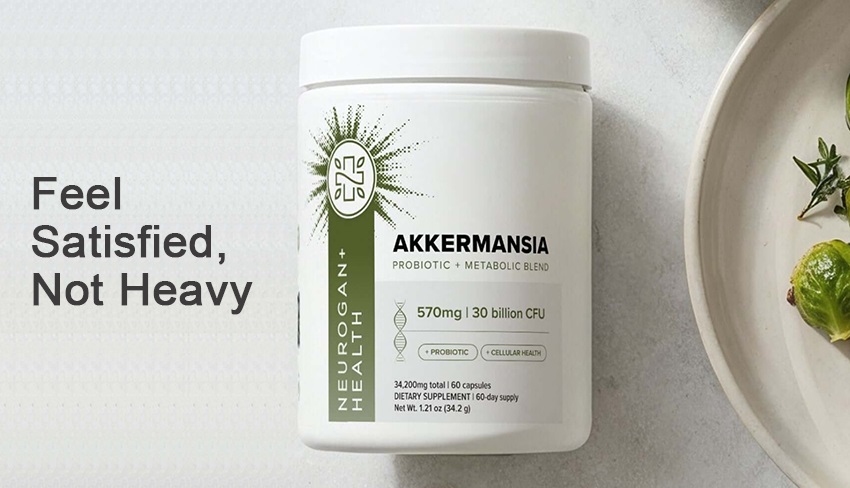
Akkermansia muciniphila is now available as a dietary supplement, primarily in pasteurized form following the evidence suggesting this preparation is at least as effective as, and potentially more effective than, live bacteria. This is a relatively recent commercial development, and the supplementation landscape is still maturing in terms of product quality standards and dosing consensus.
Most available supplements use a pasteurized preparation standardized to a specific count of bacterial cells per dose, typically in the range of ten billion to one hundred billion, taken once daily. Supporting Akkermansia through diet is also worth considering alongside supplementation: polyphenol-rich foods like pomegranate, cranberry, and green tea have been shown to promote Akkermansia growth, as has dietary fiber that feeds the broader microbial ecosystem the bacterium depends on. Akkermansia is sensitive to many antibiotics, so supplementing during or after antibiotic courses warrants particular attention.
Frequently Asked Questions
What Is Akkermansia Muciniphila and Where Does It Come From?
Akkermansia muciniphila is a naturally occurring bacterium that inhabits the mucus layer of the human intestinal wall. It is part of the normal human gut microbiome, typically comprising one to four percent of total gut bacteria in healthy adults. It can be supported through diet, particularly through polyphenol-rich foods and dietary fiber, and is now available as a dietary supplement in pasteurized form.
How Does Akkermansia Connect to GLP-1 Specifically?
Akkermansia supports GLP-1 production through several pathways: it maintains gut barrier integrity that preserves normal L-cell function, contributes to short-chain fatty acid production that directly stimulates L-cells to release GLP-1, and modulates the endocannabinoid system in ways that influence enteroendocrine cell activity. These mechanisms work together rather than in isolation, which is part of what makes Akkermansia’s metabolic influence broader than a single hormonal effect.
Is Pasteurized Akkermansia Better Than Live Akkermansia?
The 2019 Nature Medicine human trial found that pasteurized Akkermansia produced metabolic benefits at least equal to, and in some measures greater than, live bacteria. This is attributed to specific outer membrane proteins, particularly Amuc_1100, that remain active after pasteurization and appear to be primary drivers of Akkermansia’s metabolic effects. Pasteurization also simplifies storage and handling. Most commercially available Akkermansia supplements use the pasteurized form on this basis.
How Long Does It Take for Akkermansia Supplementation to Produce Metabolic Effects?
The pivotal human trial used a three-month supplementation period, and most of the meaningful metabolic improvements were measured at that endpoint. As with any gut microbiome intervention, effects develop gradually as the microbial and endocrine environment shifts. Expecting significant measurable changes before eight to twelve weeks of consistent supplementation is likely premature, and evaluating outcomes against concrete metabolic markers rather than subjective impressions produces more reliable information.