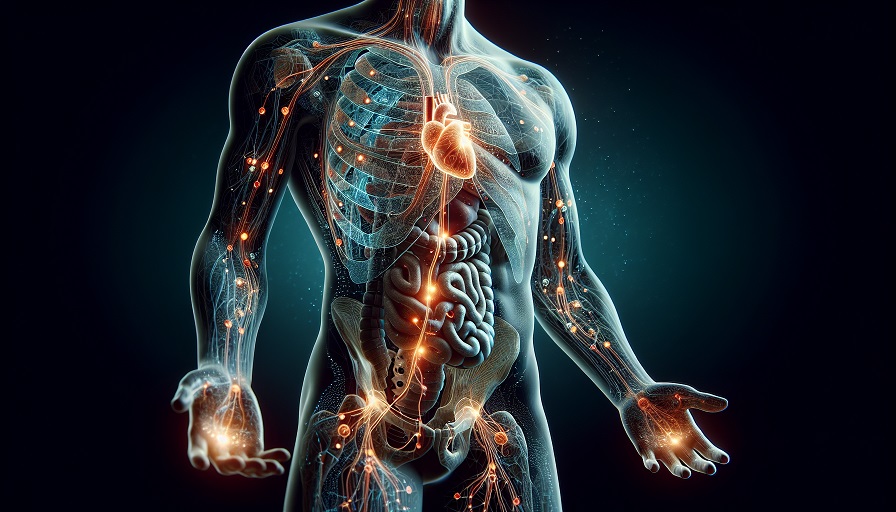
The idea that something living in your gut could meaningfully influence a hormone that governs appetite, blood sugar, and metabolic health sounds like the kind of thing that belongs in a science fiction novel. And yet that is precisely what a growing body of research suggests about Akkermansia muciniphila and its relationship with GLP-1. The more scientists have looked at how this particular gut bacterium interacts with the intestinal endocrine system, the more the connection has held up, in animal models, in human observational studies, and increasingly in controlled clinical trials.
What’s especially interesting about this story is that it isn’t about taking a pill and waiting for something external to fix a problem. Supporting Akkermansia is fundamentally about creating the internal conditions under which your gut’s own GLP-1 production system can function the way it was designed to. That framing changes how you think about the intervention, and it changes what a realistic, well-informed approach to it actually looks like.
Contents
The Link Between Akkermansia Abundance and GLP-1 Activity
The relationship between Akkermansia and GLP-1 didn’t emerge from a single eureka moment in a lab. It developed gradually as researchers examining the gut microbiomes of people with metabolic conditions kept finding the same pattern: lower Akkermansia abundance consistently accompanied the impaired GLP-1 secretion and insulin resistance that characterize those conditions. That correlation triggered a more fundamental question. Was Akkermansia depletion contributing to impaired GLP-1 production, or were both simply symptoms of the same underlying metabolic dysfunction?
The answer, assembled from animal intervention studies and increasingly from human trials, points toward causality running in both directions. Metabolic dysfunction depletes Akkermansia, and depleted Akkermansia worsens metabolic function partly by impairing the gut environment that supports healthy GLP-1 secretion. It is a feedback loop, which means breaking it by supporting Akkermansia creates ripple effects that extend well beyond what you’d expect from restoring a single bacterial strain.
What Happens in the Gut When Akkermansia Is Low
When Akkermansia abundance falls, the mucus layer it inhabits and maintains begins to thin. A thinner mucus layer compromises the integrity of the intestinal epithelium, the single-cell-thick wall that separates the gut’s microbial contents from the rest of the body. Bacterial lipopolysaccharides and other inflammatory compounds cross more easily into systemic circulation, triggering a state of chronic low-grade inflammation that researchers call metabolic endotoxemia. This inflammatory state directly impairs the function of intestinal L-cells, reducing their responsiveness to food-derived nutrient signals and suppressing GLP-1 secretion in ways that compound the blood sugar dysregulation already underway.
Simultaneously, the short-chain fatty acids that depend partly on Akkermansia’s metabolic activity for their production begin to decline. Butyrate and propionate, which act as direct chemical signals to L-cells and prompt GLP-1 release, become less abundant in the colonic environment. The L-cells are receiving fewer stimulatory signals from below and operating in a more inflammatory microenvironment from above. The predictable result is a GLP-1 production system running well below its capacity, at exactly the moment metabolic regulation needs it most.
Restoring Akkermansia, Restoring the Signal
Intervention studies that restore Akkermansia in depleted microbiomes, whether through direct supplementation, dietary strategies, or fecal microbiota transplantation in animal models, consistently reverse these downstream effects. The mucus layer thickens. Gut barrier integrity improves. Metabolic endotoxemia subsides. Short-chain fatty acid production recovers. And GLP-1 secretion, measured either directly or through its downstream effects on insulin sensitivity and glucose metabolism, rises to levels more consistent with healthy metabolic function. That chain of events, from bacterium to mucus to barrier to endocrine cell to hormone, is the biological story of how supporting Akkermansia naturally raises GLP-1.
The Three Pathways That Connect Akkermansia to GLP-1
The relationship between Akkermansia and GLP-1 runs through several distinct biological channels, each of which adds a layer of understanding to why this particular bacterium has such outsized influence on metabolic hormone production relative to its modest share of the total gut microbiome.
The Mucosal Integrity Pathway
Akkermansia’s most fundamental contribution to GLP-1 support is structural rather than chemical. By feeding on and continuously stimulating the renewal of the intestinal mucus layer, it maintains the physical environment in which L-cells function normally. A healthy mucus layer means a lower inflammatory tone in the gut epithelium, which means L-cells that respond more robustly to the nutrient signals that trigger GLP-1 release. Studies in germ-free mice colonized with Akkermansia alone, compared to mice with no gut bacteria at all, have shown significant increases in GLP-1 secretion alongside measurable improvements in mucus layer thickness, providing some of the clearest experimental evidence for this pathway.
The Short-Chain Fatty Acid Pathway
Akkermansia participates in the gut’s short-chain fatty acid economy in two ways. It produces acetate directly through mucin fermentation, and it cross-feeds other SCFA-producing bacteria by releasing fermentation products those bacteria can use as substrate. The result is a local chemical environment around the colonic L-cells that is richer in propionate and butyrate, both of which bind to free fatty acid receptors on L-cell surfaces and directly stimulate GLP-1 secretion. This pathway explains in part why dietary fiber, which feeds the broader SCFA-producing microbial community Akkermansia supports, amplifies the GLP-1 benefits of Akkermansia abundance. The bacterium and the diet work through overlapping mechanisms toward the same hormonal outcome.
The Protein-Mediated Pathway
Perhaps the most scientifically distinctive element of Akkermansia’s mechanism involves a specific outer membrane protein called Amuc_1100. This protein, which remains active even when the bacterium is pasteurized, interacts with toll-like receptor 2 on intestinal epithelial cells in ways that improve gut barrier function, reduce inflammatory signaling, and appear to influence enteroendocrine cell activity including GLP-1 secretion. The discovery of Amuc_1100 as a primary active agent was significant for two reasons: it explained why pasteurized Akkermansia produced metabolic benefits comparable to live bacteria in human trials, and it opened a pathway toward more targeted interventions based on specific bacterial proteins rather than whole organism supplementation. Research on Amuc_1100 as an independent therapeutic agent is an active frontier in this space.
Practical Ways to Support Akkermansia in Your Gut
Understanding the mechanisms is genuinely useful, but most people reading about Akkermansia eventually arrive at the same practical question: what can I actually do about this? The answer involves both supplementation and dietary strategies that work through the same biological logic.
Supplementation with Pasteurized Akkermansia
Pasteurized Akkermansia muciniphila is available as a dietary supplement, and the human clinical evidence, while still accumulating, is encouraging enough to make it a scientifically credible option. The landmark 2019 Nature Medicine trial used a daily dose standardized to ten billion bacterial equivalents of pasteurized Akkermansia over three months, producing improvements in insulin sensitivity, gut barrier markers, and cholesterol levels in overweight and obese adults with metabolic syndrome. Supplements available commercially generally use similar dosing parameters, though product quality and standardization vary and third-party testing verification is worth looking for when choosing a brand.
Dietary Polyphenols: Akkermansia’s Preferred Food Source
One of the more actionable findings in Akkermansia research is that specific dietary polyphenols consistently promote its growth in the gut. Pomegranate extract and ellagic acid are among the most studied, with multiple trials showing significant increases in Akkermansia abundance following supplementation or regular dietary intake. Cranberry polyphenols, grape seed extract, green tea catechins, and the polyphenols in dark chocolate and red wine have also shown Akkermansia-promoting effects in human and animal studies. The mechanism involves polyphenols reaching the colon relatively undigested, where Akkermansia and other bacteria metabolize them into compounds that happen to favor Akkermansia’s competitive position in the microbial ecosystem.
Frequently Asked Questions
How Quickly Does Supporting Akkermansia Raise GLP-1 Levels?
The timeline depends on the approach used and the individual’s starting microbiome state. Dietary changes promoting Akkermansia growth tend to produce measurable shifts in gut bacterial composition within two to four weeks, though the downstream effects on GLP-1 secretion and metabolic markers develop more gradually over eight to twelve weeks. Direct supplementation with pasteurized Akkermansia may produce more immediate effects on gut barrier integrity, with metabolic improvements accumulating over a similar multi-week timeline.
Can You Have Too Much Akkermansia in Your Gut?
Akkermansia at very high relative abundances has been observed in some contexts, including certain inflammatory bowel conditions, though researchers debate whether high levels are causative or simply correlative in those cases. In the context of metabolic health and supplementation within clinically studied dose ranges, excess Akkermansia has not been identified as a concern. The therapeutic window for supplementation appears comfortably within safe parameters based on current evidence, though as with all supplementation, medical guidance is appropriate for people with existing gut conditions.
Does Akkermansia Supplementation Work If Your Diet Is Poor?
Akkermansia supplementation can produce benefits independently of diet, as demonstrated in clinical trials where dietary intervention was not a study variable. However, a diet high in ultra-processed foods, low in fiber, and rich in emulsifiers disrupts the gut environment in ways that work against Akkermansia’s ability to establish and maintain its metabolic influence. Supplementing Akkermansia while eating a diet that actively suppresses it is working against yourself. The two interventions reinforce each other most effectively when diet provides the substrate and environment in which Akkermansia can thrive.
Is Akkermansia Safe for People with Irritable Bowel Syndrome or Inflammatory Bowel Disease?
People with irritable bowel syndrome or inflammatory bowel disease should consult a gastroenterologist before supplementing with Akkermansia. While Akkermansia is generally associated with gut health benefits in metabolically compromised populations, the microbiome dynamics in IBD are complex and sometimes counterintuitive. The safety and appropriateness of Akkermansia supplementation in these specific populations requires individual medical evaluation rather than general guidance.