
There is a principle in pharmacology called combination therapy, and it exists for a straightforward reason: when two agents address the same clinical problem through entirely different mechanisms, using them together tends to produce better outcomes than either one produces alone. The principle applies whether you are talking about blood pressure medications, cancer treatments, or, as an emerging body of research suggests, natural strategies for supporting GLP-1 production and metabolic health. Berberine and Akkermansia muciniphila are not interchangeable options in the natural GLP-1 space. They are complementary tools that work on different levels of the same biological system, and understanding why they fit together so logically is the most useful thing anyone serious about metabolic health through natural means can do right now.
Contents
Two Supplements, Two Distinct Biological Levels
The most important thing to understand about the berberine-Akkermansia combination is that these two interventions do not duplicate each other. They operate at different levels of the gut’s biological architecture, targeting different components of the GLP-1 production and activity system with minimal mechanistic overlap. That distinction is what makes their combination coherent rather than redundant.
What Berberine Brings to the Protocol
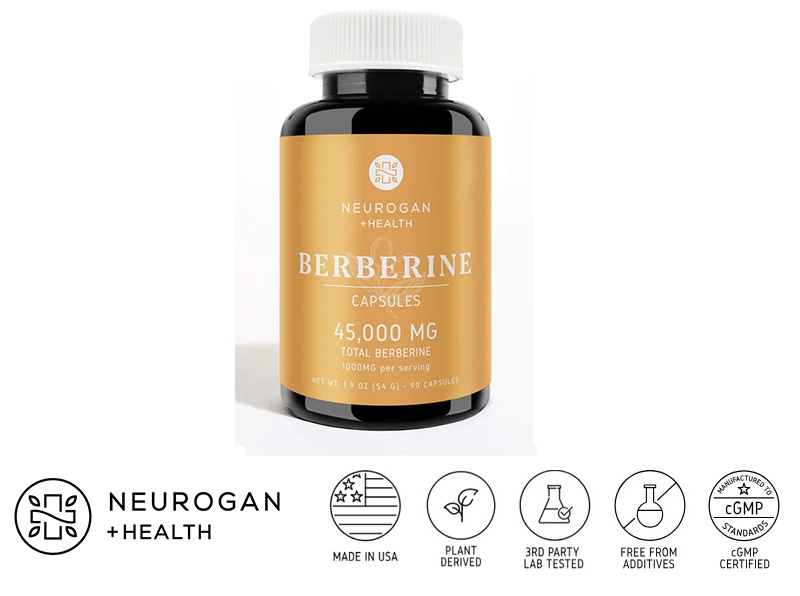
Berberine is a small alkaloid molecule that enters gut cells and acts directly on the molecular machinery of metabolism. Its primary GLP-1-related actions are chemical and enzymatic: it activates receptors on intestinal L-cells that trigger GLP-1 secretion directly, inhibits the DPP-4 enzyme that breaks GLP-1 down within minutes of its release, and activates AMPK, the cellular energy sensor that improves insulin sensitivity and metabolic efficiency across multiple tissue types. These effects are relatively fast-acting by supplement standards, with measurable changes in postprandial GLP-1 concentrations documented in clinical studies within weeks of starting supplementation.
Berberine also reshapes the gut microbiome over longer timeframes, selectively reducing metabolically unfavorable bacterial populations while promoting strains that produce GLP-1-stimulating short-chain fatty acids. This microbiome-modulating effect overlaps with Akkermansia’s territory, but it arrives through a different mechanism, berberine’s selective antimicrobial properties rather than the structural mucus-layer maintenance that Akkermansia provides. The overlap is modest and the directions are aligned, making the combination additive rather than redundant in this dimension as well.
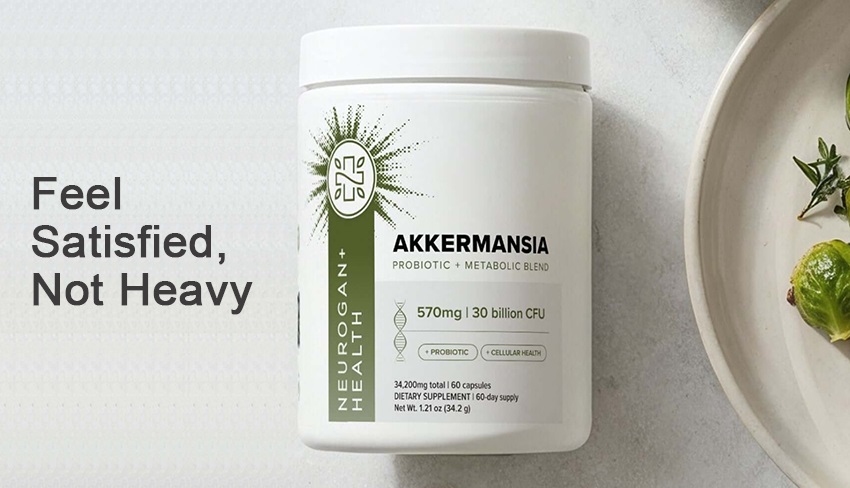
What Akkermansia Brings to the Protocol
Akkermansia muciniphila works at the architectural level of the gut, in ways that no small molecule can replicate. Its residence in the intestinal mucus layer and its continuous stimulation of mucin renewal maintains the physical environment in which GLP-1-producing L-cells are embedded and from which they release hormone into circulation. This structural contribution to L-cell function is entirely absent from berberine’s mechanism. A gut with depleted Akkermansia is a gut whose L-cells are operating in a more inflamed, less structurally supported environment, regardless of how much berberine is present to chemically stimulate those cells. Akkermansia addresses the underlying habitat quality; berberine addresses the chemical signals within that habitat.
Akkermansia’s outer membrane protein Amuc_1100 provides an additional layer of gut barrier improvement and enteroendocrine modulation that is specifically protein-mediated and structurally distinct from anything berberine produces. The cross-feeding relationships Akkermansia maintains with SCFA-producing bacteria add yet another dimension of GLP-1 support that complements rather than replicates berberine’s direct DPP-4 inhibition and L-cell stimulation. Where berberine is working on the chemistry of GLP-1 production and preservation, Akkermansia is maintaining the biological infrastructure that makes that production possible in the first place.
Why the Combination Addresses More of the GLP-1 Problem
People whose GLP-1 production is struggling typically have multiple concurrent deficits rather than a single isolated failure. The intestinal environment that impairs GLP-1 secretion is usually one in which the mucus layer is thin, the gut barrier is leaky, inflammation is elevated, DPP-4 is cleaving whatever GLP-1 gets produced, the SCFA signals that should stimulate L-cells are diminished, and the L-cells themselves are operating below their secretory potential. No single intervention addresses all of those problems simultaneously. Berberine addresses the enzymatic and signaling failures. Akkermansia addresses the structural and architectural failures. Together they cover the territory that is left exposed when either one is used alone.
The Inflammation Loop That Both Target
One of the most clinically significant points of convergence between berberine and Akkermansia is their shared effect on gut-derived inflammation, though through distinct mechanisms. Akkermansia reduces metabolic endotoxemia by maintaining the gut barrier that prevents bacterial lipopolysaccharides from crossing into systemic circulation. Berberine reduces inflammation through its AMPK-activating and microbiome-remodeling effects, which shift the gut bacterial community away from populations that produce proinflammatory compounds. Both interventions reduce the systemic inflammatory tone that impairs insulin signaling, suppresses L-cell function, and degrades the hypothalamic sensitivity to GLP-1’s satiety signals. Addressing inflammation from two mechanistically distinct directions produces more complete anti-inflammatory coverage than either approach provides on its own, and the metabolic benefits of reduced inflammation compound across every dimension of GLP-1 activity.
The SCFA Synergy
Short-chain fatty acids are a convergence point where the two supplements work in parallel rather than in sequence. Berberine promotes SCFA-producing bacterial strains through its selective microbiome-remodeling effects. Akkermansia supports the microbial community that produces SCFAs through cross-feeding relationships from its mucin fermentation activity. Both interventions push the gut’s fermentative ecology in the same direction: toward higher SCFA output and greater L-cell stimulation. The combined effect on colonic SCFA concentrations, and therefore on the chemical signals reaching GLP-1-producing L-cells, is likely more pronounced than what either intervention produces independently. This particular synergy does not require the two compounds to interact directly. It emerges from their parallel effects on the same microbial community, which is the cleanest kind of combination benefit from a safety perspective.
Building the Protocol: Practical Considerations
Understanding why berberine and Akkermansia work better together is the theoretical foundation. Putting that understanding into practice requires thinking about timing, dosing, sequencing, and the dietary context that makes both interventions more effective.
Dosing and Timing for Each Supplement
Berberine’s clinical research uses doses of 1,000 to 1,500 mg daily divided across two or three meals, taken with or just before eating to align its direct L-cell stimulation and DPP-4 inhibition with the postprandial window when GLP-1 activity is most relevant. This timing is meaningful and worth following in a combination protocol for the same reasons it matters when using berberine alone.
Pasteurized Akkermansia supplementation is typically taken once daily, with the dose standardized to the bacterial equivalent count used in the 2019 Nature Medicine trial, around ten billion bacterial equivalents. Some practitioners suggest taking it on an empty stomach to maximize mucosal contact time, though the research has not established a clear superiority for any specific timing relative to meals. Consistency over a minimum evaluation period of eight to twelve weeks matters more than precise timing for Akkermansia, given that its structural and microbiome-level effects develop gradually over weeks rather than hours.
Frequently Asked Questions
Is There Any Research Specifically Testing Berberine and Akkermansia Together?
Dedicated clinical trials examining the berberine-Akkermansia combination as a protocol for GLP-1 support have not yet been published. The case for combining them rests on the well-established mechanisms of each supplement individually and on the biological logic of their complementarity rather than on head-to-head combination trial data. This is an active area of research interest, and combination studies are a natural next step as both supplements accumulate individual clinical evidence. Practitioners who have begun combining them in clinical settings are building observational experience that will eventually contribute to the formal evidence base.
Which Supplement Should Someone Start with Before Adding the Other?
Berberine has a larger and longer-established clinical evidence base and more predictable early effects on blood sugar and GLP-1 markers, making it a reasonable starting point for people new to both. Beginning with berberine for four to six weeks before adding Akkermansia allows individual assessment of each supplement’s contribution and makes it easier to attribute any gastrointestinal adjustment effects to the right intervention. That said, starting both simultaneously is also a reasonable approach for people comfortable with managing a multi-supplement protocol from the outset.
Can the Berberine-Akkermansia Combination Replace Pharmaceutical GLP-1 Therapy?
No. The combination produces more complete natural GLP-1 support than either supplement alone, but it operates through the body’s own production system rather than through direct pharmacological receptor activation. The magnitude of GLP-1 pathway engagement remains substantially smaller than pharmaceutical GLP-1 receptor agonists produce. For people with significant metabolic disease requiring aggressive intervention, the combination is a complement to, not a substitute for, medical care. For those managing milder metabolic concerns or seeking natural support alongside lifestyle measures, it represents a more comprehensive approach than single-supplement strategies.
How Long Before the Combined Protocol Produces Noticeable Effects?
Berberine’s direct GLP-1-stimulating and DPP-4-inhibiting effects begin contributing within the first few weeks. Akkermansia’s structural benefits to gut barrier integrity develop over a similar early window, while its deeper microbiome-remodeling contributions take eight to twelve weeks to fully manifest. The combination’s most meaningful metabolic outcomes, including measurable improvements in fasting glucose, postprandial blood sugar curves, and HbA1c, are best evaluated after a minimum of twelve weeks of consistent use. Tracking concrete metabolic markers rather than relying on subjective impressions provides a more reliable basis for assessing progress over this timeline.