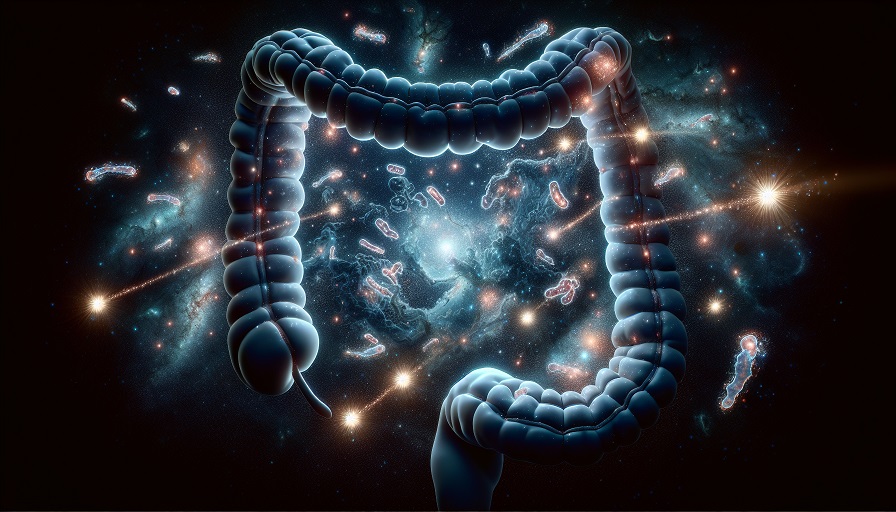
If you’ve spent any time around health-conscious communities lately, you’ve probably heard berberine described as a natural way to support the same hormonal pathway that makes Ozempic so effective. Bold claim. But unlike a lot of wellness chatter, this one actually has some biochemistry to back it up. The story of how a bitter yellow alkaloid extracted from plant roots ends up influencing one of the body’s most important metabolic hormones is genuinely fascinating, and understanding it will help you make smarter decisions about whether berberine belongs in your routine.
To appreciate what berberine does, you first need a clear picture of what GLP-1 is, how the body normally produces it, and why that process matters so much to your metabolic health. From there, the science of berberine’s influence falls into place rather elegantly.
Contents
GLP-1: Your Body’s Own Metabolic Regulator
Glucagon-like peptide-1 (GLP-1) is a hormone secreted primarily by specialized cells in the small intestine and colon called L-cells. These cells release GLP-1 in response to food, particularly when nutrients like fats, proteins, and certain carbohydrates make contact with the gut lining. Once in circulation, GLP-1 orchestrates a remarkably coordinated metabolic response.
It prompts the pancreas to release insulin in a glucose-dependent manner, meaning it only triggers insulin secretion when blood sugar is actually elevated. This is an important safety feature that pharmaceutical mimics have worked hard to replicate. GLP-1 also suppresses glucagon, slows the rate at which the stomach empties into the small intestine, and crosses into the brain where it activates satiety signals that reduce appetite. The net effect is better blood sugar control, reduced food intake, and improved energy metabolism.
The catch is that GLP-1 is fragile. An enzyme called dipeptidyl peptidase-4 (DPP-4) degrades it within just one to two minutes of secretion. Your body is producing and destroying GLP-1 in a continuous cycle, which limits how much of the hormone is active in your bloodstream at any given moment. This is exactly the vulnerability that pharmaceutical developers targeted when engineering longer-acting GLP-1 receptor agonists. And it turns out berberine may be working some of its magic through a similar vulnerability.
How Berberine Influences GLP-1 Production and Activity
Berberine doesn’t operate through a single mechanism. It’s more like a multi-tool than a single-purpose instrument, which is both what makes it interesting scientifically and why its effects are sometimes difficult to attribute to any one pathway. When it comes to GLP-1 specifically, researchers have identified several distinct ways berberine tips the scales in the hormone’s favor.
Stimulating GLP-1 Secretion from Intestinal L-Cells
The most direct route berberine takes is stimulating the intestinal L-cells themselves. Studies conducted in both cell cultures and animal models have demonstrated that berberine activates receptors on L-cells that trigger GLP-1 release. A 2012 study published in the Journal of Endocrinology showed that berberine significantly increased GLP-1 secretion from intestinal cells and that this effect was associated with improved glucose tolerance in diabetic rats. Subsequent human studies have also found elevated postprandial GLP-1 levels in subjects taking berberine compared to placebo, suggesting the same mechanism translates to people.
Inhibiting DPP-4 to Protect Existing GLP-1
Recall that DPP-4 is the enzyme that chews through GLP-1 in a matter of minutes. One of berberine’s documented effects is inhibiting DPP-4 activity, which slows the breakdown of GLP-1 already in circulation. This means that even if GLP-1 secretion remains constant, the hormone hangs around longer and exerts its effects more fully. This is the same general principle behind a class of diabetes medications called DPP-4 inhibitors (drugs like sitagliptin), though berberine’s inhibitory effect is considerably milder. It’s a softer version of the same biochemical strategy.
The AMPK Connection
Perhaps berberine’s most well-established mechanism is its activation of AMP-activated protein kinase, or AMPK. This enzyme functions as a cellular energy sensor, switching on processes that generate energy and switching off those that consume it unnecessarily. When AMPK is activated, cells become more responsive to insulin, glucose uptake improves, and fat metabolism accelerates.
AMPK activation and GLP-1 signaling are not the same thing, but they overlap in their downstream effects on blood sugar regulation. Some researchers also believe AMPK activation in gut cells may itself contribute to GLP-1 secretion, creating a feedback loop where berberine’s metabolic effects reinforce each other. The picture is still coming into focus, but AMPK remains central to understanding why berberine produces such broad metabolic benefits beyond any single hormone pathway.
The Gut Microbiome: An Underappreciated Piece of the Puzzle
One of the more surprising chapters in berberine research involves the gut microbiome, the vast community of bacteria, fungi, and other microorganisms living in your digestive tract. Scientists have known for some time that the composition of the gut microbiome influences GLP-1 secretion, because certain bacterial strains produce short-chain fatty acids (SCFAs) that directly stimulate L-cells to release the hormone. What’s become increasingly clear is that berberine is a potent modulator of microbiome composition.
How Berberine Reshapes the Microbiome
Berberine has antimicrobial properties and is selectively toxic to certain bacterial strains while sparing or even promoting others. Research has shown it reduces populations of bacteria associated with metabolic dysfunction and increases strains that produce butyrate and other beneficial SCFAs. A landmark study published in Nature Communications in 2020 found that berberine’s glucose-lowering effects were significantly mediated by changes in gut microbiome composition, and that transplanting berberine-altered gut bacteria into germ-free mice reproduced many of the metabolic improvements. In other words, the microbiome isn’t just a side effect of berberine’s action; it’s a primary mechanism.
SCFAs, L-Cells, and the GLP-1 Feedback Loop
When berberine-favored bacteria produce more butyrate and other SCFAs, those compounds reach the L-cells lining the colon and act as direct secretagogues, meaning they trigger GLP-1 release. This creates an indirect but meaningful pathway through which berberine supports GLP-1 production that unfolds over weeks rather than hours. It’s one reason why consistent long-term use tends to produce better results than short-term supplementation, and why pairing berberine with a fiber-rich diet that feeds beneficial bacteria can amplify its effects.
What the Human Clinical Data Actually Shows
Animal studies and cell culture experiments are useful for mapping mechanisms, but the question that matters most for anyone considering berberine is what happens in actual people. The clinical literature here is more substantial than many supplements can claim, even if it’s not yet as definitive as the evidence behind pharmaceutical GLP-1 drugs.
A meta-analysis published in Evidence-Based Complementary and Alternative Medicine reviewed multiple randomized controlled trials and found berberine consistently improved fasting blood glucose, postprandial blood glucose, and HbA1c in people with type 2 diabetes, with effect sizes comparable to metformin in head-to-head comparisons. A separate review focused specifically on GLP-1 found that berberine supplementation was associated with significant increases in postprandial GLP-1 concentrations across several studies. Importantly, these effects were observed at doses between 1,000 and 1,500 mg per day divided across meals, which aligns with what most current berberine supplements provide.
Lipid improvements are also consistently reported, with reductions in total cholesterol, LDL cholesterol, and triglycerides appearing across multiple trials. Whether these are direct effects of berberine or downstream consequences of better GLP-1 signaling and insulin sensitivity is an open question, but the practical outcome is favorable either way.
Putting the Science in Context
It’s tempting to read this research and conclude that berberine is simply a natural version of pharmaceutical GLP-1 therapy. The mechanisms overlap, the outcomes rhyme, and the compound has centuries of traditional use supporting its safety profile. But scientific honesty requires acknowledging the gaps. Most berberine trials are shorter in duration and smaller in scale than the pharmaceutical studies. The magnitude of GLP-1 elevation from berberine is real but modest compared to injectable GLP-1 receptor agonists. And individual responses vary, shaped by genetics, baseline microbiome composition, diet, and other factors that no supplement can fully override.
What the science does support clearly is that berberine engages the GLP-1 pathway through multiple complementary mechanisms, supports a gut environment that naturally encourages GLP-1 secretion, and produces meaningful metabolic improvements in people who take it consistently. For a botanical compound, that’s a remarkably well-characterized story, and it’s one that research continues to fill in with new detail every year.
Frequently Asked Questions
What Is the Main Way Berberine Boosts GLP-1?
Berberine works through several mechanisms simultaneously. It directly stimulates GLP-1 secretion from intestinal L-cells, inhibits the DPP-4 enzyme that breaks GLP-1 down, activates AMPK to improve metabolic signaling, and reshapes the gut microbiome to increase production of short-chain fatty acids that trigger further GLP-1 release.
How Does Berberine Compare to DPP-4 Inhibitor Drugs?
Pharmaceutical DPP-4 inhibitors like sitagliptin are more potent and longer-lasting in their enzyme inhibition than berberine. However, berberine offers a broader range of complementary mechanisms, including AMPK activation and microbiome modulation, that DPP-4 inhibitor drugs do not provide. The two approaches are not equivalent but share overlapping territory.
How Long Does It Take for Berberine to Affect GLP-1 Levels?
Some effects on GLP-1 secretion may be measurable within hours of a dose, particularly the direct L-cell stimulation. However, the microbiome-mediated effects that contribute significantly to sustained GLP-1 support take weeks to develop as bacterial populations shift. Most research showing meaningful clinical outcomes uses supplementation periods of eight to twelve weeks or longer.
Does Diet Affect How Well Berberine Supports GLP-1?
Yes, significantly. Because a key part of berberine’s mechanism involves reshaping the gut microbiome to produce GLP-1-stimulating short-chain fatty acids, dietary fiber plays an important supporting role. A diet rich in vegetables, legumes, and whole grains feeds the beneficial bacteria that berberine cultivates, amplifying its GLP-1-supporting effects.
Is Berberine Safe to Use Long-Term for GLP-1 Support?
Berberine has a long history of use and a generally favorable safety profile at standard doses of 1,000 to 1,500 mg daily. Some people experience gastrointestinal discomfort, particularly when starting supplementation. It can interact with blood sugar and blood pressure medications, so anyone on prescription drugs should consult a healthcare provider before using berberine regularly.