
Somewhere between a pineapple and a strawberry, wrapped in a spiky green shell the size of a rugby ball, there’s a fruit that has been quietly captivating tropical communities for centuries. Meet soursop, the plant world’s best-kept secret that the wellness world is finally letting out of the bag.
If you’ve ever wandered through a Caribbean market or stumbled across a smoothie menu in Southeast Asia, you may have spotted the name soursop without giving it much thought. That would be a missed opportunity. This extraordinary fruit, grown on the Annona muricata tree, is native to the tropical regions of the Americas but has spread its roots across Africa, Asia, and the Pacific islands, where it’s treasured not just for eating but for its remarkable health-supporting properties. Once you know what soursop brings to the table, you’ll wonder how it stayed off your radar for so long.
Contents
Getting Acquainted with the Fruit Itself
Before we get into what soursop can do for your health, it helps to picture what we’re actually talking about. The soursop fruit is large, heart-shaped, and covered in soft, curved spines that look intimidating but are surprisingly gentle to the touch. Underneath that peculiar exterior lies a white, fibrous pulp that’s creamy, juicy, and genuinely delicious. Think of it as nature’s attempt at making a tropical dessert right on the tree.
A Flavor Worth Talking About
The name “soursop” might sound a little off-putting at first, and fair enough. But the flavor is anything but unpleasant. It’s a layered, complex taste experience: think sweet with bright citrus undertones, a whisper of strawberry, and something almost coconut-creamy in the finish. The “sour” in soursop is more of a gentle tartness, the kind that makes your tastebuds sit up and pay attention rather than pucker dramatically. In many countries, the pulp is blended into juices, ice creams, teas, and nectars. In others, it’s eaten fresh with a spoon, like a tropical treat you earned by getting off the beaten path.
Where Soursop Grows and Thrives
The Annona muricata tree is a sun-seeker through and through. It flourishes in warm, humid climates with well-drained soil and can grow up to 30 feet tall. You’ll find it growing abundantly in Brazil, Peru, Mexico, the Caribbean islands, and parts of West Africa. In each of these regions, local communities have incorporated every part of the tree, including the leaves, bark, and roots, into traditional wellness practices that stretch back generations. That’s not a coincidence. When something keeps showing up in the healing traditions of diverse cultures, it’s worth paying attention.
The Nutritional Profile: What’s Actually Inside
Soursop earns its superfruit status through a surprisingly robust nutritional lineup. The fruit is relatively low in calories while offering a respectable range of vitamins, minerals, and beneficial plant compounds. It’s the kind of combination that makes nutritionists smile and say, “yes, more of that, please.”
Vitamins and Minerals
A single cup of soursop pulp delivers a meaningful dose of vitamin C, which supports immune function and acts as an antioxidant in the body. It also provides B vitamins including thiamine, riboflavin, and folate, all of which play critical roles in energy metabolism and cellular health. On the mineral side, soursop offers potassium, magnesium, and phosphorus. Potassium in particular supports healthy blood pressure and proper muscle function, making soursop a fruit that works hard for its keep.
Antioxidants and Plant Compounds
Here’s where things get genuinely exciting. Soursop is rich in antioxidants, compounds that neutralize free radicals and help protect cells from oxidative stress. Research has identified several active compounds in soursop, most notably a group called acetogenins, which are unique to the Annonaceae plant family. These naturally occurring compounds have attracted significant scientific curiosity and are central to much of the ongoing research into soursop’s health-supporting potential. The leaves, in particular, have shown high concentrations of these compounds, which is why soursop leaf extract has become a popular ingredient in quality supplements.
A Long History in Traditional Wellness
Long before anyone coined the term “superfruit,” indigenous communities across the tropics were already using soursop in thoughtful, purposeful ways. In the Caribbean, soursop leaf tea has been a traditional remedy for restlessness and sleep difficulties. In parts of Africa, the leaves have been applied topically and brewed into teas for a range of wellness applications. In South America, the fruit and its derivatives have been woven into local healing traditions for centuries.
This kind of multigenerational, multicultural use isn’t mere folklore. It represents accumulated observational knowledge about how the plant interacts with the human body. Modern science is now catching up, working to understand the mechanisms behind what traditional healers observed intuitively. Studies have looked at soursop’s potential anti-inflammatory properties, its antioxidant capacity, and the specific bioactivity of its unique compounds. The research is still evolving, but the early signals are promising and have been enough to spark genuine enthusiasm in the nutritional science community.
You may also encounter soursop under different names depending on where you’re reading. It’s called “guanábana” in Spanish-speaking countries and “graviola” in Brazil. All three names refer to the same fruit, so don’t let the interchangeable terminology throw you off when reading wellness articles or supplement labels.
Why Soursop Supplements Make Sense
If you don’t live in a tropical climate, getting your hands on fresh soursop is easier said than done. The fruit doesn’t travel particularly well, and it’s rarely found in mainstream grocery stores outside of specialty or international markets. That’s precisely where a high-quality soursop supplement steps in to fill the gap.
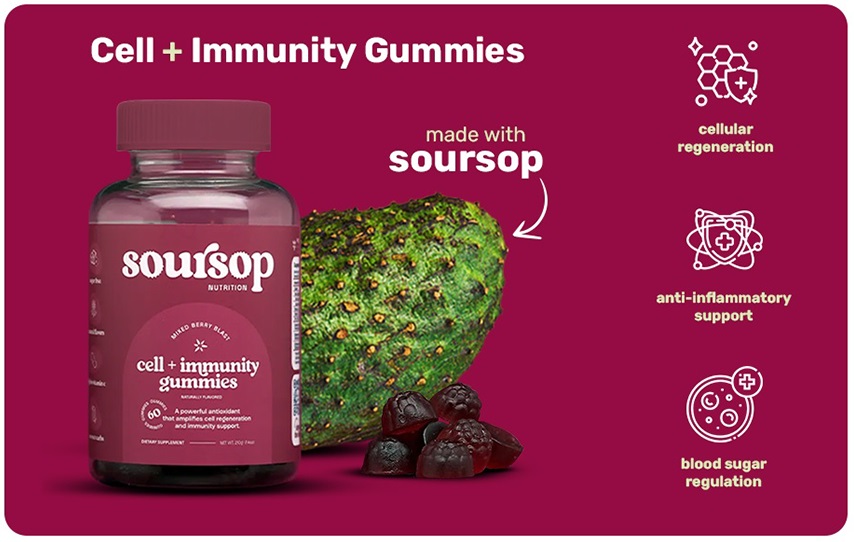
Supplements allow you to access the concentrated benefits of soursop, particularly the bioactive compounds found in the leaves and fruit, without needing to hunt down a fresh specimen or figure out how to crack one open (it’s messier than it looks, ask anyone who’s tried). A well-formulated supplement brings the power of this tropical treasure to your daily routine in a convenient, consistent, and reliable form. When you choose a supplement that’s transparent about its sourcing and standardized for its active compounds, you’re not cutting corners. You’re being smart about geography.
Whether your interest is in supporting immune health, adding antioxidant protection to your daily routine, or simply incorporating a time-honored botanical with an impressive traditional track record, soursop offers a compelling case. This isn’t just another trendy fruit making a cameo on a wellness blog. It’s a plant with deep roots, real science behind it, and a growing community of enthusiasts who’ve discovered what tropical communities have known all along.
The soursop tree has been quietly doing its work for centuries. Maybe it’s time to let it work for you.
Frequently Asked Questions
Here are answers to some of the most common questions people have when they first encounter this remarkable fruit.
What Does Soursop Taste Like?
Soursop has a unique, layered flavor that combines sweetness with a gentle tartness. Many people describe it as a blend of strawberry, pineapple, and coconut with citrus undertones. It’s pleasant and tropical, nothing like its unusual name might suggest.
What Is Soursop Also Known As?
Soursop goes by several names depending on the region. It’s called “guanábana” in Spanish-speaking countries, “graviola” in Brazil, and sometimes “custard apple” in parts of Asia and Africa, though it is technically a distinct species from other custard apple varieties.
What Are the Key Nutrients in Soursop?
Soursop provides vitamin C, B vitamins including thiamine, riboflavin, and folate, and minerals such as potassium, magnesium, and phosphorus. It also contains antioxidants and a unique group of plant compounds called acetogenins found only in the Annonaceae plant family.
Can I Get Soursop If I Don’t Live in a Tropical Area?
Fresh soursop is difficult to find in non-tropical regions because it doesn’t travel or store particularly well. High-quality soursop supplements, made from concentrated leaf extract or fruit powder, are an excellent and convenient alternative that provides the beneficial compounds without the geographic limitations.
Why Is Soursop Considered a Superfruit?
Soursop earns its superfruit reputation through a combination of its rich antioxidant content, unique bioactive compounds like acetogenins, its broad spectrum of vitamins and minerals, and its long history of use in traditional wellness practices across multiple cultures and continents.