
You’ve probably seen the ads — spit in a tube, mail it in, and a few weeks later you’re staring at a report full of insights about your ancestry, your health, your body. It sounds almost too simple. And honestly, a lot of people wonder whether there’s any real substance behind it, or whether it’s just an expensive curiosity.
The short answer is that at-home DNA tests have gotten genuinely useful. They’re not a crystal ball, and they won’t replace a doctor. But when you understand what they’re actually measuring — and what that information means for your day-to-day health decisions — they can be one of the more practical tools you have for understanding your own body.
Here’s what’s actually going on when you send off that saliva sample, and what kind of health information you can realistically expect to get back.
What an At-Home DNA Test Is Actually Measuring
Your DNA is made up of about three billion base pairs — think of them as the individual “letters” in a very long instruction manual for building and running your body. The overwhelming majority of that manual is identical from one person to the next. What makes you genetically unique comes down to variations in a relatively small number of locations throughout the genome.
The most commonly studied type of variation is called a single nucleotide polymorphism, or SNP (pronounced “snip”). A SNP is a spot in the genome where people commonly differ by a single letter. Some SNPs have no meaningful effect. Others are associated with how your body processes certain nutrients, how efficiently your liver breaks down medications, how your immune system responds to stress, or how likely you are to develop certain conditions over time.
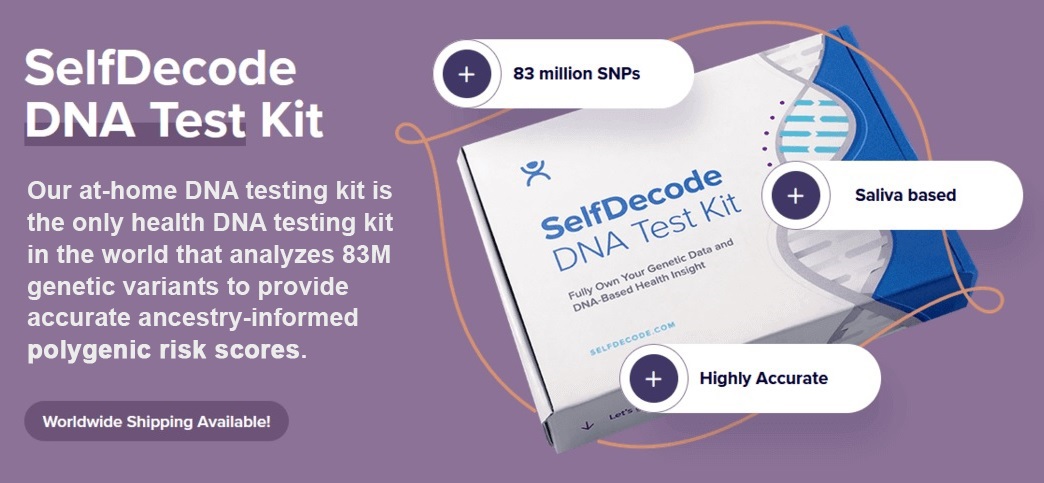
At-home DNA tests typically analyze hundreds of thousands to several million of these SNPs. That raw data becomes the foundation for every health report and recommendation built on top of it.
How the Test Works Physically
The process is straightforward. You collect a saliva sample using a kit sent to your home, register it online, and mail it to a lab. The lab extracts DNA from the cells in your saliva and runs it through a process called genotyping, which identifies your specific variants at each SNP location being tested. Your results are then processed and returned to you through an app or online platform, usually within two to four weeks.
Raw Data vs. Interpreted Reports
It’s worth understanding the difference between raw genetic data and an interpreted health report. Raw data is just a long file listing your genotype at each SNP — not very useful on its own unless you know how to read it. Health reports take that raw data and compare it against scientific research to tell you what your variants may mean in practical terms. The quality of those interpretations varies a lot depending on the company and the depth of research behind each report.
The Health Topics a DNA Report Can Meaningfully Address
This is where things get interesting. Because SNPs affect so many different biological processes, a well-designed DNA health report can cover a surprisingly wide range of topics. Some of the most useful categories include the following.
Nutrient Metabolism and Dietary Needs
Certain genetic variants affect how well your body absorbs or converts specific nutrients. A common example is the MTHFR gene, which plays a role in processing folate. People with certain MTHFR variants don’t convert folate as efficiently, which can affect everything from energy levels to cardiovascular health. Similarly, variants in other genes can influence how your body handles vitamin D, vitamin B12, omega-3 fatty acids, and iron. Knowing this can make a real difference in how you approach supplementation.
How Your Body Responds to Different Diets
There’s a reason low-carb diets work remarkably well for some people and barely move the needle for others. Genes influence how your body handles fats, carbohydrates, and calories — including how quickly you feel full, how your blood sugar responds to certain foods, and how efficiently you burn fat for energy. A DNA-based nutrition report won’t hand you a perfect meal plan, but it can help explain why a diet that works for your best friend isn’t working for you.
Medication Response (Pharmacogenomics)
This is one of the more clinically significant things a DNA test can tell you. Pharmacogenomics — the study of how genes affect drug response — looks at variants in liver enzymes that metabolize medications. If you’re a fast metabolizer of a particular drug, a standard dose might clear your system before it has a chance to work. If you’re a slow metabolizer, the same dose could build up and cause side effects. These insights are particularly relevant for antidepressants, blood thinners, pain medications, and several other common drug classes.
Inflammation, Immune Function, and Autoimmunity
Some people carry genetic variants that make their immune systems more reactive — producing stronger inflammatory responses to triggers like stress, infection, or certain foods. This doesn’t mean those people are destined to develop an autoimmune condition, but it can explain chronic symptoms that have otherwise been hard to pin down. Understanding your genetic inflammatory tendencies can inform decisions about diet, lifestyle, and which types of medical evaluations might be worth pursuing.
Mental Health and Neurotransmitter Pathways
Genes play a meaningful role in how your brain produces, uses, and recycles neurotransmitters like serotonin, dopamine, and norepinephrine. Variants in the genes that govern these pathways can affect mood regulation, stress resilience, motivation, and sleep quality. This doesn’t mean your mental health is predetermined — far from it. But it does mean that understanding your neurochemical tendencies can help you and your healthcare provider make more informed decisions about treatment and lifestyle strategies.
Hormones, Sleep, and Other Systems
Beyond the categories above, DNA reports can provide useful information about hormone metabolism (including estrogen, testosterone, and cortisol), detoxification pathways in the liver, gut health and digestion, and genetic factors related to sleep. The research behind some of these areas is more established than others, so it’s always worth paying attention to how confident a report is in its findings and what the underlying evidence looks like.
What a DNA Test Cannot Tell You
Being realistic about limitations matters just as much as understanding the benefits. A DNA test gives you a picture of your genetic tendencies, not a fixed prediction of your future. Most health outcomes are shaped by a combination of genetics, environment, lifestyle, and chance. Having a gene variant associated with a higher risk of a certain condition doesn’t mean you’ll develop it — and not having that variant doesn’t mean you’re immune.
DNA also doesn’t change over time, which means a test you take today reflects the same underlying genetics you’ll have in twenty years. What changes is your environment, your habits, and how the scientific community understands those genetics as research continues to evolve. Some variants that seem significant today may be refined or recontextualized as more studies emerge.
Finally, at-home DNA tests are not diagnostic tools. They can suggest that you may want to discuss certain risks or tendencies with a doctor, but they don’t diagnose disease and shouldn’t be treated as a substitute for medical care.
Making the Most of Your Genetic Information
The people who get the most out of DNA health reports tend to approach them as a starting point rather than a final answer. If a report flags that you may have reduced folate metabolism, that’s a prompt to learn more and potentially discuss it with a healthcare provider — not a reason to panic or immediately overhaul your routine.
It also helps to choose a platform that puts genuine research behind its reports. There’s a meaningful difference between a report based on a handful of well-studied variants and one that has analyzed millions of genetic data points across dozens of biological pathways. The depth of analysis determines how useful and actionable the information actually is.
At their best, DNA health reports give you a more complete picture of how your body works — and that’s genuinely valuable. Not because your genes tell the whole story, but because knowing your tendencies lets you make smarter decisions about the things you can actually control.

Frequently Asked Questions
- Is an at-home DNA test as accurate as one done in a doctor’s office?
- For SNP genotyping, at-home tests from reputable labs are generally accurate. The bigger variable is how well those results are interpreted — the quality of the health reports built on top of the raw data varies considerably between providers.
- Can my DNA test results change over time?
- Your DNA itself doesn’t change, so the raw genetic data from a test you take today will always be the same. However, as scientific research advances, the interpretations of certain variants may be updated or refined.
- Do I need a doctor to interpret my DNA health results?
- You don’t need one to get started — most reports are designed to be understandable without a medical background. That said, if a report raises questions about medication response, disease risk, or a specific health condition, it’s worth bringing those findings to a healthcare provider for context.
- What’s the difference between ancestry DNA tests and health DNA tests?
- Ancestry tests analyze variants associated with geographic heritage and family lineage. Health-focused tests analyze different sets of variants linked to biological processes like metabolism, immune function, and hormone regulation. Some platforms offer both, but they serve very different purposes.
- How is my genetic data kept private?
- Privacy practices vary by company. Before testing, it’s worth reviewing the provider’s data policy to understand who has access to your results, whether your data is used for research, and what your options are for deleting your information.