
Inflammation Risk Quiz
Chronic inflammation is the hidden driver behind heart disease, diabetes, Alzheimer's, and most major chronic conditions — and most people have no idea their levels are elevated. Answer 24 questions about your symptoms, diet, and lifestyle to receive a personalized inflammation risk score.
This tool is for educational purposes only and is not a medical diagnosis. Always consult a qualified healthcare provider about your health.
What is chronic inflammation — and why should you care?
Inflammation is one of the body's most fundamental protective mechanisms. When you get a cut, catch a virus, or sprain an ankle, the immune system dispatches inflammatory signals to contain damage, fight pathogens, and begin repair. This acute inflammation is short-lived, visible, and essential. The problem arises when the inflammatory alarm never fully shuts off — when the immune system remains in a low-grade state of activation for months or years. This is chronic inflammation, and it is now recognized as a central driver of most major chronic diseases affecting the developed world.
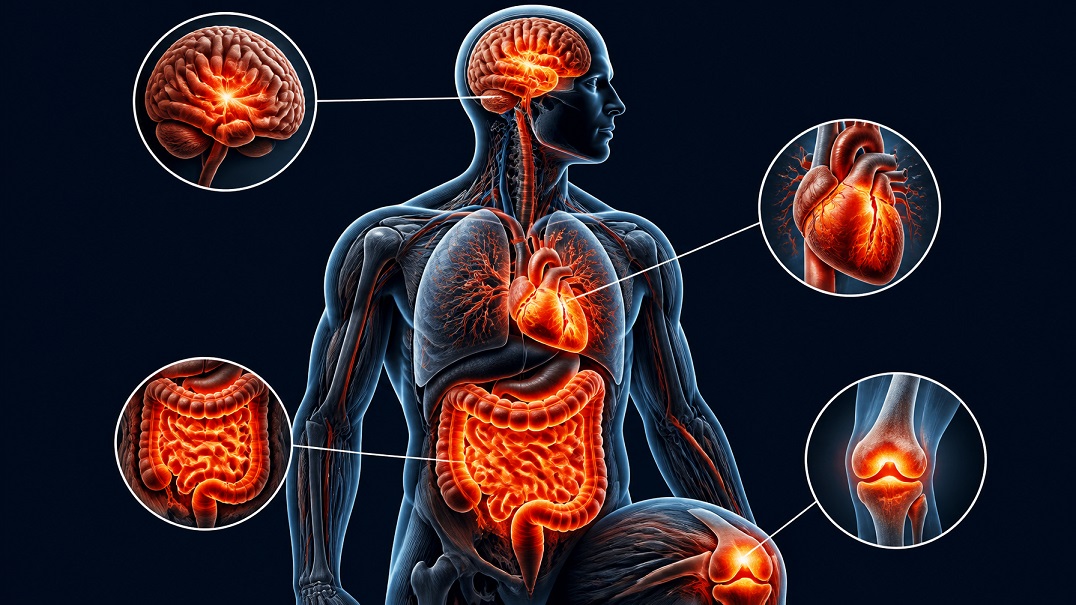
Together, inflammatory diseases account for more than half of all deaths globally. Cardiovascular disease, type 2 diabetes, cancer, Alzheimer's disease, autoimmune conditions, and depression all have chronic inflammation as either a cause or a major contributing mechanism. What makes this particularly concerning is that chronic low-grade inflammation is largely silent — many people have significantly elevated inflammatory markers for years without knowing it.
The six domains assessed in this quiz
Symptoms. Persistent fatigue, joint pain, brain fog, digestive issues, recurring infections, and skin problems are the signature cluster of chronic low-grade inflammation. Their presence, particularly in combination, warrants investigation.
Diet. Ultra-processed foods, added sugars, and refined carbohydrates elevate CRP and IL-6. The Mediterranean dietary pattern — rich in omega-3s, antioxidants, and fiber — consistently reduces inflammatory markers, with effects in some studies comparable to low-dose statin therapy.
Body composition and exercise. Visceral fat actively produces pro-inflammatory cytokines. Physical inactivity independently predicts elevated CRP regardless of body weight. Regular exercise reduces inflammatory markers through multiple mechanisms.
Sleep. Restricting sleep over multiple nights measurably raises IL-6 and CRP. Chronic sleep deprivation impairs cortisol's normal anti-inflammatory function. Untreated sleep apnea creates sustained inflammatory activation through repeated cycles of oxygen deprivation.
Stress and mental health. Chronic stress drives glucocorticoid resistance — impairing the body's ability to turn off inflammation. Elevated IL-6 and CRP are independently associated with depression and anxiety, suggesting inflammation both causes and results from psychological distress.
Environmental and other factors. Smoking is among the most potent activators of systemic inflammation. Untreated gum disease produces two to three times higher IL-6 levels. Autoimmune conditions and chronic infections sustain inflammatory signaling independently of lifestyle.
The genetics dimension: Your baseline inflammatory tone is also significantly shaped by your DNA. Variants in CRP, IL-6, TNF-alpha, MTHFR, and NF-kB influence how readily your immune system activates and how quickly it returns to baseline after a trigger. Two people with identical quiz scores can have very different actual inflammatory profiles — which is why genetic analysis adds a personalization layer that no lifestyle quiz alone can provide.
Frequently asked questions
About chronic inflammation and this quiz