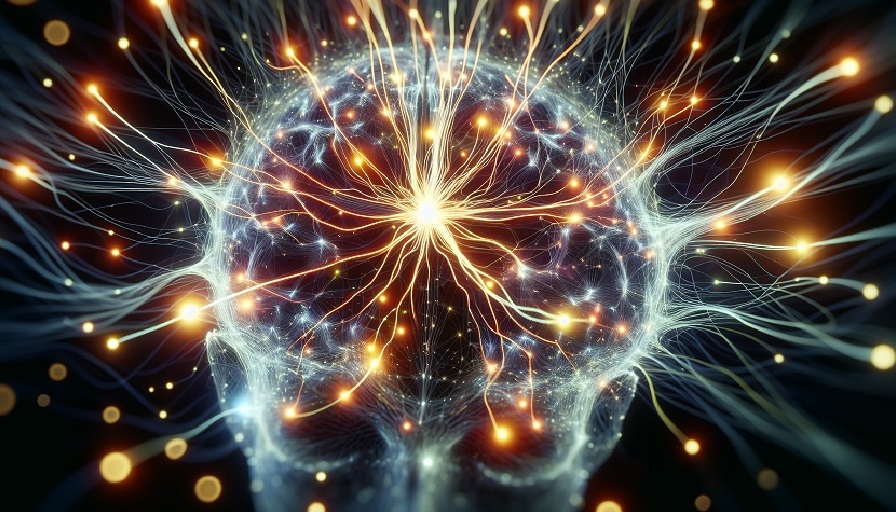
Most of us were told at some point to stop doodling and pay attention. As it turns out, the doodling might have been the most cognitively useful thing happening in the room. Creative activities, from sketching and playing music to writing and crafting, do something that passive entertainment simply cannot: they actively recruit and challenge multiple brain systems simultaneously, producing the kind of neural workout that keeps the mind sharp over time.
You do not need artistic talent to benefit. You need only a willingness to make something, and the good news is that the brain rewards the attempt regardless of the result.
Why Creative Activities Are Uniquely Brain-Healthy
What makes creative engagement neurologically distinctive is the breadth of brain regions it activates at once. A painter uses visual-spatial processing, fine motor coordination, aesthetic judgment, working memory, and emotional expression in a single sitting. A musician adds auditory processing, rhythmic pattern recognition, and often social coordination to that mix. Creativity asks more of the brain than most activities, and the brain responds by building more robust, flexible neural networks.
This is neuroplasticity in its most enjoyable form.
The Role of Flow States
Creative engagement frequently induces what psychologist Mihaly Csikszentmihalyi called a flow state: a condition of absorbed, effortless focus in which self-consciousness fades and performance peaks. Neurologically, flow is associated with reduced activity in the default mode network’s self-referential circuits and heightened connectivity across creative brain networks. Regular access to flow states through creative practice has been linked to lower stress, improved mood, and stronger cognitive resilience.
Creative Activities Worth Adding to Your Routine
The following activities represent some of the most cognitively rich creative pursuits available, each with a distinct neurological profile and accessible entry points for beginners.
Drawing and Visual Art
Drawing trains the brain to observe carefully and translate three-dimensional reality into two-dimensional representation, a non-trivial cognitive task. Regular sketching has been shown to strengthen visual-spatial skills and improve memory encoding. One often-cited study found that drawing information to be remembered produced significantly stronger recall than writing or reading the same content, an effect researchers called the drawing effect.
Watercolor painting, collage, and even adult coloring books engage overlapping benefits, combining focused attention with the relaxation response that repetitive, rhythmic hand movements tend to produce. The medium matters less than the act of sustained visual making.
Playing a Musical Instrument
Of all creative activities, learning to play an instrument may be the most comprehensively brain-engaging. It simultaneously activates auditory, motor, visual, and emotional processing systems while demanding precise timing, pattern recognition, and real-time error correction. Musicians consistently show structural brain differences compared to non-musicians, including greater gray matter volume in motor and auditory regions and stronger connectivity between hemispheres.
Critically, these benefits accrue even when learning begins in adulthood. Picking up a ukulele at fifty is not a consolation prize. For the brain, it is a remarkably rich stimulus package.
Creative Writing and Journaling
Writing engages language processing, narrative construction, working memory, and emotional regulation all at once. Expressive writing in particular, putting difficult or emotionally significant experiences into words, has demonstrated measurable effects on both psychological and physical health in research going back decades to James Pennebaker’s foundational work in the 1980s.
Even daily journaling without a therapeutic aim strengthens the brain’s capacity to organize experience into coherent narrative, a function associated with better emotional regulation and stronger autobiographical memory. Fiction writing adds imaginative perspective-taking to the mix, recruiting the same neural systems used to understand other people’s minds.
Craft and Making
Knitting, woodworking, pottery, and similar crafts combine fine motor precision with spatial planning, sequential reasoning, and the satisfying feedback loop of tangible creation. Research on knitting in particular has found associations with reduced cognitive decline, lower rates of depression, and improved sense of purpose in older adults. There is something neurologically and psychologically grounding about making something with your hands that screen-based activities rarely replicate.
Dance and Improvisation
Dance is where physical and creative activity converge most powerfully for brain health. Learning choreography challenges memory, spatial orientation, and rhythmic coordination simultaneously. Improvised dance adds real-time creative decision-making to that mix. A landmark study of leisure activities and dementia risk found that frequent dancing was associated with the greatest reduction in risk of any physical activity studied, outperforming swimming, cycling, and golf.
Photography and Visual Composition
Photography trains attentional selectivity, the ability to identify what matters in a visual scene and frame it deliberately. It combines technical learning with aesthetic judgment and, for those who engage with editing, digital problem-solving. As a creative practice that requires going out into the world and paying close attention to it, photography also delivers the incidental cognitive benefits of physical activity and environmental novelty.
Supporting Creative Brain Function from Within
Creative engagement thrives when the brain is operating at its best, which means nutrition and targeted supplementation are more relevant here than might initially be obvious. The mental clarity, working memory, and sustained focus that creative flow depends on are all functions that brain health supplements can meaningfully support.
Bacopa monnieri has well-documented effects on memory consolidation and the reduction of cognitive fatigue, both directly relevant to sustained creative work. Lion’s Mane mushroom supports nerve growth factor and the neural connectivity that learning new creative skills depends on. Omega-3 fatty acids, particularly DHA, maintain the brain cell membrane fluidity that efficient neurotransmission requires. Phosphatidylserine supports cognitive performance under mental demand. For anyone building a regular creative practice as part of a broader brain health strategy, a quality brain supplement may help ensure the brain showing up to that practice is well-resourced and ready. Talk to your healthcare provider about what makes sense for you.