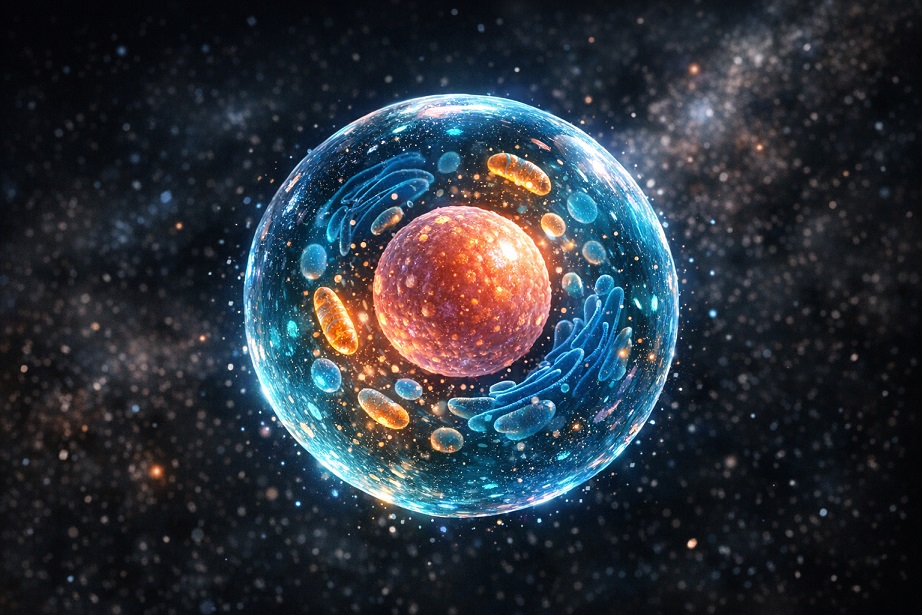
Some nutrients are nice to have. CoQ10 is not in that category. It is essential in the most literal sense of the word: without it, the process of converting nutrients into cellular energy cannot proceed. There is no backup pathway that takes over. There is no alternative compound that performs the same function. If CoQ10 is absent from the mitochondria, ATP production stops. Given that ATP powers virtually every biological function in the body, that makes CoQ10 about as foundational as nutrients get.
And yet, despite this indispensable role, CoQ10 is one of those nutrients that most people have heard of in a vague way without really understanding what it does or why its levels matter so much. That’s worth correcting, not just as a matter of scientific literacy, but because CoQ10 status has direct, measurable implications for energy, cardiovascular health, athletic performance, and how gracefully the body handles the passage of time.
What CoQ10 Actually Does
Coenzyme Q10, also known as ubiquinone in its oxidized form, is a fat-soluble, vitamin-like compound found in the membranes of mitochondria throughout virtually every cell in the body. Its name reflects its function: it is ubiquitous, meaning present nearly everywhere, and it acts as a coenzyme, meaning it works alongside enzymes to facilitate essential biochemical reactions rather than triggering those reactions on its own.
CoQ10’s primary job is to serve as an electron carrier in the electron transport chain, the final and most productive stage of cellular energy production. Here’s what that means in practice. As nutrients are broken down through earlier stages of metabolism, the citric acid cycle extracts electrons from them and loads those electrons onto carrier molecules. These carriers, including CoQ10, then deliver the electrons to a series of protein complexes embedded in the inner mitochondrial membrane. As electrons move along this chain from one complex to the next, the energy released drives the pumping of protons across the membrane. This creates an electrochemical gradient, a kind of stored potential energy, that is then used by ATP synthase to produce ATP.
CoQ10 specifically shuttles electrons between the first and second major protein complexes of the chain. Without CoQ10 performing this relay function, the chain stalls. Electron flow stops. ATP synthesis stops. The cell’s energy supply collapses.
CoQ10 and Antioxidant Protection
The electron transport chain, for all its efficiency, is not a perfectly contained system. A small fraction of electrons escape the chain and react with oxygen to form reactive oxygen species, the free radicals that drive oxidative stress and mitochondrial damage. CoQ10’s role in managing this byproduct is its second major function, and it’s equally important to the first.
When CoQ10 accepts electrons during its carrier function, it becomes reduced to ubiquinol. In this form, it functions as a potent antioxidant, embedded in the inner mitochondrial membrane precisely where free radical production is occurring. Ubiquinol can donate electrons to neutralize free radicals before they damage the surrounding membrane lipids, mitochondrial proteins, or mitochondrial DNA. After doing so, ubiquinol returns to the ubiquinone form, ready to participate in the next electron transport cycle.
This dual function, energy production enabler and mitochondrial antioxidant, is what makes CoQ10 irreplaceable. It’s not simply doing one important job. It’s doing two critical jobs simultaneously in the same organelle, using the same molecule cycling between two forms.
Why CoQ10 Levels Decline
The body synthesizes CoQ10 endogenously, meaning it produces it internally rather than relying entirely on dietary intake. The biosynthesis pathway is complex and shares several steps with the pathway that produces cholesterol. This is the reason why statin medications, which work by inhibiting a key enzyme in the cholesterol synthesis pathway, also reduce CoQ10 production as a side effect. People taking statins may experience a significant decline in CoQ10 levels, which is one of the proposed mechanisms underlying the muscle-related side effects that some statin users report.
Beyond statin use, CoQ10 levels decline with age through a more universal mechanism. The body’s synthesis capacity peaks in the mid-twenties and then decreases progressively. By the time a person reaches their fifties, CoQ10 levels in various tissues may be meaningfully lower than they were in early adulthood, and the decline continues from there. Research has found particularly significant CoQ10 reductions with age in the heart, which is among the highest-CoQ10 tissues in the body given its continuous, high-energy workload, and in the brain.
Exercise, while beneficial for mitochondrial health in many ways, also places a demand on CoQ10, since high rates of energy production consume CoQ10 more rapidly. Highly active individuals may therefore have higher CoQ10 needs than sedentary ones, even as their overall mitochondrial health benefits from training.
CoQ10 and the Heart
Few tissues in the body are more dependent on CoQ10 than the heart. Cardiac muscle cells operate continuously, never resting, and they contain among the highest concentrations of mitochondria of any cell type. CoQ10 concentrations in healthy heart tissue are correspondingly high. When those concentrations decline, cardiac energy production efficiency falls, and the functional consequences can be significant.
Research has consistently found lower CoQ10 levels in individuals with various cardiovascular conditions compared to healthy controls. Clinical studies have examined CoQ10 supplementation for cardiovascular support, and some have found benefits for heart function, exercise capacity, and recovery. CoQ10 is included in heart health protocols in some clinical settings and is among the more heavily studied nutritional compounds in cardiovascular research. The connection between CoQ10 and heart function is one of the most thoroughly explored dimensions of its biology.
Dietary Sources and Their Limitations
CoQ10 is found in food, primarily in organ meats like heart and liver, as well as in sardines, mackerel, beef, pork, chicken, spinach, broccoli, and cauliflower. However, even diets with meaningful amounts of these foods tend to supply CoQ10 in amounts measured in milligrams, substantially below what research studies examining CoQ10 supplementation typically use. The combination of limited dietary supply and the body’s declining synthesis capacity as age increases makes the gap between what many people have and what their mitochondria would ideally have a meaningful one.
The Bioavailability Challenge
CoQ10 is a large, fat-soluble molecule, and these properties make it difficult to absorb efficiently from the gastrointestinal tract. Standard CoQ10, encapsulated as a simple powder, has relatively poor bioavailability. The oil-based softgel format improves absorption compared to dry powder capsules, but the most significant advances in CoQ10 bioavailability have come from purpose-built delivery technologies.
Microencapsulation and cyclodextrin complexing have been used to improve CoQ10 solubility and absorption. Sustained-release formulations have been developed to extend CoQ10’s presence in the bloodstream over many hours, providing more consistent mitochondrial support throughout the day rather than a rapid peak followed by a fast decline. Research on some of these advanced forms has shown both higher peak plasma levels and more sustained elevation compared to standard formulations, which translates into greater biological availability for the tissues that need it most.
A Nutrient Worth Prioritizing
The straightforward case for CoQ10 is that it performs two indispensable functions in the mitochondria, that the body’s capacity to maintain optimal levels declines with age and is further compromised by certain medications, and that the gap between naturally occurring levels and what research suggests is optimal is one that cannot easily be closed through diet alone. For anyone interested in sustaining cellular energy production, protecting mitochondria from oxidative damage, and supporting cardiovascular health over the long term, CoQ10 belongs near the top of the nutritional priority list. The mitochondria that power your life depend on it, quite literally, to keep the lights on.