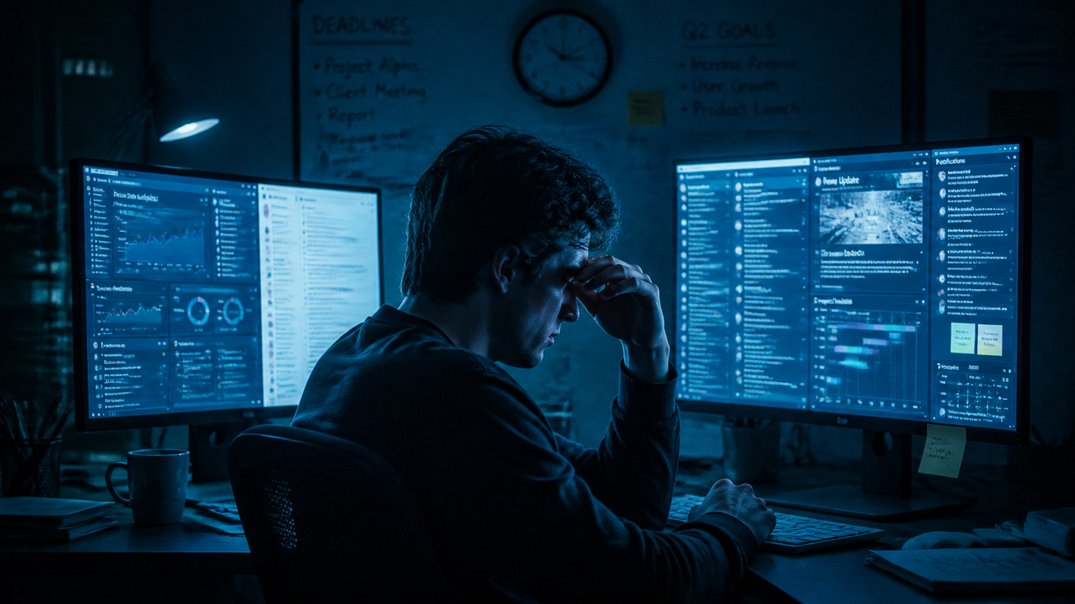
Digital eye strain tends to get filed under minor discomfort, a sore, tired feeling that seems separate from actual work performance. The research on this connection tells a different story. Vision fatigue during prolonged screen work has a measurable relationship with slower task completion, reduced accuracy, and declining ability to sustain attention as a work session continues, and understanding why this happens makes a stronger case for treating eye comfort as a genuine performance issue rather than a peripheral complaint.
What Controlled Research Has Found About Symptoms and Output
A study published examining the relationship between digital eye strain symptoms and work performance had participants with diagnosed digital eye strain complete a sustained attention task for an extended period, tracking how visual symptoms, productivity, and accuracy changed over the course of the session under different levels of cognitive demand. The research found that visual and ocular symptoms worsened as the task continued, and this worsening was specifically associated with a corresponding decline in productivity, providing direct, controlled evidence for a relationship that had previously been described mainly through anecdotal workplace reports rather than measured experimental data.
Why This Finding Matters
What makes this kind of controlled study valuable is that it isolates the relationship between eye strain and performance more clearly than a workplace survey can. Broad workplace surveys asking employees whether eye strain affects their productivity are useful for understanding scale and prevalence, but they cannot establish that eye strain specifically, rather than general fatigue, workload, or unrelated stress, is driving the productivity change. A controlled task that tracks symptoms and performance together over the same session provides more direct evidence that the two are genuinely connected rather than simply occurring at the same time for unrelated reasons.
The Mechanism: Why Tired Eyes Slow Down Cognitive Work
The connection between eye strain and reduced focus is not simply that discomfort is distracting, though that plays some role. A more direct mechanism involves the visual system itself becoming less efficient at its basic job. As the eye’s focusing muscles fatigue during sustained near work, maintaining a sharp, stable image on the retina requires more conscious effort, and blurred or fluctuating vision, a common symptom of prolonged accommodative strain, forces the brain to work harder to interpret visual information that would otherwise be processed automatically and effortlessly.
Competing for the Same Cognitive Resources
This matters because visual processing and higher-level cognitive tasks, reading comprehension, analysis, decision-making, draw on shared attentional and cognitive resources rather than operating in complete isolation from one another. When part of that shared capacity is diverted toward compensating for a visual system that is not functioning at full efficiency, whether due to blur, discomfort, or the effort of maintaining focus through fatigue, less capacity remains available for the actual cognitive content of the work. This helps explain why eye strain symptoms correlate not just with subjective tiredness but with objectively measurable declines in task accuracy and completion speed.
Why Symptoms Tend to Worsen as a Session Continues
Digital eye strain is not a fixed, constant burden throughout a work session; it accumulates. The accommodative and vergence systems, the muscles responsible for focusing and for coordinating both eyes to work together on a near target, function similarly to other muscle groups in that sustained near work produces progressive fatigue rather than a stable, unchanging level of effort. This is consistent with research showing that visual symptoms and associated productivity effects tend to intensify the longer an uninterrupted digital task continues, rather than appearing suddenly at some fixed point or remaining constant from the start of a session.
Why This Argues for Breaks Over Willpower
Because the underlying mechanism is a form of genuine muscular and neural fatigue rather than a purely psychological lapse in attention, pushing through eye strain with focus and determination addresses the symptom far less effectively than an actual break that allows the visual system to recover. This is the physiological logic behind interventions like the 20-20-20 rule, looking at something roughly 20 feet away for about 20 seconds every 20 minutes, which gives the accommodative system a genuine opportunity to relax and reset rather than simply distracting attention from the discomfort temporarily.
Cognitive Load and Its Interaction With Visual Strain
Research in this area has also examined how the cognitive demand of the task itself interacts with visual symptoms, finding that higher cognitive load conditions tend to be associated with more pronounced symptom development compared with lower load conditions performed under otherwise similar visual circumstances. This suggests eye strain and mental workload are not entirely separate phenomena competing for attention but are meaningfully intertwined, with demanding cognitive work potentially accelerating the onset or severity of visual fatigue, and visual fatigue in turn making cognitively demanding work harder to sustain, a reinforcing cycle rather than two independent burdens simply adding together.
What This Means for High-Stakes, Detail-Oriented Work
The implications are particularly relevant for work that depends on sustained accuracy and attention to visual detail, proofreading, data entry, financial analysis, coding, or any task where a small missed detail carries a real cost. If eye strain measurably degrades both visual clarity and available cognitive capacity as a session progresses, the later portions of a long, unbroken work session on this kind of task are likely to carry meaningfully higher error risk than the earlier portions, independent of how motivated or careful someone is trying to be. Structuring demanding, detail-critical work earlier in a session, or breaking it into shorter segments with genuine visual breaks between them, is a reasonable response to this pattern rather than simply pushing through a single long stretch.
Practical Steps That Address Both Comfort and Output
Because the eye strain and productivity relationship appears to be genuinely causal rather than incidental, the same interventions that improve visual comfort are reasonably expected to support work performance as well, not simply make the workday feel more pleasant. Regular breaks following something like the 20-20-20 pattern, proper monitor distance and height to reduce sustained accommodative and vergence demand, adequate and well-matched lighting to reduce glare-related strain, and an updated eyeglass prescription for anyone whose correction has become outdated, all address the same underlying mechanisms this research points to. Treating these as performance interventions rather than purely comfort measures is a reasonable shift for anyone whose work depends on sustained visual attention throughout the day.
Why Employers Are Starting to Pay Closer Attention
Industry survey data, while less methodologically precise than a controlled laboratory study, has consistently pointed in the same direction as the more rigorous research: large-scale workplace surveys have repeatedly found that a majority of desk-based employees report screen-related visual discomfort, and a substantial share of those affected report a noticeable impact on their own productivity and effectiveness at work. This convergence between controlled experimental findings and broad workplace reporting strengthens the overall picture considerably, even though the survey data alone cannot establish causation with the same rigor as a controlled task. Some employers have responded by incorporating vision benefits, ergonomic assessments, and eye break education into workplace wellness programs, treating digital eye strain as a legitimate operational concern rather than an individual employee complaint to be addressed only when it becomes severe enough to raise on its own.