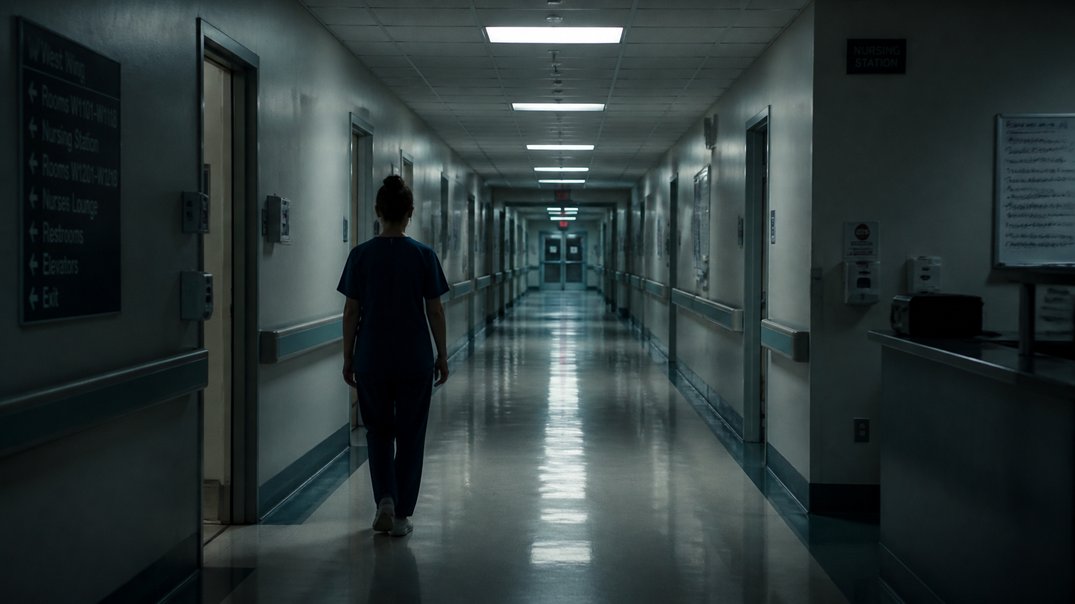
Nursing and other healthcare roles built around rotating or overnight shifts ask a great deal of the body’s internal clock, and the eyes are affected by this disruption in ways that go beyond simple tiredness. Research specifically studying nurses working night shifts has documented measurable, same-day changes in tear film quality, and separate research has begun examining whether years of shift work leave a lasting mark on deeper eye structures. Understanding these mechanisms helps explain symptoms that many shift-working healthcare professionals notice but rarely connect to their schedule specifically.
How Night Shifts Measurably Worsen Dry Eye Within Hours
A study following hospital nurses through both day and night shifts measured tear film stability and dry eye symptoms at four points across a 24-hour cycle: the start and end of a day shift, and the start and end of a night shift. The results showed a clear and statistically significant pattern: dry eye symptom scores and tear break-up time, a standard clinical measure of how quickly the tear film destabilizes, were both meaningfully worse at the end of the night shift compared with every other measurement point, including the beginning of that same night shift.
Why Sleep Disruption Affects Tear Production Specifically
The mechanism behind this pattern connects to how tear secretion is regulated. Tear production is influenced by the same endocrine and autonomic nervous system pathways that govern the sleep-wake cycle, meaning disrupted sleep does not just cause fatigue in a general sense, it interferes with the specific physiological signaling that keeps the tear film adequately maintained. Research has also found that sleep deprivation itself reduces tear secretion and impairs tear film quality directly, independent of the light exposure and activity differences between day and night shifts, suggesting the sleep disruption itself, not simply the unusual working hours, is doing much of the damage.
Why This Compounds Over a Nursing Career
Beyond the acute, shift-by-shift pattern, researchers have also investigated whether years of rotating or night shift work leave any lasting structural changes in the eye. Studies using optical coherence tomography, an imaging technique that can measure the thickness of individual retinal layers, have begun comparing long-term night shift nurses with day-shift colleagues, looking specifically at retinal nerve fiber layer thickness and related structural measures. This research remains in relatively early stages, but it points toward the possibility that chronic circadian disruption from years of shift work may have effects that extend beyond simple day-to-day dry eye symptoms, an area of ongoing investigation rather than a settled finding.
Additional Eye Strain Factors Specific to Healthcare Settings
Beyond shift timing itself, healthcare work environments layer on several additional contributors to eye strain that compound the sleep-related effects already described. Bright, often fluorescent overhead lighting designed for clinical accuracy and patient safety tends to run considerably brighter than typical office lighting, and combined with the close, sustained visual attention required for tasks like medication administration, wound assessment, and electronic charting, this creates conditions favorable to digital eye strain on top of the circadian effects already at play. Extended use of electronic health record systems, often for the majority of a shift, adds the same accumulated near-focus and reduced blink rate documented in general digital eye strain research, layered directly on top of a tear film already compromised by disrupted sleep.
Personal Protective Equipment and Its Effect on the Eyes
Mask wearing, a routine part of many healthcare roles, introduces its own contributing factor: exhaled air redirected upward past the mask’s upper edge can flow directly across the ocular surface, increasing local evaporation of the tear film in a way that is specific to mask-wearing environments and adds to the overall dryness burden of a shift already working against normal tear production.
Practical Strategies for Shift-Working Healthcare Professionals
Given that the underlying mechanism involves both sleep-cycle disruption and prolonged near-focus work, addressing both pieces tends to be more effective than focusing on either alone. Preservative-free artificial tears used proactively during a night shift, rather than only once symptoms become noticeable, can help offset the documented decline in tear film stability that builds through the latter part of a night shift specifically. Consciously incorporating brief visual breaks during a shift, looking at something farther away periodically, helps counter the accumulated near-focus demand of extended charting and monitor use, similar to general digital eye strain recommendations but particularly relevant given how compromised the tear film already is during night shifts.
Why Sleep Hygiene Matters as Much as Direct Eye Care
Because the research points to disrupted sleep and circadian misalignment as a primary driver of shift-related dry eye, rather than the unusual hours alone, prioritizing sleep quality during off hours, consistent sleep scheduling where shift patterns allow it, and minimizing further circadian disruption on days off are reasonable interventions that address the underlying mechanism rather than just the resulting eye symptoms. This does not mean every dry eye symptom during a demanding nursing career can be eliminated through better sleep alone, but it does mean sleep quality is a legitimate, evidence-supported piece of an overall eye health strategy for anyone working rotating or overnight shifts.
When to See an Eye Care Professional
Dry eye symptoms that worsen predictably during and after night shifts, consistent with the pattern documented in nursing research, are a reasonable and common experience that responds well to standard dry eye management, primarily artificial tears and attention to sleep quality. Symptoms that are severe, that do not improve with these measures, or that are accompanied by pain, significant redness, or vision changes warrant a proper evaluation, since these can indicate a level of ocular surface disease that benefits from more targeted treatment than over-the-counter drops alone can provide, an especially relevant consideration for healthcare professionals whose demanding schedules make it easy to defer their own care.
Why Healthcare Workers Often Delay Their Own Eye Care
There is a recognizable pattern among healthcare professionals of prioritizing patient care needs over routine self-care, and eye health is a common casualty of this tendency. Nurses and other clinical staff frequently work through shifts with worsening dry eye symptoms, waiting until an eye feels genuinely painful rather than simply uncomfortable before seeking evaluation, a pattern that can allow manageable irritation to progress into more significant ocular surface disease over time. Building a scheduled annual eye exam into the same routine used for other occupational health requirements, rather than treating eye care as optional or something to address only when symptoms become severe, is a reasonable countermeasure given how consistently shift work has been shown to affect tear film health in this population specifically.