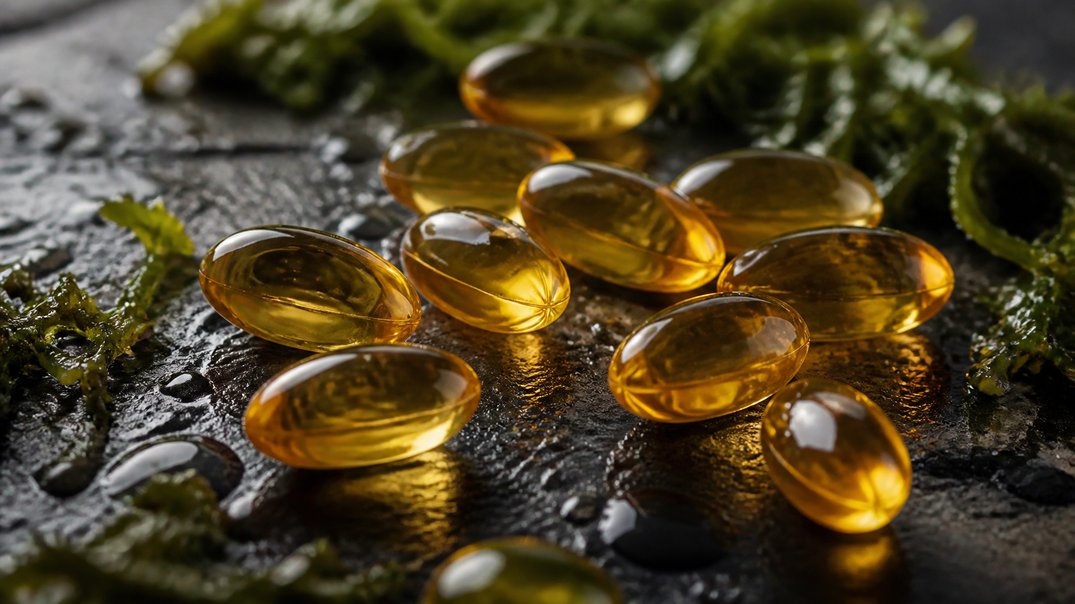
Most children in the United States and similar Western countries do not get enough DHA and EPA from food, largely because fatty fish is not a regular part of the typical child’s diet. That gap has pushed algae oil into a growing number of children’s vitamins and supplements, since it offers a way to raise DHA intake without relying on fish. The question parents actually ask is simpler: is it safe, and how much is appropriate for a child’s age.
Why DHA Matters During Childhood Development
DHA is a structural fatty acid that concentrates heavily in the brain and the retina of the eye, two tissues that undergo their most rapid development during infancy and continue developing throughout childhood and adolescence. Because DHA is built directly into the membranes of neurons and photoreceptor cells, an inadequate supply during these developmental windows is a genuine nutritional concern, not just a minor gap.
How Much DHA Children Actually Get From Food
Estimates suggest that many children in the United States consume only around 40 milligrams of combined DHA and EPA daily from food, well below recommended levels. The European Food Safety Authority recommends 250 milligrams of combined EPA and DHA daily for children aged two and older, a target that is difficult to reach through diet alone without regular fish consumption.
Is Algae-Derived DHA Safe for Children
Algal oil has a reasonably well-documented safety record in pediatric use. Clinical use has included daily doses providing up to 30 milligrams of DHA per kilogram of body weight in children seven years and older, tracked safely for periods of up to four years. This is a meaningfully higher figure than what a typical children’s supplement provides, which suggests standard commercial doses fall well within a range considered safe.
Why Algae DHA Specifically, Not Just Any Omega-3
Algae oil supplies preformed DHA directly, the same molecule found in fish oil, without requiring a child’s body to convert it from a plant-based precursor like ALA, a conversion process that is inefficient at any age and particularly limited in children. For families avoiding fish due to allergy, taste preference, or a vegetarian or vegan diet, algae oil is the more direct way to raise a child’s DHA status compared to relying on flaxseed or walnuts.
Allergy and Contamination Considerations
Algae oil does not contain the fish or shellfish proteins responsible for most seafood allergies, which makes it a reasonable option for children with those allergies, though checking the capsule material is still worthwhile since some softgels use fish-derived gelatin even when the oil inside is algae-based. Algae oil is also generally lower in heavy metal contamination risk than fish oil, since cultivated algae is not exposed to the same accumulation pathway as wild ocean fish.
How Much DHA a Child Actually Needs by Age
Recommended amounts increase gradually with age, reflecting a child’s changing size and developmental needs rather than a single fixed number for every stage of childhood.
Toddlers and Young Children
Younger children generally need a lower absolute dose, often in the range of 100 to 150 milligrams of combined DHA and EPA daily, and liquid or chewable formats are usually more appropriate than softgels at this age due to choking risk.
School-Age Children and Teens
As children get older, appropriate doses rise, with some research suggesting an efficacious range up to 1500 milligrams daily for children aged one to eight and up to 2000 milligrams for those aged nine to thirteen, though these upper figures reflect research dosing ranges rather than typical supplement serving sizes. Older children and teens who can safely swallow a softgel have access to the same concentrated algae oil products used by adults.
What to Look for in a Children’s Algae Oil Product
A few practical details matter more for children’s products than for adult supplements, beyond the general quality markers that apply to any omega-3 product.
Age-Appropriate Format
A liquid or chewable format is the safer choice for younger children who cannot reliably swallow a softgel capsule, while older children and teens can generally transition to standard softgels once they can do so safely.
Clear Labeling of EPA and DHA Content
A children’s supplement should state EPA and DHA content in milligrams per serving rather than listing a vague total “omega-3” or “fish oil” figure, which can obscure how much of the fatty acids that actually matter, DHA and EPA, the product provides.
Minimal Added Sugar
Many children’s gummy formulations rely on added sugar to make the product palatable, which can mean a lower effective dose of DHA and EPA per piece compared to a liquid or softgel. Checking the milligram content per serving, rather than assuming a gummy delivers a comparable dose, avoids under-dosing a child without realizing it.
Talking to a Pediatrician Before Starting
While algae DHA has a solid general safety profile in children, confirming an appropriate dose and product with a pediatrician remains a reasonable step, particularly for children with existing health conditions or those already taking other supplements. This is standard, sensible practice for any new supplement in a child’s routine, not a sign that algae oil carries unusual risk.
Frequently Asked Questions
Is Algae Oil Safe for Children to Take Daily?
Yes, based on available research, which has documented safe use of algal oil in children seven and older at doses up to 30 milligrams of DHA per kilogram of body weight for periods up to four years, well above typical commercial supplement doses.
How Much DHA Does a Child Need Each Day?
Recommendations increase with age, from roughly 100 to 150 milligrams for toddlers up to 250 milligrams or more for children over two, with some research supporting higher ranges for older children and teens depending on individual needs.
Is Algae DHA Better Than Fish Oil for Kids?
Algae oil provides the same preformed DHA found in fish oil without the allergy risk tied to fish or shellfish proteins and with generally lower heavy metal contamination risk, making it a strong option for children avoiding fish for any reason.
What Format of Omega-3 Supplement Is Safest for Young Children?
Liquid or chewable formats are generally safer for young children, since standard softgel capsules can pose a choking risk before a child is old enough to reliably swallow them.
Should I Check with a Pediatrician Before Giving My Child Algae Oil?
It is a reasonable step, particularly to confirm an appropriate dose for your child’s age and to account for any existing health conditions or other supplements, even though algae DHA has a well-documented general safety profile in children.