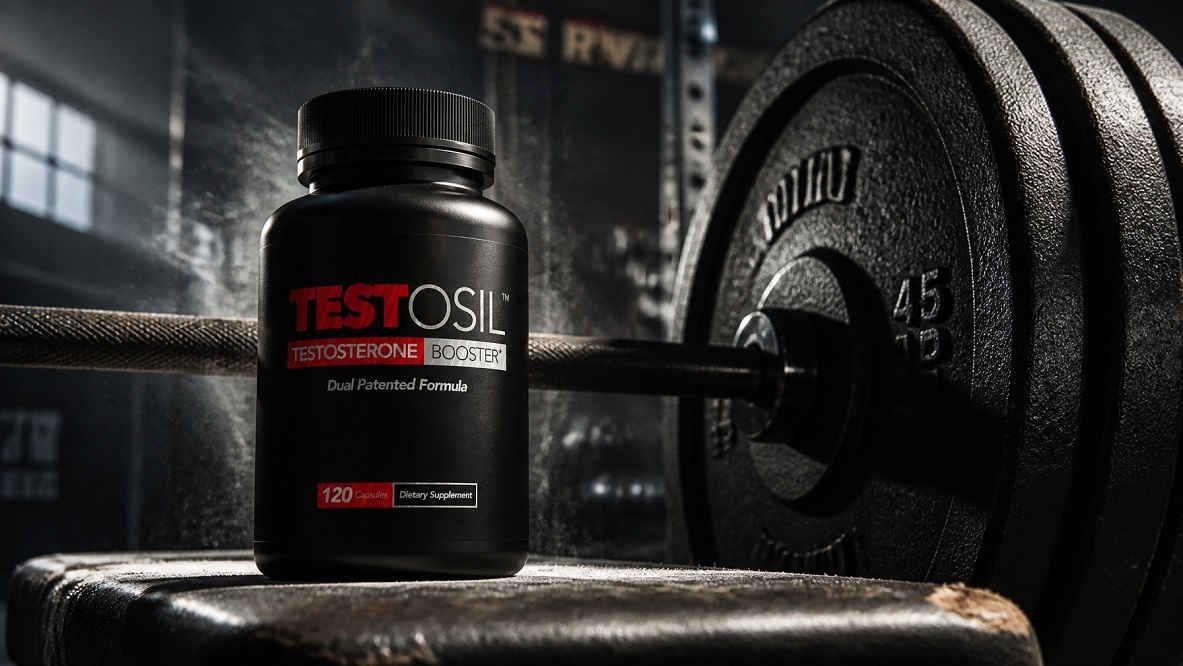
Testosil is an 11-ingredient testosterone support supplement, and like most products in this category, its marketing leans on one especially strong headline number. Rather than taking that number at face value or dismissing the product outright, this review goes ingredient by ingredient against the actual research, using the same standards applied to every ingredient covered elsewhere on this topic: does the dose match what was actually studied, and does the underlying evidence hold up.
What’s Actually in Testosil
The full formula includes KSM-66 ashwagandha, D-aspartic acid, fenugreek seed extract, Panax ginseng, zinc citrate, magnesium, vitamin D3, vitamin B6, pantothenic acid, garlic bulb extract, L-arginine HCl, and AstraGin, a patented absorption-enhancing blend. That’s a genuinely broad formula, and broad isn’t automatically better, since a longer ingredient list only helps if the doses are meaningful and the ingredients are pulling in the same direction. Here’s how each one actually stacks up.
The Ingredient With the Strongest Evidence: KSM-66 Ashwagandha
Not all ashwagandha on the market is the same, and the difference comes down to standardization. KSM-66 is a patented, root-only extract standardized to contain a minimum of 5 percent withanolides, the compounds believed responsible for most of ashwagandha’s effects, verified through laboratory testing on every batch. Generic ashwagandha powders typically don’t specify a withanolide percentage at all, which means two products listing the same milligram amount on the label can contain meaningfully different amounts of the actual active compounds. This consistency is also why KSM-66 specifically, rather than ashwagandha in general, is the version used in most of the clinical research behind the ingredient’s reputation, including a placebo-controlled trial that found a 300 mg daily dose significantly reduced both perceived stress and serum cortisol over 60 days (Chandrasekhar et al., 2012, Indian Journal of Psychological Medicine).
Testosil’s 600 mg daily dose of KSM-66, split into two 300 mg servings, matches the exact protocol used in the clinical trial the product’s marketing draws its headline claim from. That trial, published in the Journal of the International Society of Sports Nutrition, found men taking 300 mg of KSM-66 twice daily alongside resistance training had a significantly greater increase in testosterone than men doing the same training with a placebo (Wankhede et al., 2015, Journal of the International Society of Sports Nutrition). KSM-66 has the most consistent independent research support of any ingredient commonly marketed for testosterone, and this is a case where the label dose genuinely matches what was studied rather than a token amount.
About the “434% More Testosterone” Claim
It’s worth being precise about what this number actually refers to. It comes from the same single ashwagandha trial just described, comparing the relative size of the testosterone increase in the ashwagandha group to the much smaller increase in the placebo group, not from a study of Testosil’s complete 11-ingredient formula. That distinction matters. The underlying ashwagandha result is real and the dose matches, but the claim describes one ingredient’s effect in one trial, not a tested outcome for the product as a whole.
Ingredients With Modest or Mixed Support
Some other ingredients have real but more limited research behind them. Fenugreek is included at 50 mg standardized to 50 percent saponins, equivalent to roughly 800 mg of seed powder, within the range used in trials showing modest effects on free testosterone. Panax ginseng is dosed at 180 mg standardized to 80 percent ginsenosides. Ginseng’s clinical evidence doesn’t support a direct testosterone increase, but it does have real trial support for improving erectile function through a separate, blood-flow-related mechanism, a legitimate benefit even though it isn’t a hormonal one. D-aspartic acid is included at 2,000 mg, a dose in line with early research showing a short-term testosterone increase, though larger, more recent research has generally failed to replicate a consistent effect, making this one of the weaker-supported ingredients despite the substantial dose.
What Hasn’t Been Tested: The Formula as a Whole
No published clinical trial has evaluated Testosil’s complete 11-ingredient formula as a single product. This is standard across the category, essentially no multi-ingredient formula gets tested as a whole, since that kind of trial is expensive and slow to run. It does mean the honest framing is that individual ingredients have individual evidence, of varying strength, rather than the product itself having been directly proven effective as formulated.
Price and Practical Considerations
At the time of this review, a single bottle runs $69, dropping to $59 per bottle on a three-bottle order and $49 per bottle on a six-bottle order, with free shipping within the continental United States. The product is backed by a lifetime money-back guarantee covering both opened and unopened bottles, which meaningfully lowers the risk of trying it.
Who Testosil Makes Sense For
Based on the ingredient evidence, Testosil is a reasonable option for a man who wants a well-dosed ashwagandha product with several additional, more modestly supported ingredients layered on top, particularly if he’s also managing training stress, where ashwagandha’s evidence is strongest. As with any supplement in this category, checking your own nutrient status and talking with a doctor if you plan to use it long-term remains a reasonable step regardless of which product you choose.
Frequently Asked Questions
A few common questions about this product, based on what its formula and the underlying research actually show.
Does Testosil’s Ashwagandha Dose Match What Was Studied?
Yes. The 600 mg daily dose, split into two 300 mg servings, matches the exact protocol used in the clinical trial behind the product’s headline testosterone claim.
What Does the “434% More Testosterone” Claim Actually Refer To?
It refers to the relative size of the testosterone increase seen in a single ashwagandha trial, not a study of Testosil’s complete 11-ingredient formula.
Has Testosil’s Full Formula Been Clinically Tested?
No. Like most multi-ingredient testosterone supplements, the full 11-ingredient formula has not been tested as a single product in a published clinical trial, though several individual ingredients have their own supporting research.