There is a particular quality of silence that follows a very good joke. It is the silence of a room catching up to something unexpected, of brains simultaneously completing a connection they did not see coming, and then the laughter arrives all at once, spontaneous and unanimous. That collective moment is one of the most distinctly human experiences there is, and the brain processing that produces it turns out to be more cognitively sophisticated, and more therapeutically significant, than the breezy social lubricant it appears to be on the surface.
Humor has suffered somewhat from being treated as the opposite of seriousness, as though the capacity for levity is in tension with depth, rigor, or intellectual substance. This framing is not just wrong; it is precisely backwards. The cognitive operations that underlie genuine humor, the detection of incongruity, the rapid integration of incompatible conceptual frameworks, and the resolution of cognitive dissonance through a reframe, are among the more demanding things a brain regularly does. And the physiological cascade that laughter triggers has measurable, meaningful effects on stress hormones, immune function, cardiovascular health, and cognitive clarity. Taking humor seriously, as a subject, is one of the more rewarding things a brain health enthusiast can do.
The Neuroscience of Getting the Joke
Humor processing in the brain is not a single event but a sequence. The most widely accepted cognitive model, articulated in different forms by researchers including Rod Martin and Peter McGraw, describes humor as arising from the perception of a benign violation: something that simultaneously violates an expectation or norm and is perceived as non-threatening. The joke sets up an expectation, delivers something that violates it, and the resolution of that violation in a way that is ultimately safe or harmless triggers the humor response.
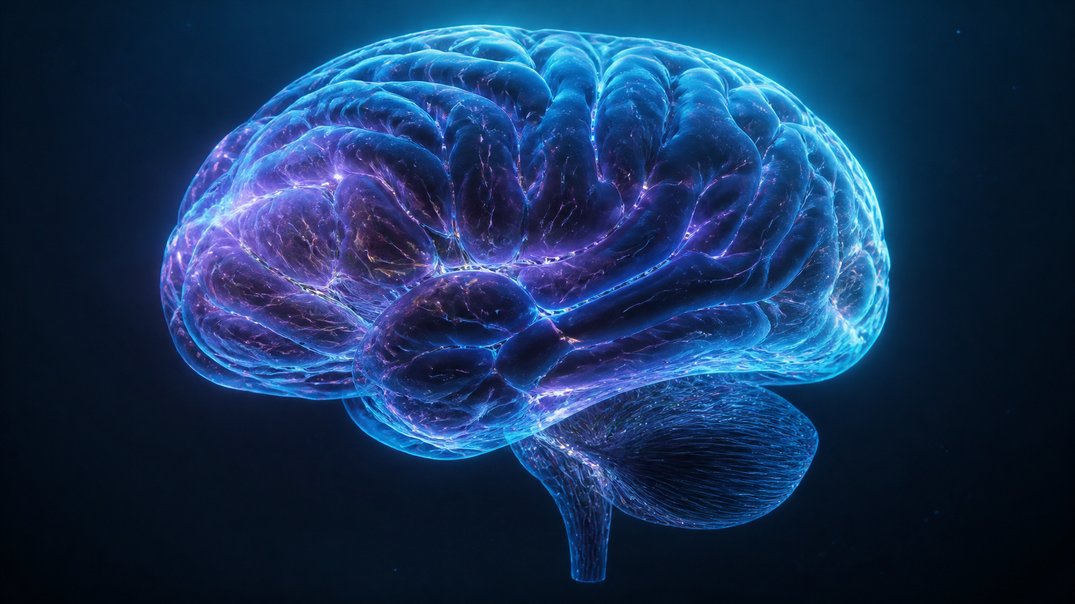
Neuroimaging studies of humor processing reveal a distributed network involving several functionally distinct regions. The left hemisphere language regions process the semantic content and setup of a joke. The right hemisphere, particularly the right prefrontal cortex, is critically involved in detecting and resolving incongruity, holding the violated expectation and the surprising punchline simultaneously in working memory and integrating them into a coherent resolution. The medial prefrontal cortex evaluates the social meaning of the joke. The nucleus accumbens, a central node of the brain’s reward circuitry, signals the pleasure of resolution when the incongruity is successfully integrated. The limbic system, particularly the amygdala, modulates the emotional response.
The Right Hemisphere and Incongruity Resolution
The right hemisphere’s particular role in humor is worth dwelling on. Right hemisphere damage has been consistently found to impair humor comprehension in neurological patients, not their ability to understand the literal content of jokes, which tends to remain intact, but their ability to detect and appreciate incongruity resolution. Patients with right hemisphere damage often prefer straightforward, non-surprising endings to joke setups, finding the conventional resolution more satisfying than the unexpected punchline that non-brain-damaged individuals find funny.
This implicates the right hemisphere in exactly the cognitive operation that makes humor cognitively interesting: the holding of two incompatible conceptual frames simultaneously and the sudden integration of them into a new, unified perspective. This is structurally identical to the cognitive operation involved in creative insight and reframing, the moment when a problem that seemed intractable is suddenly seen from a new angle that makes the solution obvious. Humor and creative insight share neural machinery, which may be part of why people who are genuinely funny tend also to be cognitively flexible, and why humor is so frequently associated with creative intelligence.

What Laughter Does to the Stressed Brain
The physiological effects of laughter on the stress response are well-documented and practically significant. Laughter suppresses the release of cortisol and epinephrine, the primary hormones of the stress response, while simultaneously stimulating the release of endorphins, the brain’s endogenous opioid peptides associated with pleasure and pain relief. It also increases levels of immunoglobulin A, a key antibody in the mucosal immune system, and has been associated with reduced blood pressure and improved cardiovascular function.
For cognitive clarity specifically, the cortisol-suppressing effect is particularly relevant. Chronic elevated cortisol impairs prefrontal cortex function, reducing working memory capacity, cognitive flexibility, and the quality of executive decision-making. It also suppresses hippocampal function, impairing memory consolidation. In other words, the stress that humor relieves is not just unpleasant to experience; it is actively degrading the cognitive machinery you need to think clearly. Humor does not just make you feel better. It removes a biochemical obstacle to effective cognition.
The Cardiovascular Connection and Cerebral Blood Flow
Research by cardiologist Michael Miller at the University of Maryland has found that laughter produces measurable dilation of blood vessels, increasing blood flow in a pattern similar to that produced by aerobic exercise. The endothelial cells lining blood vessel walls release nitric oxide during laughter, causing vasodilation. For the brain, which is exquisitely sensitive to variations in blood flow and oxygen delivery, sustained improvements in vascular health associated with regular laughter have meaningful implications for cognitive function, particularly in aging, when cerebrovascular health becomes an increasingly significant determinant of cognitive resilience.
The comparison to aerobic exercise, while not quantitatively equivalent, captures something real. Laughter is physically active: it engages the respiratory system vigorously, produces genuine cardiovascular response, and releases neurochemicals that have both immediate and cumulative effects on brain health. It is not a replacement for exercise, but it is not entirely separate from it either.
Humor as a Cognitive Style
Beyond the acute effects of laughter episodes, there is a subtler but arguably more important dimension: humor as a habitual cognitive orientation, a tendency to approach the world’s incongruities with curiosity and lightness rather than rigidity and alarm.
Research by psychologist Rod Martin on humor styles distinguishes between adaptive humor styles, those that enhance well-being, social connection, and resilience, and maladaptive ones, including humor used to demean others or to avoid genuine emotional engagement. Affiliative humor, the tendency to say funny things to amuse others and facilitate social connection, and self-enhancing humor, the ability to maintain a humorous perspective about one’s own difficulties, are consistently associated with higher psychological well-being, lower depression and anxiety, and better stress management.
Cognitive Flexibility and the Humorous Perspective
The self-enhancing humor style is particularly interesting from a cognitive science perspective. The ability to find something genuinely funny about one’s own frustrations and failures requires the same cognitive reframing that metacognitive flexibility demands: stepping outside an immediate experience, perceiving it from a detached perspective that allows its inherent absurdity to register, and choosing a response that does not amplify distress. This is not the same as denial or avoidance. It is a genuine perceptual shift that requires both emotional regulation and cognitive flexibility.
People who can reliably achieve this shift under stress tend to perform better on cognitive tasks in challenging conditions, maintain more accurate self-assessment during difficulties, and recover more quickly from setbacks. They are also consistently rated as more creative by peers and colleagues, which loops back to the shared neural machinery of humor and creative insight. The person who can laugh at their own difficulties is deploying a cognitive skill, not just exhibiting a temperamental trait, and that skill is trainable.
The case for taking humor seriously, as a brain health strategy, turns out to be stronger than the subject’s apparent lightness would suggest. A mind that can find the incongruity in its own assumptions, laugh at the gap between its expectations and reality, and use that laughter to reset its stress response and return to clearer thinking is a mind with a genuinely useful cognitive tool. The best jokes have always been teaching the brain something true about the world. It just took neuroscience a while to explain the mechanism.