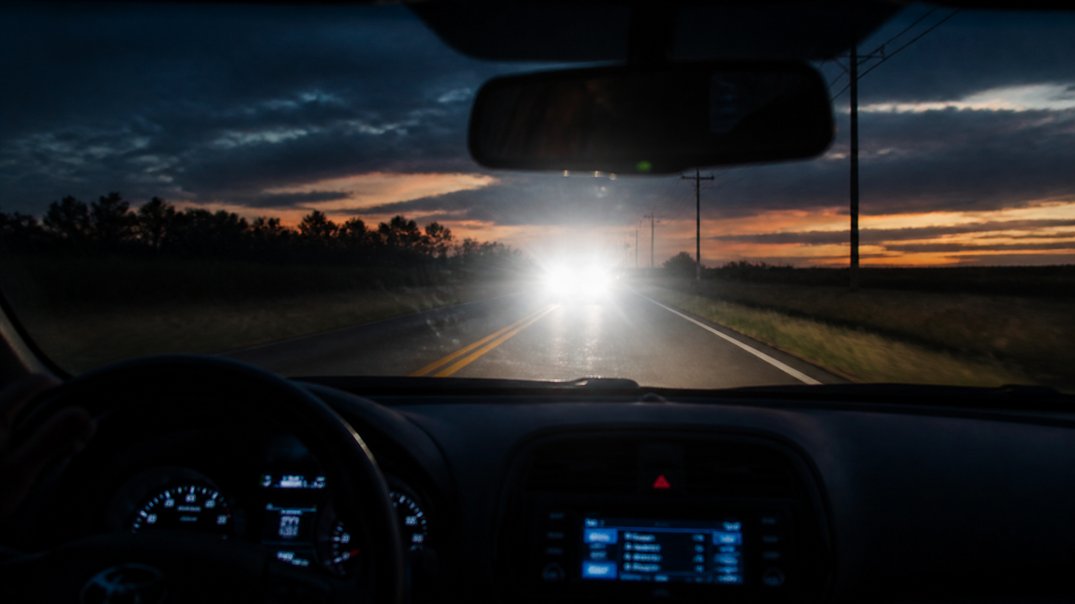
Complaints about oncoming headlight glare have become common enough to spawn public petitions and consumer advocacy campaigns, and the shift from warm, yellowish halogen headlights to the cooler, whiter light of modern LED headlights sits at the center of the frustration. The discomfort is not purely subjective or a matter of unfamiliarity with newer technology. There are genuine, measurable differences in both the total light output and the color characteristics of these two bulb technologies, and there is a specific reason the human eye responds to that particular combination more harshly at night than it would during the day.
LEDs Genuinely Produce More Total Light
Part of the explanation is straightforward: LED headlights typically output meaningfully more total light than halogen bulbs did, often two to three times as many lumens for a comparable application. This increase reflects genuine advances in the underlying lighting technology, since LEDs convert electrical energy into visible light far more efficiently than halogen bulbs, which waste a substantial portion of their energy as heat rather than usable light. For the driver using LED headlights, this translates into a real, practical safety benefit: better illumination of the road ahead, greater visibility of pedestrians and obstacles, and improved ability to react to hazards in time. For oncoming drivers and pedestrians facing those headlights directly, however, the same increase in raw output is exactly what produces more intense glare.
Color Temperature: The Second, Separate Factor
Beyond simple brightness, LED and halogen headlights differ substantially in color temperature, a measurement expressed in degrees Kelvin that describes where a light source falls on the spectrum from warm yellow to cool blue-white. Halogen headlights typically produce light in the range of roughly 3000 to 3500 Kelvin, a warm yellowish tone. LED headlights commonly range from around 5000 to 6500 Kelvin, a considerably cooler, whiter, sometimes visibly blue-tinged light. This color shift is not simply a stylistic choice manufacturers happened to prefer; it reflects genuine differences in how each technology generates light in the first place, with most white LEDs starting from a blue LED chip filtered through a phosphor coating to broaden the emitted spectrum into something perceived as white.
Why Cooler Light Is Perceived as Sharper and More Intense
Human perception of brightness is not a simple, linear function of raw light output alone; the color temperature of a light source measurably affects how bright and how sharp it appears to the eye, even when two sources emit a genuinely similar total quantity of light. Cooler, bluer light tends to be perceived as crisper and more intense than warmer light of comparable actual output, which means part of why LED headlights feel so much more jarring than halogens is not purely a matter of more photons reaching the eye, but a matter of how those particular photons, given their color characteristics, get processed and interpreted by the visual system.
Why Night Vision Specifically Amplifies the Blue-Light Effect
The interaction between color temperature and glare intensity becomes particularly pronounced specifically at night because of how the eye’s photoreceptors are being used under those conditions. During low-light driving, the eyes rely considerably more heavily on rod cells than they do during the day, and rod cells have a spectral sensitivity that peaks in the blue-green portion of the visible spectrum rather than matching the sensitivity profile of daytime cone-based color vision. This means the cooler, bluer-leaning light characteristic of LED headlights lines up more closely with exactly the wavelengths rod cells respond to most strongly, producing a disproportionately intense sensory signal precisely because of which photoreceptors happen to be dominant at that moment, compounding on top of the straightforward difference in total light output.
What Survey and Crash Data Actually Show
Public sentiment on this issue is unusually consistent and strongly one-sided: one UK motoring organization survey found a substantial majority of drivers specifically blamed whiter LED and xenon headlights for worsening glare, compared with only a small fraction blaming older yellow halogen bulbs, a striking imbalance in perceived responsibility between the two technologies. Research specifically measuring subjective glare discomfort under controlled conditions, including work conducted by the University of Michigan Transportation Research Institute, has found that blue-white light sources are consistently rated as more glaring and uncomfortable than yellow light sources of comparable measured brightness, providing controlled experimental support for what the broader driving public has been reporting anecdotally.
A Genuine Tradeoff Between Driver Benefit and Oncoming Discomfort
Complicating the picture further, some of the same research examining glare discomfort has also found that bluer, cooler light sources can improve certain aspects of a driver’s own night vision performance, including peripheral object detection under mesopic, or partially dark-adapted, lighting conditions. This creates a genuine tradeoff rather than a simple case of LED headlights being an unambiguous downgrade: the driver using them may benefit from improved visibility and detection distance, while other road users facing those same headlights experience disproportionately greater discomfort and glare, a real conflict of interest between headlight users and everyone else sharing the road with them.
Whether Headlight Glare Is Actually Increasing Crash Risk
Despite the intensity of public complaints, data specifically examining crash causation has not found headlight glare to be a dominant factor in nighttime collisions. Analysis of crash data covering recent years found headlight glare cited as a contributing factor in only a small fraction of crashes overall, and broader nighttime visibility-related crashes have generally trended downward over the same period that LED headlight adoption increased substantially, suggesting that whatever discomfort drivers report experiencing from LED glare has not, at a population level, translated into a corresponding measurable increase in crash risk from that specific cause, even as the subjective complaint has grown louder and more widespread.
Practical Steps for Managing LED Headlight Glare
For drivers bothered by oncoming LED glare, a few practical adjustments can meaningfully help. Slightly shifting gaze toward the right edge of the road rather than looking directly at oncoming headlights reduces direct exposure to the most intense portion of the beam while still maintaining adequate peripheral awareness of the road ahead. Keeping a windshield clean, since dirt, small scratches, and residue scatter incoming light and meaningfully worsen the perceived intensity and spread of glare from any headlight source, matters more than many drivers realize. For anyone whose own vehicle still has halogen headlights and is considering an upgrade, opting for LED replacements closer to the lower end of the common color temperature range, nearer 4000 to 5000 Kelvin rather than 6000 Kelvin or above, offers much of the practical brightness benefit while producing somewhat less of the harsh, blue-leaning quality that other drivers find most uncomfortable.