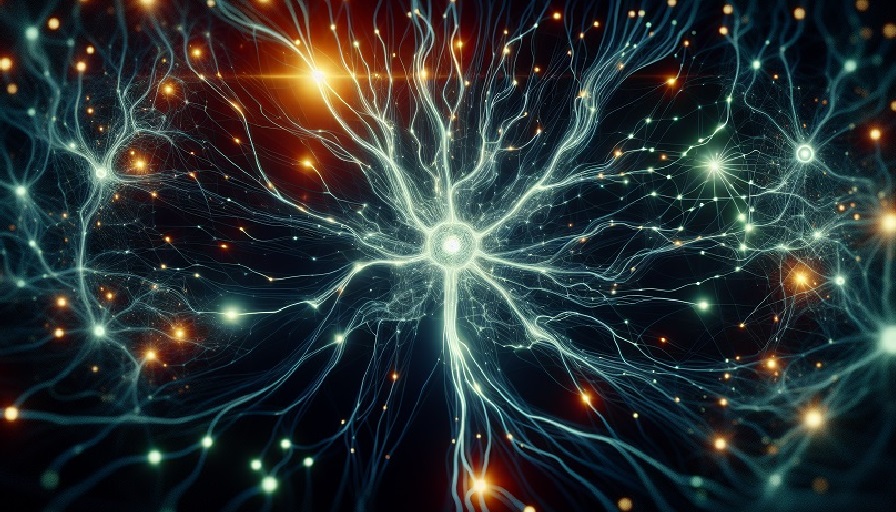
Archimedes, so the story goes, climbed into his bath, noticed the water rise, and immediately grasped the principle of displacement he had been puzzling over for days. He reportedly ran through the streets of Syracuse shouting “Eureka,” which translates, charmingly, as “I have found it.” What the story does not mention is the neurochemical responsible for that flash of insight. Meet acetylcholine: the brain’s master molecule of attention, learning, and creative illumination.
While dopamine gets most of the cultural attention as the brain’s feel-good chemical and serotonin is celebrated for mood regulation, acetylcholine quietly does some of the most important cognitive work in the brain. For anyone interested in creativity, learning, or simply thinking more clearly, understanding this neurotransmitter is well worth the effort.
What Acetylcholine Actually Does
Acetylcholine was the first neurotransmitter ever identified, discovered by pharmacologist Otto Loewi in 1921, ironically, in a dream. It operates throughout both the central and peripheral nervous systems, but its role in the brain is where things get particularly interesting for cognitive health and creativity.
At its most fundamental, acetylcholine is the brain’s signal for “pay attention.” When acetylcholine levels rise, the cortex shifts into a heightened state of sensory processing and learning readiness. Incoming information is encoded more sharply, existing memories are held more stably in working memory, and the brain’s signal-to-noise ratio improves dramatically. Acetylcholine essentially turns up the contrast on conscious experience.
The Attention-Insight Connection
There is a neurologically precise relationship between quality attention and the capacity for insight. Insight, those sudden moments of understanding in which a solution appears whole rather than assembled piece by piece, depends on the brain holding relevant information in an accessible, activated state long enough for the right connections to form. Acetylcholine is central to this process. It maintains the attentional spotlight on the relevant elements of a problem while simultaneously modulating the plasticity of cortical connections, making the brain more receptive to novel associations.
Think of it as the neurotransmitter that keeps the pieces of a puzzle on the table rather than letting them slide back into the box before they can be connected.
Acetylcholine and the Creative Brain
The relationship between acetylcholine and creativity is more nuanced than a simple “more is better” equation. Research suggests that different creative phases benefit from different neurochemical conditions. The generative phase, in which ideas form and combine freely, benefits from a state of relatively diffuse attention and high default mode network activity. The focused development and refinement phase benefits from the kind of sharp, sustained attention that acetylcholine enables.

Modulating the Default Mode Network
Acetylcholine plays a direct regulatory role in the default mode network, the brain’s imaginative infrastructure. During states of high acetylcholine activity, the default mode network is partially suppressed in favor of more externally directed, focused processing. During lower acetylcholine states, the network runs more freely, supporting the mind-wandering and associative thinking that seeds creative ideas.
Highly creative individuals appear to be unusually adept at moving between these states, toggling between diffuse, generative thinking and focused, evaluative refinement more fluidly than average. Acetylcholine is one of the key regulators of this toggle. Understanding it helps explain why creative flow often involves a rhythmic alternation between absorbed focus and looser, wandering thought rather than either state maintained continuously.
Acetylcholine and Memory Consolidation
Creative work is inseparable from memory. The unexpected combination of existing knowledge is the mechanism behind most creative insight, and that combination requires rich, accessible memory. Acetylcholine is critically involved in the encoding of new memories in the hippocampus and in the retrieval of existing ones from cortical storage. Low acetylcholine activity is a hallmark of age-related memory decline and is one of the defining neurochemical features of Alzheimer’s disease, in which acetylcholine-producing neurons in the basal forebrain are among the earliest casualties.
Preserving robust acetylcholine function across the lifespan is therefore not just a question of cognitive performance in the short term. It is a meaningful component of long-term brain health strategy.
What Depletes Acetylcholine and What Supports It
Several common factors work against healthy acetylcholine function. Chronic stress depletes it. Poor sleep impairs the cholinergic system’s overnight restoration. Aging naturally reduces both the production of acetylcholine and the sensitivity of acetylcholine receptors. Certain medications, particularly anticholinergic drugs used for conditions including allergies, bladder issues, and sleep, directly block acetylcholine receptors and have been associated in research with increased dementia risk when used long-term.
Dietary Precursors and Nutritional Support
The brain synthesizes acetylcholine from choline, an essential nutrient found in eggs, liver, fish, and certain legumes. Many people do not consume adequate choline from diet alone, which creates a genuine nutritional gap with direct cognitive implications. Choline-rich foods and targeted supplementation are among the most straightforward and evidence-backed approaches to supporting acetylcholine function.
Citicoline, also known as CDP-choline, is a particularly well-studied compound that serves as a direct precursor to both choline and the phospholipid phosphatidylcholine, supporting acetylcholine synthesis while simultaneously supporting neural membrane integrity. Clinical research on citicoline has demonstrated improvements in attention, memory, and processing speed across several populations, making it one of the more evidence-backed ingredients in the nootropic landscape. Alpha-GPC, another choline-containing compound, shows similar promise and has been studied specifically in the context of cognitive aging and memory support.
Beyond choline precursors, bacopa monnieri supports the cholinergic system through inhibition of acetylcholinesterase, the enzyme that breaks down acetylcholine, effectively extending the neurotransmitter’s activity at the synapse. Lion’s Mane mushroom supports nerve growth factor, which is important for the maintenance of the basal forebrain neurons that are the brain’s primary acetylcholine producers. Omega-3 fatty acids, particularly DHA, maintain the membrane fluidity that acetylcholine receptors require to function efficiently. A quality brain supplement that combines citicoline or Alpha-GPC with these complementary ingredients offers meaningful, targeted support for the brain’s acetylcholine system. As always, speak with a healthcare provider about what suits your individual needs.
Cultivating the Conditions for Eureka
The eureka moment feels like lightning, unpredictable and uncontrollable. But the conditions that make such moments possible are anything but random. Sustained attention, rich memory, quality sleep, adequate choline nutrition, and the rhythmic alternation between focused and diffuse thinking all feed the neurochemical environment in which creative insight becomes more likely.
Archimedes was not lucky. He was primed. His brain, saturated with the problem, supported by the peculiar cognitive loosening that a warm bath induces, made a connection his focused daytime thinking had not yet found. The water rose. Acetylcholine did the rest.