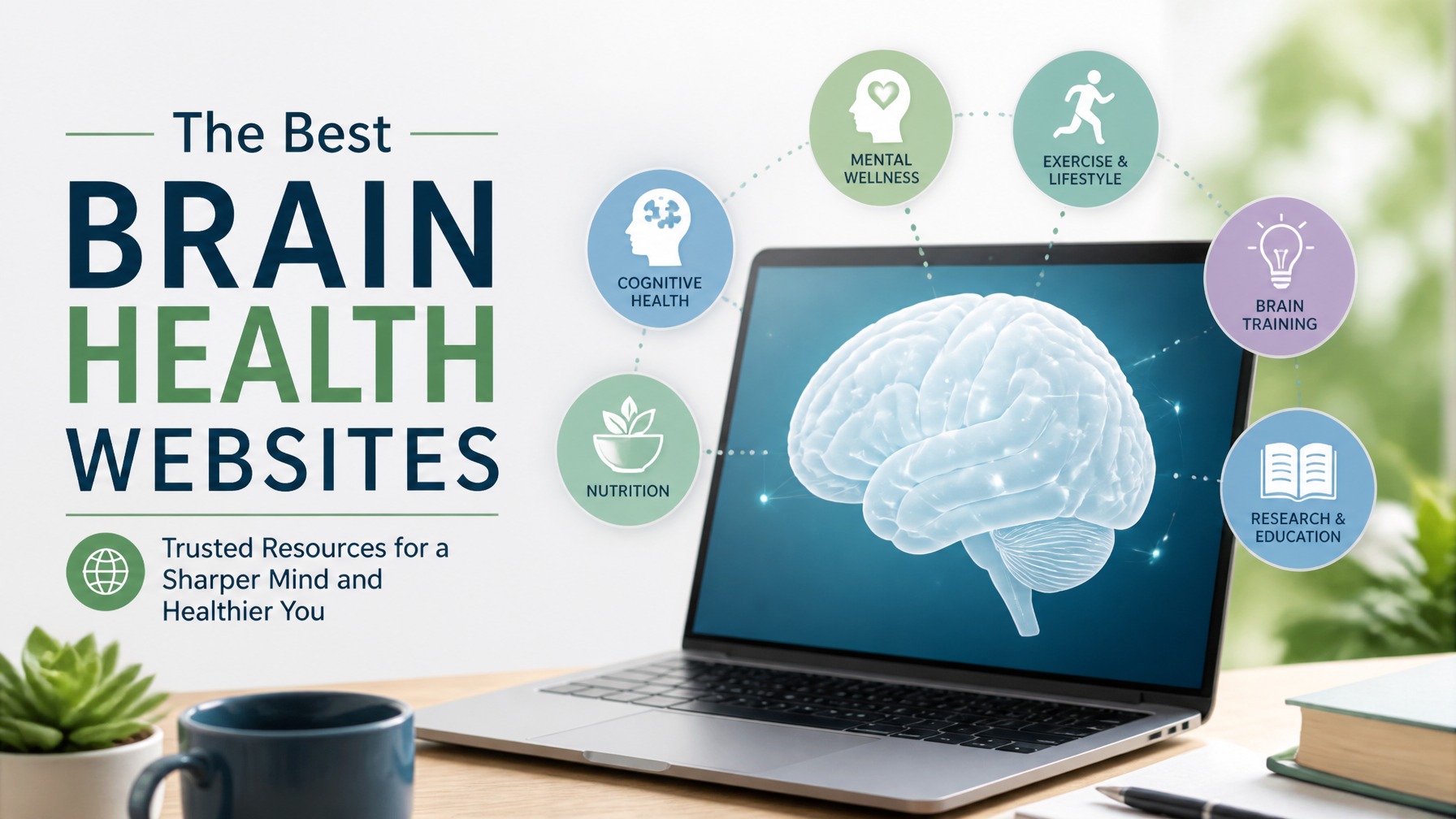
If you care about memory, focus, and long-term cognitive health, it helps to have a few trusted go-to sites beyond your usual reading. Below is a curated mix of blogs, nonprofit organizations, brain-training tools, and medical publishers that dig deeper into brain health than most general wellness sites do. Bookmark a few, and you’ll always have somewhere reliable to turn when a brain-related question comes up.
Very Big Brain
Very Big Brain describes its focus as “everything cognitive enhancing,” and the site backs that up with an impressively wide net of topics: neuron biology, nootropics, hormones, brain anatomy, cognitive decline, and even how modern digital life reshapes attention and thinking. The team’s goal is to turn current neuroscience, on subjects like neuroplasticity and neurogenesis, into guidance that’s actually usable day to day, rather than leaving it locked away in academic papers. Readers will find a mix of straightforward explainers and more unusual features, including deep dives into rare neurological case studies and how work environments quietly affect cognitive performance. A library of downloadable guides, covering everything from nootropics to brain-boosting foods, rounds out the site as a resource people can return to again and again.
Brain Health University
True to its name, Brain Health University is organized like a curriculum, with five main “subjects”: brain supplements, brain food and diet, brain exercises and activities, brain restoration and repair, and general brain health insights. The site leans heavily into actionable advice, walking readers through specific supplements, foods, and mental exercises rather than staying purely theoretical, while also addressing recovery topics like brain fog and stress management. It’s built for a broad audience, whether you’re a student trying to sharpen focus, a busy professional looking to stay mentally competitive, or an older adult working to protect memory over time. New articles are added regularly, keeping the site aligned with current research and trends in the brain health space.
Alzheimer’s Association
As the largest voluntary organization devoted to Alzheimer’s care, support, and research, the Alzheimer’s Association offers one of the most thorough public resources available on how Alzheimer’s and related dementias affect the brain, along with clear breakdowns of symptoms, risk factors, and treatment options. Its work extends well past disease information: the organization funds large-scale studies on lifestyle changes that may lower dementia risk, positioning brain health promotion as a core part of its mission rather than an afterthought. Visitors also get access to a free, round-the-clock helpline, local in-person support through community chapters, and a matching service that connects people with relevant clinical trials. For anyone specifically concerned with memory loss or dementia prevention, few sites carry as much authority.
BrainHQ (Posit Science)
BrainHQ takes a different approach than most brain health sites: instead of publishing articles to read, it offers an interactive, science-based training program you actually do. Built on years of brain plasticity research, its exercises target skills like memory, attention, processing speed, and executive function, automatically adjusting difficulty based on how each user performs. The underlying methodology comes from Posit Science, a company founded on research showing that the adult brain remains capable of meaningful change, and the program’s results are backed by more than a hundred peer-reviewed studies, including a well-known NIH-funded clinical trial. For readers who’d rather actively exercise their brain than simply read about doing so, it’s a well-credentialed option worth exploring.
Dana Foundation
The Dana Foundation is a philanthropic organization whose mission centers on making neuroscience understandable and useful to the general public, funding lecture series, learning programs, and public research surveys along the way. Topics covered through its various initiatives range from memory and sleep to nutrition and neurological disease, frequently developed in collaboration with universities and academic research centers. The foundation’s own public surveys have found that most people consider brain health to be a top health priority, yet feel they lack solid, trustworthy information on the subject, which is precisely the gap its programming tries to fill. It’s also behind Brain Awareness Week, a recurring global campaign built to connect everyday people with current neuroscience research.
National Institute on Aging – Cognitive Health
Operating under the National Institutes of Health, the National Institute on Aging offers a large, free library of government-vetted material on cognitive health as it relates to aging, covering everything from normal memory changes to mild cognitive impairment and Alzheimer’s disease. Because it’s a federal research body rather than a commercial publisher, the tone stays cautious and closely tethered to peer-reviewed evidence, which makes it a solid place to fact-check information you’ve come across elsewhere. It also links directly to active clinical trials and NIH-funded research projects, giving curious readers a real-time view into where brain aging research is headed next.
Cleveland Clinic – Brain & Nervous System Health
Cleveland Clinic’s brain and nervous system section draws on the resources of one of the country’s largest academic medical centers, producing a sizable library of consumer health content that spans everyday questions about memory and focus all the way to detailed neurological condition guides. Every article is written with a general reader in mind but reviewed by practicing clinicians, which keeps the material approachable without sacrificing medical accuracy. Because the coverage spans symptoms, treatment options, prevention, and general wellness, it works well as a single reference point for brain-related questions, no medical background required.
Neuroscience News
Unlike most sites on this list, Neuroscience News isn’t focused on lifestyle tips, it’s a science journalism outlet that reports on newly published neuroscience research as it comes out of universities and research institutions worldwide. Coverage ranges from memory formation and neurodegenerative disease to brain-computer interfaces and mental health research, all translated into language that doesn’t require a science degree to follow. For readers who want to stay current on what scientists are actually discovering about the brain, rather than general advice on how to care for it, this site fills that niche well.