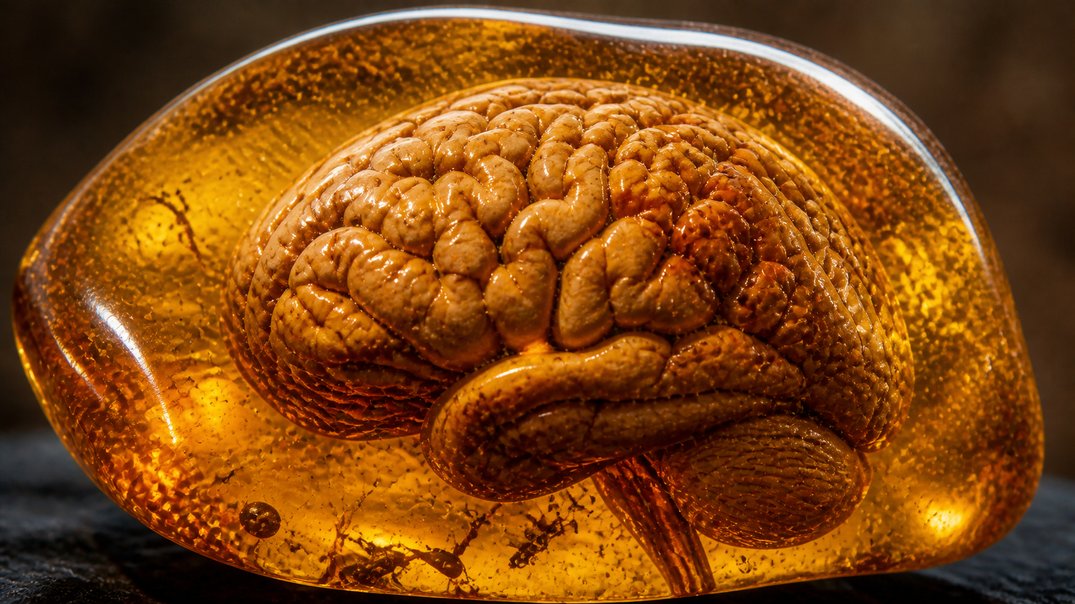
Ask most people how old their brain is and they will give you the same answer as their driver’s license. It seems like a reasonable assumption. One body, one age, one number. But neuroscientists and cognitive aging researchers live in a more complicated and considerably more interesting world, and what they know about brain age is enough to make you rethink some deeply held assumptions about what aging the mind actually means.
The short version is this: your brain’s biological age and your chronological age can diverge significantly, and the gap between them is far more malleable than most people realize. Some people in their sixties have brains that measure biologically younger than those of some people in their forties. Understanding why, and what drives the difference, is one of the most practically useful things you can learn about your own health.
What Brain Age Actually Measures
Brain age is not a single metric but a cluster of measurable biological and functional characteristics that researchers compare against population norms. When a neuroscientist says someone’s brain age is ten years younger than their chronological age, they are drawing on data points including the thickness of the cortex, the integrity of white matter pathways, the volume of key structures like the hippocampus, and the efficiency of neural networks as measured by functional imaging. Collectively, these markers paint a picture of how much biological wear the brain has accumulated relative to what would be expected for a person of that age.
The Biomarker Revolution
Advances in neuroimaging and blood-based biomarkers have made brain age assessment dramatically more precise in recent years. Blood tests can now detect proteins like neurofilament light chain and phosphorylated tau at very early stages, long before any cognitive symptoms appear, giving researchers and clinicians a window into brain health that was simply unavailable a decade ago. Machine learning algorithms trained on brain scans from thousands of individuals can now estimate a person’s brain age from an MRI with remarkable accuracy. The field is moving fast, and what was experimental five years ago is becoming clinical practice.
The Difference Between Aging and Decline
One of the most important distinctions that experts make, and that most people miss, is between normal brain aging and pathological decline. Not every change that occurs with age represents damage or disease. Processing speed does slow somewhat with age, and multitasking becomes harder, but crystallized intelligence, meaning the accumulated knowledge and wisdom built over a lifetime, continues to grow well into old age for most people. The brain that belongs to a 70-year-old who has aged normally is different from a 30-year-old brain, but it is not simply an inferior version of it. It has traded some capabilities for others, and some of those trades are surprisingly favorable.

The Biggest Drivers of Accelerated Brain Aging
If brain age and chronological age can diverge, something must be driving them apart. Researchers have identified several factors that consistently accelerate biological brain aging, many of which are modifiable.
Chronic Stress and the Cortisol Problem
Sustained psychological stress is one of the most potent accelerants of brain aging identified by researchers. The mechanism runs through cortisol, the body’s primary stress hormone. In short bursts, cortisol is useful and even protective. But chronically elevated cortisol damages the hippocampus, the brain’s memory hub, by promoting inflammation, impairing neurogenesis, and weakening synaptic connections. People who experience prolonged periods of high stress, whether from work, financial pressure, relationship difficulty, or chronic illness, show measurable acceleration in brain aging markers. Managing stress is not a lifestyle luxury. It is a direct intervention in the aging rate of your brain.
Sleep: The Non-Negotiable
No single behavior is more consistently linked to brain aging outcomes than sleep. During deep sleep, the brain runs its own cleaning system, a network of channels called the glymphatic system that flushes out metabolic waste products, including the amyloid-beta and tau proteins that accumulate in Alzheimer’s disease. People who chronically sleep fewer than seven hours per night show accelerated cortical thinning and higher loads of these toxic proteins, and the effect compounds over years. Experts who spend their careers studying brain aging are, almost without exception, extremely protective of their sleep. The data leaves little room for cavalier attitudes about pulling all-nighters or running on six hours.
Cardiovascular Health and the Brain
The brain is the most vascular organ in the body, and what is bad for the heart is reliably bad for the brain. Hypertension, diabetes, obesity, and smoking are all strongly associated with accelerated brain aging, largely through their damaging effects on the small blood vessels that supply the brain with oxygen and glucose. Researchers often describe the brain and the cardiovascular system as running on the same track: improve one and you almost inevitably improve the other.
What Can Actually Slow Brain Aging
The research on interventions that measurably slow brain aging is more encouraging than the popular narrative of inevitable decline would suggest, and the effective strategies are more accessible than most people assume.
Exercise: The Closest Thing to a Brain Age Eraser
Aerobic exercise is the single best-studied intervention for reducing brain age, and the effect sizes are large enough to be striking. Regular moderate-to-vigorous physical activity increases the volume of the hippocampus, improves white matter integrity, promotes the release of brain-derived neurotrophic factor (BDNF), a protein that supports the growth and maintenance of neurons, and reduces inflammatory markers throughout the brain. Studies have found that physically fit older adults have brains that measure years younger than their sedentary peers. The optimal dose appears to be around 150 minutes of moderate aerobic activity per week, which is entirely achievable without any special equipment or gym membership.
Cognitive Engagement and Social Connection
The brain builds resilience through use. People who remain cognitively active across their lifetimes, reading, learning new skills, engaging in intellectually demanding work or hobbies, and maintaining rich social connections, consistently show lower rates of age-related cognitive decline. Social isolation, by contrast, is one of the most underappreciated risk factors for accelerated brain aging. Loneliness is associated with increased cortisol, disrupted sleep, and elevated inflammatory markers, which is a perfect storm for the brain.
What experts know about brain age, and what most people are only beginning to appreciate, is that the number on your birthday cake tells you surprisingly little about the biological state of your brain. The factors that determine how fast or slow your brain ages are, to a meaningful degree, within your control. That is not a small thing. It is, arguably, one of the most empowering findings in modern neuroscience.